Age-Appropriate Dental Education: What to Teach at Each Stage
Dental health education is not one-size-fits-all. As individuals progress through different life stages, their oral health needs evolve—and so should the educational approaches used to address them. From teaching a toddler how to hold a toothbrush to helping seniors maintain natural teeth longer, age-appropriate dental education makes all the difference in establishing lifelong healthy habits.
This comprehensive guide breaks down exactly what dental knowledge to impart at each life stage, along with effective teaching strategies tailored to different age groups. Whether you’re a parent, educator, or dental professional, these insights will help you deliver dental health information that resonates and creates lasting impact.
Before diving into specific age recommendations, let’s understand why tailoring dental education to developmental stages is so important:
Developmental Readiness: Children at different ages have varying cognitive abilities and manual dexterity that affect how they understand and implement dental care.
Changing Oral Health Needs: From baby teeth to orthodontics to potential dentures, oral health concerns evolve dramatically throughout life.
Motivation Factors: What motivates a 7-year-old to brush (stickers, perhaps) differs vastly from what motivates a teenager or a middle-aged adult.
Knowledge Retention: Information delivered in age-appropriate ways is more likely to be understood, remembered, and applied.
According to the American Dental Association, customizing oral health education to match a person’s life stage significantly improves compliance with recommended care routines.
Infants and Babies (0-2 Years)
What to Teach Parents:
1. Pre-Teeth Oral Care
Gently wipe gums with a clean, damp washcloth after feedings
Recognize the signs of teething and safe soothing techniques
Understand how bottle use affects developing teeth
2. First Teeth Care
Begin brushing with a rice-sized smear of fluoride toothpaste when first tooth appears
Position baby properly for safe, effective cleaning
Recognize normal eruption patterns and potential concerns
3. Nutrition Basics
Limit sugary drinks, including juice
Avoid putting baby to bed with a bottle
Understand how breastfeeding and formula affect oral development
Schedule first dental appointment by first birthday or within 6 months of first tooth
Prepare for what happens during an infant dental visit
Establish the dental home concept early
Teaching Strategies:
Demonstration Models: Large tooth models help parents visualize proper cleaning techniques
Guided Practice: Hands-on demonstration with their own baby under professional guidance
Visual Guides: Simple pictorial handouts showing proper positioning and technique
Video Resources: Short clips demonstrating infant oral care basics
The American Academy of Pediatric Dentistry emphasizes that early intervention can prevent many common dental problems, making this foundational education crucial for parents of infants.
Toddlers and Preschoolers (2-5 Years)
What to Teach:
1. Basic Brushing Skills
Proper toothbrush grip and basic technique
Brushing for an appropriate duration (2 minutes)
Allowing adult help to ensure all surfaces are cleaned
Using a pea-sized amount of fluoride toothpaste
2. Introduction to Flossing
Basic concept of cleaning between teeth
Adult assistance required at this stage
Establishing it as part of the routine
3. Healthy Food Choices
Identifying “tooth-friendly” snacks versus “cavity-causing” options
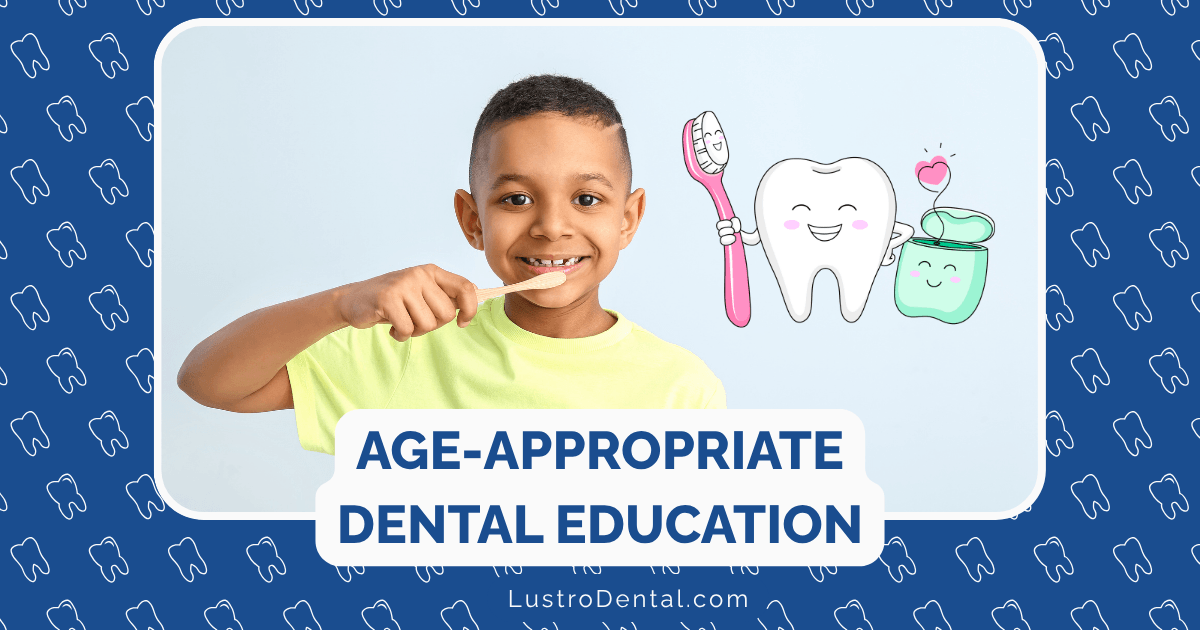
Storytelling: Books like “The Tooth Book” by Dr. Seuss or “Brush Your Teeth, Please” by Leslie McGuire
Role Play: Using stuffed animals or dolls to practice dental visits and brushing
Music and Timers: Songs that last two minutes to ensure adequate brushing time
Reward Systems: Sticker charts for consistent brushing
Visual Demonstrations: Disclosing tablets to show missed spots (for older preschoolers)
Research from America’s ToothFairy shows that children who develop positive associations with dental care before age five are significantly more likely to maintain good oral health habits throughout childhood.
Elementary School Age (6-11 Years)
What to Teach:
1. Independent Brushing Skills
Proper brushing techniques (circular motions, 45-degree angle, all surfaces)
Hands-On Experiments: The classic “egg in soda” experiment to demonstrate enamel erosion
Interactive Technology: Apps that track brushing or teach dental concepts
Peer Learning: Group activities where children teach each other
Science Connections: Linking dental health to biology lessons about bacteria and body systems
Visual Aids: Before-and-after photos showing consequences of poor dental care
According to the Centers for Disease Control and Prevention, this age range is critical for establishing independent oral hygiene habits that will carry into adulthood.
Personal Responsibility Framing: Emphasizing control over their health outcomes
Technology Integration: Apps for tracking oral hygiene or reminder systems
The American Association of Orthodontists notes that adolescence is often when compliance with dental recommendations decreases, making targeted education particularly important during this stage.
Young Adults (19-35 Years)
What to Teach:
1. Independent Dental Care Management
Navigating dental insurance and payment options
Establishing regular dental visit patterns without parental prompting
Selecting appropriate dental products for specific needs
2. Preventive Focus
The cost-effectiveness of prevention versus treatment
Effects of common habits (coffee, wine, smoking) on dental health
4. Special Considerations
Oral health during pregnancy
Managing wisdom tooth issues
Options for addressing cosmetic concerns
Teaching Strategies:
Digital Resources: Webinars and online tutorials on specific topics
Cost-Benefit Analysis: Clear information about the financial benefits of preventive care
Convenience Emphasis: Quick tips and efficient routines for busy lifestyles
Workplace Programs: Dental wellness initiatives in employment settings
Social Motivation: Group challenges or partner accountability systems
Research from the Academy of General Dentistry indicates that young adults who understand the systemic health connections to oral health are more likely to maintain regular dental care routines.
Case-Based Learning: Relatable scenarios with practical solutions
Health Integration: Connecting dental care to overall wellness plans
Financial Planning: Long-term cost analysis of treatment options
Convenience Solutions: Products and approaches that fit busy lifestyles
Digital Reminders: Systems for tracking family dental appointments
The American Academy of Periodontology emphasizes that middle age often brings increased risk for periodontal disease, making education about gum health particularly important during this life stage.
Recognizing dental problems in those who can’t communicate them
Incorporating oral care into overall health routines
Teaching Strategies:
Demonstration with Return Demonstration: Showing techniques and having seniors practice them
Simplified Routines: Breaking down care into manageable steps
Caregiver Inclusion: Training family members or professional caregivers
Repetition: Regular review of important concepts
Adaptive Focus: Emphasizing what’s possible rather than limitations
The Special Care Dentistry Association recommends that dental education for seniors should emphasize maintaining dignity and independence while ensuring adequate oral health.
Effective Teaching Methods Across Age Groups
While specific approaches vary by age, certain educational principles remain effective throughout life:
1. Make It Relevant
Connect dental health to what matters to each age group:
For children: Appearance, avoiding pain, being like admired adults
For teens: Social acceptance, appearance, independence
For adults: Overall health, financial savings, setting good examples
For seniors: Maintaining independence, quality of life, comfort
2. Use Multiple Learning Modalities
Incorporate various teaching approaches:
Visual: Diagrams, videos, before/after photos
Auditory: Clear explanations, memorable phrases
Kinesthetic: Hands-on practice, demonstrations
Social: Group discussions, shared experiences
3. Provide Immediate Feedback
Help learners gauge their progress:
Disclosing tablets for children to see missed areas
Guided practice with correction
Self-assessment tools
Follow-up communications after education sessions
4. Make It Accessible
Ensure information is easy to understand and implement:
Use plain language without jargon
Provide written materials at appropriate reading levels
Offer translations for non-English speakers
Consider cultural contexts that may affect dental practices
Implementing Age-Appropriate Dental Education
For Parents
Model good behavior: Children learn by watching you
Create age-appropriate routines: Adjust expectations as children develop
Use positive reinforcement: Focus on successes rather than failures
Maintain consistency: Regular habits form more easily than sporadic ones
Adapt as children grow: Transfer responsibility gradually
For Dental Professionals
Assess current knowledge: Start where the patient is
Customize approaches: Consider learning preferences and cultural contexts
Follow up: Reinforce education at subsequent visits
Provide resources: Offer take-home materials appropriate to age and reading level
Collaborate with other health providers: Coordinate messages across healthcare settings
For Educators
Integrate dental health into broader curriculum: Connect to science, health, even math
Create supportive environments: School policies that support dental health
Partner with dental professionals: Arrange classroom visits or field trips
Involve families: Send home activities that reinforce classroom learning
Address disparities: Ensure all children receive basic dental health information
Measuring Success in Dental Education
Effective dental education should produce measurable outcomes:
Knowledge Increase: Can the individual explain key dental concepts?
Skill Development: Has technique improved for brushing, flossing, etc.?
Attitude Change: Is there greater value placed on oral health?
Behavior Adoption: Are new habits being maintained over time?
Health Outcomes: Is there improvement in clinical measures like plaque scores or cavity rates?
According to research published in the Journal of Dental Education, programs that measure these outcomes and adjust accordingly show significantly better results than one-time educational interventions.
Conclusion: A Lifelong Learning Journey
Dental education isn’t a one-time event but a continuous process that evolves throughout life. By tailoring educational approaches to each developmental stage, we can create a foundation of knowledge, skills, and habits that support lifelong oral health.
Whether you’re teaching a toddler to brush with a favorite character toothbrush or helping a senior adapt to new challenges, age-appropriate dental education makes all the difference. The investment in proper education at each life stage pays dividends in healthier smiles, reduced dental costs, and better quality of life for years to come.
Remember that successful dental education meets people where they are—developmentally, culturally, and in terms of their existing knowledge. With patience, creativity, and consistent reinforcement, dental educators of all types can make a lasting impact on oral health across the lifespan.
What dental education approaches have you found most effective for different age groups? Share your experiences in the comments below!