🦷 General Care
✨ Treatments
👶 Family Care
💚 Wellness
💡 Resources

🦷 General Care
✨ Treatments
👶 Family Care
💚 Wellness
💡 Resources

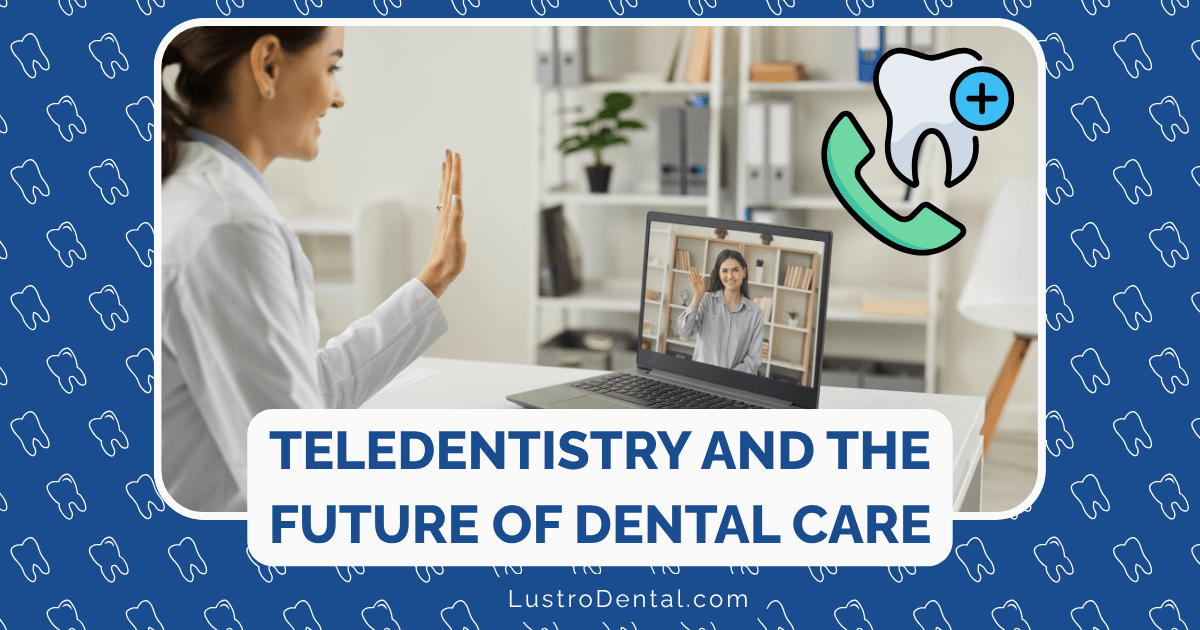
In a world where approximately 2.4 billion people lack access to basic dental care, innovative solutions are desperately needed. Enter teledentistry—a powerful combination of dental expertise and telecommunications technology that’s revolutionizing how oral healthcare is delivered globally. From rural communities in developed nations to remote villages in developing countries, teledentistry is breaking down barriers and bringing quality dental care to those who need it most.
Teledentistry uses digital technologies to provide dental care, consultation, and education remotely. Rather than requiring patients to physically visit a dental office, teledentistry enables:
According to the American Dental Association, teledentistry encompasses synchronous (real-time) video consultations, asynchronous (store-and-forward) transmission of dental records, remote patient monitoring, and mobile health applications.
To understand the transformative potential of teledentistry, we must first recognize the scale of the dental access problem:
Research published in the Journal of Telemedicine and Telecare indicates that these disparities lead to preventable suffering, with untreated oral diseases affecting nearly half the world’s population.
Teledentistry addresses these challenges through several mechanisms:
By eliminating geographic barriers, teledentistry brings dental expertise to previously unreachable communities:
A study from the University of Rochester Medical Center found that 81.6% of children in a rural teledentistry program completed their recommended dental treatments within six months of virtual consultations—a remarkable success rate for an underserved population.
Teledentistry makes dental care more affordable and convenient:
Recent models indicate that teledentistry can reduce overall costs by 25-30% compared to traditional care models, making dental services more accessible to economically disadvantaged populations.
In regions with dental professional shortages, teledentistry multiplies the impact of available providers:
Teledentistry excels at delivering education and preventive guidance:
Studies show that virtual educational sessions have led to a 22% reduction in cavities among children who participated—highlighting the preventive power of teledentistry.
Teledentistry initiatives around the world demonstrate its transformative potential:
The Indian Space Research Organization (ISRO) has established over 1,000 telemedicine nodes across India, including teledentistry services:
Impact: Remote villages now have access to dental consultations that were previously impossible, with preliminary diagnoses and treatment planning available without travel to urban centers.
Key Success Factor: Integration with existing telecommunications infrastructure and government support.
Australia’s Royal Flying Doctor Service has incorporated teledentistry to enhance its reach:
Impact: Indigenous communities in the Outback receive regular virtual check-ups between in-person visits, ensuring continuity of care despite vast distances.
Key Success Factor: Combination of teledentistry with periodic in-person care for comprehensive treatment.
A corporate-led initiative has brought teledentistry to Indonesia and Vietnam:
Impact: Over 100 million consumers have been reached, with particular focus on making dental care more inclusive and affordable.
Key Success Factor: Partnership between private sector expertise and local healthcare systems.
Several African nations have implemented mobile teledentistry programs that work with limited internet connectivity:
Impact: Communities without reliable broadband can still benefit from store-and-forward teledentistry, where dental images and information are collected and transmitted when connectivity is available.
Key Success Factor: Adaptation to local technological constraints rather than requiring high-bandwidth solutions.
Despite its promise, teledentistry faces several challenges that must be addressed for maximum impact:
Challenge: Many underserved populations lack reliable internet access or digital devices.
Solutions:
Challenge: Many countries lack clear regulations for teledentistry practice.
Solutions:
According to a study published in BMC Oral Health, only 31.6% of countries surveyed had specific policies or strategies for teledentistry, highlighting the need for regulatory development.
Challenge: Not all dental procedures can be performed remotely.
Solutions:
Challenge: Remote care must be culturally appropriate and linguistically accessible.
Solutions:
The teledentistry market is projected to grow significantly, from approximately $3.2 billion in 2023 to $7.8 billion by 2030. Several emerging trends will shape its evolution:
Artificial intelligence is increasingly being integrated into teledentistry platforms:
The range of services deliverable via teledentistry continues to grow:
Teledentistry is increasingly being incorporated into broader telehealth ecosystems:
The Internet of Things (IoT) is creating new possibilities for remote monitoring:
For teledentistry to reach its full potential in bridging the global access gap, support is needed from multiple stakeholders:
Teledentistry represents one of the most promising solutions to the global dental access crisis. By leveraging digital technologies to overcome geographic, economic, and workforce barriers, it has the potential to bring quality dental care to billions who currently go without.
As noted in the Journal of the American Dental Association, “Teledentistry is not merely a technological innovation but a necessary evolution in how we deliver care to meet the needs of underserved populations worldwide.”
The COVID-19 pandemic accelerated teledentistry adoption out of necessity, but its continued growth will be driven by its proven ability to expand access, reduce costs, and improve outcomes. With appropriate investment, policy support, and professional engagement, teledentistry can help create a world where quality dental care is available to all—regardless of where they live or their economic circumstances.
The digital bridge is under construction. With continued effort and innovation, it will connect more communities to the dental care they deserve, one virtual consultation at a time.
Have you experienced teledentistry as a patient or provider? Share your thoughts and experiences in the comments below!