🦷 General Care
✨ Treatments
👶 Family Care
💚 Wellness
💡 Resources

🦷 General Care
✨ Treatments
👶 Family Care
💚 Wellness
💡 Resources

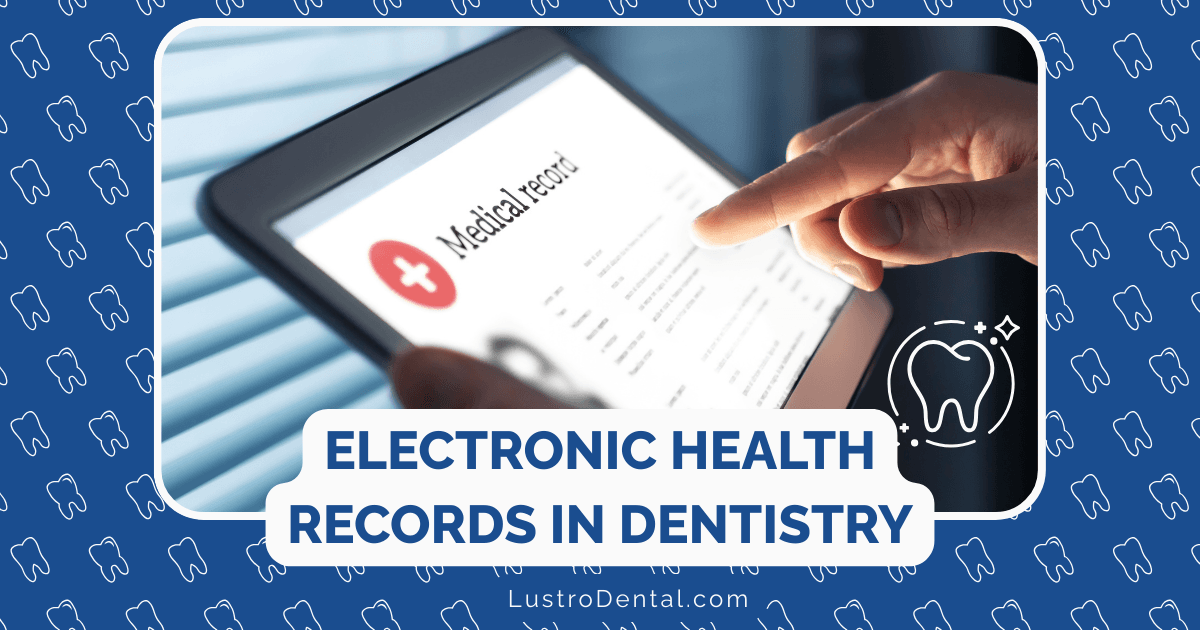
In an era where digital transformation is reshaping healthcare, electronic health records (EHRs) have emerged as a pivotal technology in modern dentistry. Gone are the days of paper charts stuffed in filing cabinets and X-rays stored in manila envelopes. Today’s dental practices are increasingly adopting sophisticated electronic systems that not only streamline operations but fundamentally enhance patient care.
At the heart of this digital revolution lies a crucial benefit: improved continuity of care. But what exactly does this mean for you as a patient, and why should you care about whether your dentist uses electronic records? Let’s explore how dental EHRs are transforming the healthcare landscape and ensuring more coordinated, comprehensive care for patients.
Electronic health records (EHRs) in dentistry—sometimes called electronic dental records (EDRs)—are digital versions of patients’ dental charts. Unlike traditional paper records, EHRs store all patient information in a structured, easily accessible digital format.
According to the American Dental Association, modern dental EHR systems typically include:
Dr. Sarah Chen, a digital health expert at the American Dental Association, explains: “EHRs aren’t simply digital versions of paper charts. They’re interactive, intelligent systems that help dentists make better clinical decisions while creating a more seamless experience for patients.”
Continuity of care refers to the quality of care over time—how well healthcare providers maintain a coherent treatment approach as patients move between different providers, settings, and stages of life. In dentistry, maintaining this continuity has traditionally faced several challenges:
Perhaps the most significant barrier to continuity has been the historical separation between dental and medical care systems. A study published in the Journal of the American Medical Informatics Association found that:
This disconnect can have serious implications. For example, a dentist unaware of a patient’s cardiovascular condition might prescribe medications that interact dangerously with heart medications, or a physician might miss oral manifestations of systemic diseases.
Even within dentistry, coordination between general dentists and specialists (orthodontists, periodontists, oral surgeons, etc.) has traditionally relied on referral letters, phone calls, and patients themselves serving as information couriers.
As patients relocate or change providers, their complete dental histories often don’t follow them, leading to repeated procedures, unnecessary X-rays, and treatment inconsistencies.
Electronic health records address these challenges in several powerful ways:
EHRs create a single, comprehensive record of a patient’s dental care that follows them throughout their life. This means:
Dr. James Wilson, who practices in a multi-dentist group, notes: “When a patient sees different providers within our practice, each dentist has instant access to the patient’s complete history—previous treatments, noted sensitivities, even preferred numbing techniques. This creates a seamless experience regardless of which provider they see.”
Modern EHR systems facilitate better communication between dental professionals:
Research from CareQuest Institute for Oral Health shows that all dental providers surveyed (100%) expressed a desire to view their patients’ medical information, recognizing its importance for comprehensive care.
Perhaps the most promising aspect of dental EHRs is their potential to bridge the traditional gap between dental and medical care:
According to a study in the Journal of Dental Research, this integration is particularly important for patients with conditions like diabetes, cardiovascular disease, and pregnancy, where oral health and systemic health are closely linked.
EHRs significantly improve patient safety through:
A report from the Office of the National Coordinator for Health Information Technology found that EHR interoperability can reduce medication errors by up to 50% by ensuring all providers have access to accurate medication lists.
When patients move or change providers, EHRs ensure their complete records can follow them:
Dr. Michael Roberts, a dentist who frequently treats patients who have relocated, shares: “Before EHRs, new patients would arrive with partial or no records from their previous dentist. Now, with electronic transfers, we can often get their complete history before their first appointment, allowing us to provide more informed care from day one.”
The theoretical advantages of EHRs translate into tangible benefits for dental patients:
With complete records available, dentists can avoid repeating recent X-rays or procedures, saving patients time, money, and unnecessary radiation exposure.
Access to comprehensive histories allows dentists to tailor treatment plans based on a patient’s unique oral health journey, previous responses to treatments, and personal preferences.
A study published in the Journal of Patient Safety found that improved information sharing through EHRs reduced adverse events by 17-30% across healthcare settings.
EHRs help dentists identify patterns and risk factors, enabling more proactive and preventive approaches to oral health.
Many dental EHR systems include patient portals that allow patients to:
Research from Park University indicates that patients who engage with their health records through patient portals demonstrate better adherence to treatment plans and preventive care recommendations.
Despite their benefits, dental EHRs face several challenges:
Perhaps the biggest hurdle is interoperability—the ability of different EHR systems to exchange and use information. According to the American Dental Association, there is currently no widely available centralized electronic health record mechanism usable by both medical and dental providers.
For smaller dental practices, the cost of implementing EHR systems—including hardware, software, training, and maintenance—can be prohibitive, ranging from $10,000 to $20,000 per provider.
Transitioning from paper to electronic records requires significant training and adaptation for dental teams, which can temporarily disrupt workflows.
While EHRs enhance data protection compared to paper records, they also introduce new security considerations. A survey by ResearchGate found that 28.3% of dentists expressed concerns about patient data leakage.
The landscape of dental EHRs continues to evolve rapidly, with several promising developments on the horizon:
AI is increasingly being integrated into dental EHR systems to:
Blockchain offers a secure method for managing patient records, potentially solving many interoperability challenges while enhancing data integrity and patient control.
Efforts are underway to develop standardized data exchange protocols between medical and dental EHR systems. The ADA Standards Committee on Dental Informatics is actively developing standards to facilitate this integration.
The integration of EHRs with teledentistry platforms is creating new possibilities for remote consultations, follow-ups, and monitoring—further enhancing continuity of care regardless of physical location.
As a dental patient, you can take several steps to leverage EHRs for better continuity of care:
When selecting a dentist, consider asking:
If your dental practice offers a patient portal:
When seeing multiple providers:
Let your dental providers know about your experiences with their electronic systems—what works well and what could be improved. Patient feedback drives system enhancements.
Electronic health records are transforming dentistry from isolated episodes of care to a continuous, coordinated health journey. By creating comprehensive, accessible, and shareable patient records, EHRs enhance communication between providers, improve treatment decisions, and ultimately lead to better oral health outcomes.
While challenges remain, particularly in achieving seamless integration between dental and medical systems, the trajectory is clear: dental care is becoming more connected, both within dentistry and with the broader healthcare ecosystem.
As Dr. Lisa Chen from the American Dental Association’s Digital Innovation Committee puts it: “The future of dentistry isn’t just about better treatments—it’s about better connections. Electronic health records are the foundation that will allow us to truly integrate oral health into whole-person care.”
For patients, this means more personalized, coordinated, and effective dental care throughout their lives—a worthy goal that makes the digital transformation of dentistry not just a technological advancement but a significant step forward for public health.
Have you experienced the benefits of electronic health records in your dental care? Share your thoughts in the comments below.