🦷 General Care
✨ Treatments
👶 Family Care
💚 Wellness
💡 Resources

🦷 General Care
✨ Treatments
👶 Family Care
💚 Wellness
💡 Resources

For decades, we’ve understood the mouth as a distinct entity—a system to be treated separately from the rest of the body. Yet emerging research reveals a far more interconnected reality: the health of our oral cavity is intimately linked with our systemic health, particularly when it comes to autoimmune conditions.
As a dental health advocate who has followed this research closely, I’ve observed how this paradigm shift is transforming both dentistry and medicine. The mouth isn’t merely a gateway to the body; it’s an active participant in whole-body health and disease processes.
In this article, we’ll explore the fascinating and complex relationship between oral inflammation and systemic autoimmune conditions like rheumatoid arthritis, lupus, and Sjögren’s syndrome. Understanding this connection could change how we approach both oral health and autoimmune disease management.
Before diving into specific autoimmune conditions, let’s examine the mechanisms that create this crucial link between oral health and systemic autoimmunity.
Inflammation—the body’s response to injury or infection—serves as the primary bridge between oral health and systemic autoimmune conditions. Research published in PMC identifies several key mechanisms connecting oral inflammation to systemic diseases:
Dr. Sarah Chen, an immunologist specializing in oral-systemic connections, explains: “The oral cavity contains nearly 700 species of bacteria. When these communities become imbalanced, the resulting inflammation doesn’t stay confined to the mouth. It can have far-reaching effects throughout the body, particularly in individuals with genetic predispositions to autoimmunity.”
Recent research has identified inflammasomes—multiprotein complexes that play a central role in the inflammatory response—as key players in both periodontal disease and autoimmune conditions.
A study published in the Annals of Research in Medicine and Health highlights the NLRP3 inflammasome as particularly significant. When activated by oral pathogens, NLRP3 triggers the release of pro-inflammatory cytokines like interleukin-1β (IL-1β), which can:
Intriguingly, periodontal disease itself may have autoimmune characteristics. Research from the National Center for Biotechnology Information has found evidence of:
This suggests that the relationship between periodontal disease and autoimmune conditions may be bidirectional, with each potentially influencing the other’s development and progression.
Among autoimmune conditions, rheumatoid arthritis (RA) shows perhaps the strongest and most well-documented connection to oral health, particularly periodontal disease.
The relationship between RA and periodontal disease is striking:
At the center of the RA-periodontal disease relationship is a bacterium called Porphyromonas gingivalis (P. gingivalis)—one of the primary pathogens in severe periodontal disease.
This bacterium possesses a unique enzyme called peptidylarginine deiminase (PAD), which can modify proteins through a process called citrullination. In genetically susceptible individuals, these citrullinated proteins may trigger an autoimmune response that leads to the production of anti-citrullinated protein antibodies (ACPAs)—a hallmark of RA.
Dr. Michael Rodriguez, a rheumatologist specializing in RA, notes: “The discovery of P. gingivalis‘s ability to citrullinate proteins provided a potential mechanistic link between periodontal disease and RA. It helps explain why these two conditions so frequently co-occur and suggests that addressing oral health might be an important component of RA management.”
This connection has significant implications for clinical practice:
A study cited in Nature Reviews Immunology found that local treatment of periodontitis can improve surrogate markers of RA, suggesting that dental interventions may complement traditional RA management.
Systemic lupus erythematosus (SLE or lupus) is another autoimmune condition with significant connections to oral health.
Lupus frequently manifests in the oral cavity, with approximately 25-30% of patients experiencing oral symptoms. These can include:
These oral manifestations can serve as important diagnostic clues, particularly since oral ulcers are included in the diagnostic criteria for SLE established by the American College of Rheumatology.
The connection between lupus and oral health involves several inflammatory pathways:
The relationship between lupus and oral health appears to be bidirectional:
This suggests that comprehensive management of lupus should include attention to oral health, and conversely, that dental providers should be aware of the potential systemic implications of oral inflammation in lupus patients.
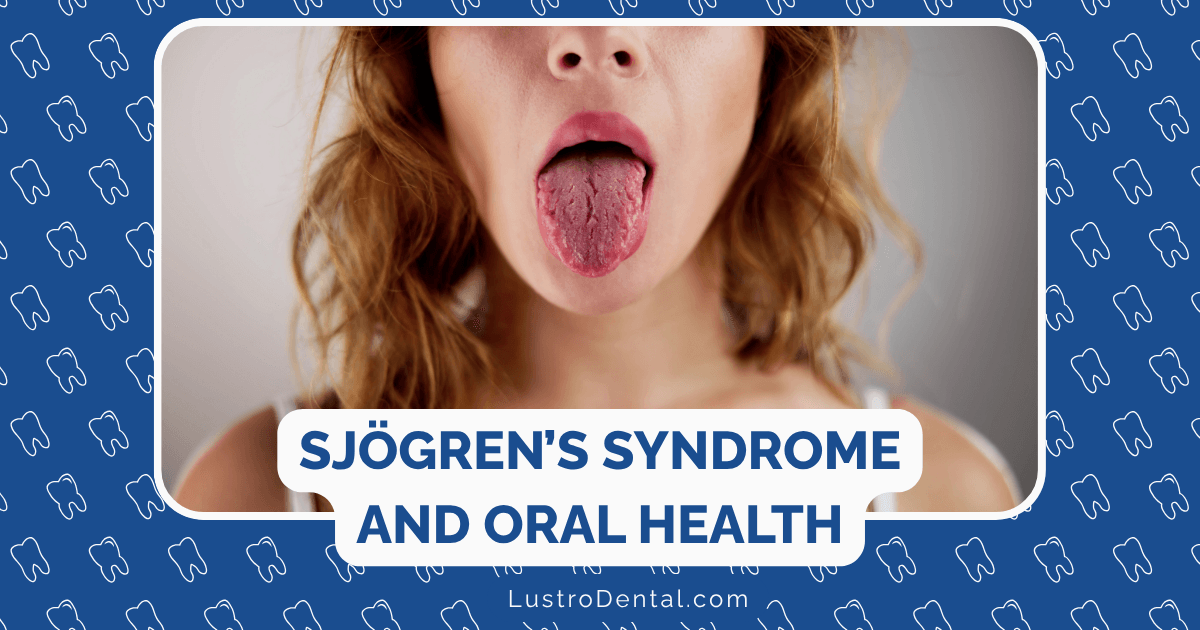
Unlike RA and lupus, where oral manifestations are common but not universal, Sjögren’s syndrome almost always involves the oral cavity, with dry mouth (xerostomia) being one of its defining features.
Sjögren’s syndrome can occur as:
According to the American Dental Association, approximately 3 million Americans have Sjögren’s disease, with women accounting for 86% of cases.
The oral manifestations of Sjögren’s syndrome are extensive and can significantly impact quality of life:
Dr. Jennifer Lee, a specialist in oral medicine, explains: “Saliva isn’t just water—it’s a complex fluid containing enzymes, antibodies, and other compounds that protect the oral cavity. When salivary function is compromised in Sjögren’s syndrome, the entire oral ecosystem is disrupted, leading to a cascade of dental and oral health problems.”
The oral manifestations of Sjögren’s syndrome aren’t just symptoms to be managed—they’re crucial diagnostic indicators. According to the National Center for Biotechnology Information, a minor salivary gland biopsy showing focal lymphocytic sialadenitis is considered the gold standard for diagnosing Sjögren’s syndrome.
This places dental professionals in a unique position to identify potential Sjögren’s syndrome cases, particularly since xerostomia is often the first symptom patients notice.
While RA, lupus, and Sjögren’s syndrome show the most well-documented connections to oral health, other autoimmune conditions also demonstrate important oral-systemic relationships.
Research published in Nature Reviews Immunology indicates that:
Emerging evidence suggests connections between periodontal disease and psoriatic conditions:
While less extensively studied, connections between oral health and MS include:
Understanding the connections between oral inflammation and autoimmune conditions has important implications for both patients and healthcare providers.
Dental providers can play a crucial role in the broader healthcare landscape by:
Medical professionals treating autoimmune conditions should:
Individuals with autoimmune conditions can take proactive steps:
The field of oral-systemic autoimmunity continues to evolve, with several promising areas of research and therapeutic development.
Research published in Annals of Research in Medicine and Health highlights several emerging approaches:
Given the role of microbial dysbiosis in both periodontal disease and autoimmunity, approaches to modulate the oral microbiome show promise:
The future may bring more personalized approaches to managing the oral-autoimmune connection:
The connection between oral inflammation and systemic autoimmune conditions represents a powerful example of how artificial divisions in healthcare—between dental and medical, between one body system and another—can impede our understanding of complex diseases.
By recognizing the common inflammatory thread that links conditions like periodontal disease, rheumatoid arthritis, lupus, and Sjögren’s syndrome, we open new possibilities for prevention, early detection, and integrated treatment approaches.
For patients living with autoimmune conditions, this integrated perspective offers hope—that addressing oral inflammation might help manage their systemic symptoms, and that coordinated care between dental and medical providers might lead to better outcomes and improved quality of life.
As research continues to illuminate these connections, the artificial boundary between oral and systemic health continues to dissolve, replaced by a more holistic understanding that acknowledges what many have long suspected: the mouth truly is a window to overall health, particularly when it comes to autoimmunity.
Have you experienced oral symptoms in connection with an autoimmune condition? Or are you a healthcare provider who has observed these connections in your practice? Share your experiences in the comments below.