🦷 General Care
✨ Treatments
👶 Family Care
💚 Wellness
💡 Resources

🦷 General Care
✨ Treatments
👶 Family Care
💚 Wellness
💡 Resources

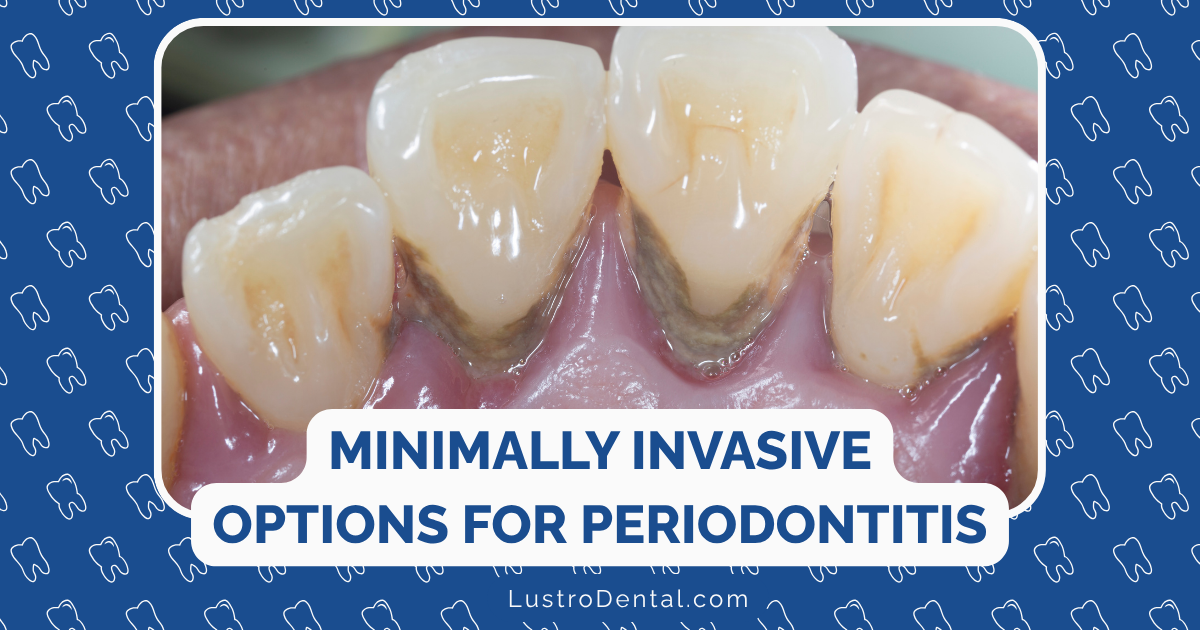
The landscape of periodontal treatment has undergone a remarkable transformation in recent years. Gone are the days when treating gum disease meant painful surgeries, significant downtime, and uncertain outcomes. In 2025, patients suffering from periodontitis have access to an impressive array of minimally invasive treatments that promise less pain, faster healing, and often better results than traditional approaches.
As someone who’s spent years advocating for better dental health awareness, I’m excited to share these advancements with you. Whether you’re currently dealing with periodontitis or simply want to stay informed about the latest treatment options, this comprehensive guide will walk you through the cutting-edge approaches now available.
Periodontitis—advanced gum disease that damages the soft tissue and bone supporting your teeth—affects nearly 47% of adults over 30 in the United States, according to the CDC. Left untreated, it can lead to tooth loss and has been linked to serious health conditions including heart disease, diabetes, and respiratory issues.
Traditionally, treatment involved:
While these approaches remain effective, they often come with drawbacks including pain, bleeding, swelling, and extended healing times. Fortunately, 2025 has ushered in a new era of minimally invasive options that address these concerns while delivering impressive results.
LANAP has emerged as the gold standard in minimally invasive periodontal treatment. This FDA-approved procedure uses the PerioLase MVP-7 laser to selectively target diseased tissue while preserving healthy gums.
According to a recent publication, LANAP offers several significant advantages:
Dr. Sarah Chen, a leading periodontist in Boston, notes: “What’s remarkable about LANAP is not just the reduced discomfort for patients, but the biological response it triggers. We’re seeing natural reattachment and bone growth that wasn’t possible with traditional approaches.”
The procedure typically requires just one or two sessions, compared to multiple visits for conventional surgery, and healing time is measured in weeks rather than months.
Another laser-based approach gaining traction is Antimicrobial Photodynamic Therapy. This technique combines light-sensitive agents (photosensitizers) with specific wavelengths of light to eliminate bacteria in periodontal pockets.
The process is remarkably simple:
Dr. James Rodriguez at the University of California Periodontal Institute explains: “aPDT allows us to target pathogenic bacteria with incredible precision without affecting surrounding healthy tissue. It’s particularly effective as an adjunct to scaling and root planing for patients with moderate to severe periodontitis.”
The Waterlase REPAIR Perio protocol represents another significant advancement in minimally invasive treatment. This system uses hydrophotonic technology—a combination of water, air, and laser energy—to gently remove diseased tissue and disinfect periodontal pockets.
According to Dental Tribune, the Waterlase system offers:
The REPAIR protocol is particularly effective for treating early to moderate periodontitis and can be completed in fewer sessions than conventional therapy.
Air polishing technology has evolved significantly, with new devices using fine glycine powder instead of traditional abrasive materials. These systems effectively remove biofilm and stains from tooth surfaces with minimal discomfort.
“The latest generation of air polishing devices allows us to access subgingival areas that were previously difficult to reach,” explains Dr. Michelle Park, Director of Periodontal Research at Northwestern University. “The glycine powder is gentle on soft tissue and root surfaces while effectively removing bacterial biofilm.”
This approach is particularly valuable as a maintenance therapy for patients who have undergone more intensive treatments.
Perhaps the most exciting developments in periodontal treatment involve regenerative therapies that can actually restore tissues damaged by periodontitis.
Stem cell-based approaches for periodontal regeneration have moved from experimental to clinical application in 2025. A meta-analysis published in the Journal of Dental Research found that stem cell therapies resulted in significantly better outcomes compared to conventional methods, including:
Current applications include:
While still relatively new in clinical practice, these approaches show tremendous promise for cases where significant tissue loss has occurred.
Innovative biomaterials are revolutionizing tissue regeneration in periodontal treatment. These include:
A groundbreaking study from the Dental Health Foundation describes a membrane coated with special materials that accelerate bone regeneration while simultaneously fighting infection—effectively addressing the two primary challenges in periodontal treatment.
The one-size-fits-all approach to periodontal treatment is becoming obsolete in 2025. Advanced diagnostic technologies now allow for highly personalized treatment plans based on:
Dr. Robert Kim, periodontist and researcher at Harvard School of Dental Medicine, explains: “We’re now able to analyze a patient’s specific periodontal microbiome and genetic markers to determine which treatments will be most effective for their particular case. This precision approach significantly improves outcomes while minimizing unnecessary interventions.”
| Treatment | Best For | Pain Level | Recovery Time | Cost Range | Long-term Results |
| LANAP | Moderate to severe periodontitis | Minimal | 24-48 hours | $$$$ | Excellent |
| aPDT | Mild to moderate periodontitis | Very minimal | Immediate | $$ | Good (as adjunct) |
| Waterlase REPAIR | Early to moderate periodontitis | Minimal | 1-3 days | $$$ | Very good |
| Air Polishing | Maintenance/mild cases | None | Immediate | $ | Good (as maintenance) |
| Stem Cell Therapy | Severe tissue loss | Moderate | 1-2 weeks | $$$$$ | Excellent for regeneration |
| Traditional Surgery | Advanced cases | High | 2-4 weeks | $$$ | Variable |
One of the most significant advantages of these minimally invasive approaches is the improved patient experience. Here’s what real patients report:
Michael, 52, LANAP patient: “I was terrified of gum surgery after hearing my father’s experience years ago. With LANAP, I felt minimal discomfort during the procedure and was back at work the next day. Six months later, my dentist says my gums and bone look healthier than they have in years.”
Jennifer, 45, Waterlase REPAIR patient: “The procedure was surprisingly comfortable—nothing like what I expected. I felt a slight warming sensation but no pain. Recovery was quick, with just minor sensitivity for a day or two. The best part is that my gum pockets have reduced from 6mm to 3mm in just three months.”
David, 63, Stem Cell Therapy recipient: “After being told I would lose several teeth due to bone loss, I opted for stem cell treatment. The procedure was more involved than laser treatments, but still much easier than traditional surgery. Six months later, my bone is regenerating, and my dentist is amazed at the improvement.”
When considering treatment options, ask your periodontist these key questions:
Looking beyond 2025, research continues to advance in several promising areas:
Dr. Lisa Nguyen, Director of the National Institute of Dental Research, predicts: “Within the next decade, I believe we’ll see periodontal disease become largely manageable through minimally invasive approaches, with traditional surgery reserved for only the most complex cases.”
The evolution of periodontitis treatment represents one of the most significant advances in modern dentistry. These minimally invasive approaches offer:
If you’re facing periodontitis treatment decisions in 2025, take heart in knowing that your options are better than ever before. The combination of advanced technology, biological understanding, and regenerative approaches means that even advanced cases can often be treated successfully with minimal discomfort and downtime.
Remember: Early intervention is still key. Even with these advanced treatments, addressing periodontal disease in its earliest stages provides the best outcomes. Regular dental check-ups, professional cleanings, and diligent home care remain your first line of defense against periodontitis.
Have you experienced any of these minimally invasive treatments? Share your experience in the comments below!