🦷 General Care
✨ Treatments
👶 Family Care
💚 Wellness
💡 Resources

🦷 General Care
✨ Treatments
👶 Family Care
💚 Wellness
💡 Resources

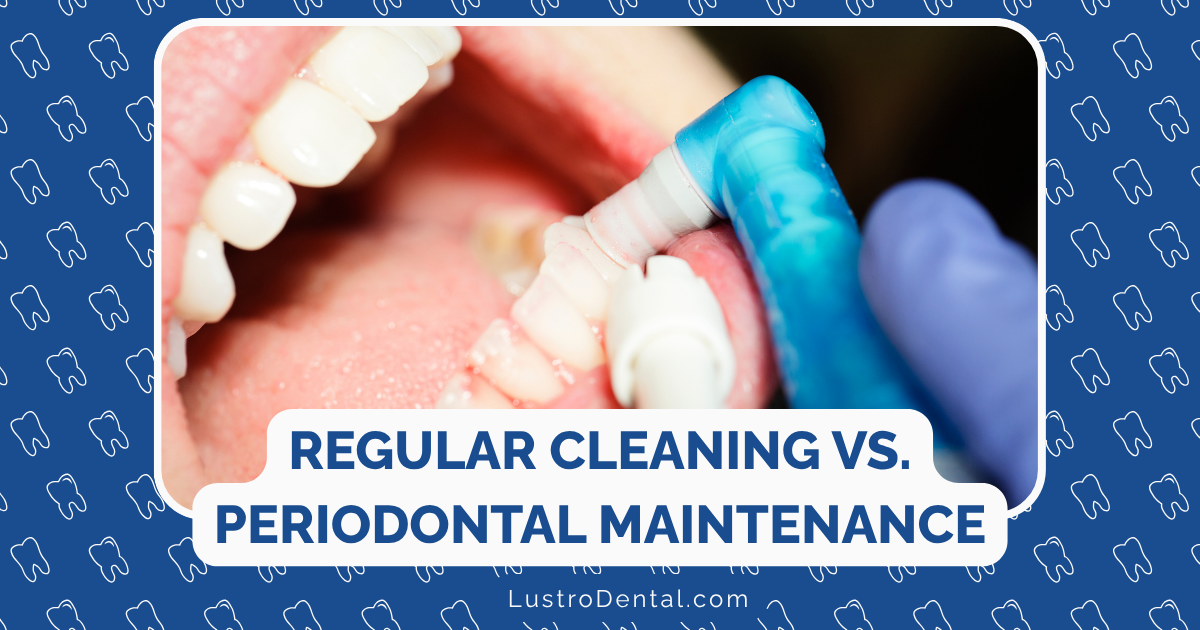
When you schedule a dental cleaning, you might assume all cleanings are created equal. However, there’s a significant difference between a regular cleaning (prophylaxis) and periodontal maintenance—a distinction that matters for both your oral health and your wallet.
As someone who’s worked with countless patients navigating these different types of care, I’ve seen the confusion firsthand. Many patients don’t understand why they’ve been scheduled for periodontal maintenance instead of their usual cleaning, or why the cost and frequency have changed.
In this article, I’ll break down the key differences between regular cleanings and periodontal maintenance, helping you understand which one you need and why it matters for your long-term oral health.
The most important difference between regular cleanings and periodontal maintenance lies in their purpose:
A regular cleaning, known in dental terminology as “prophylaxis” or “prophy” (dental code D1110), is a preventive procedure designed for patients with healthy gums and no bone loss. The word “prophylaxis” comes from Greek, meaning “to guard or prevent beforehand.”
Dr. Michael Wilson, periodontist at Mayo Clinic, explains: “Prophylaxis is truly preventive in nature—it’s intended to maintain already-healthy tissues and prevent disease from developing in the first place.”
Periodontal maintenance (dental code D4910), on the other hand, is a therapeutic procedure designed for patients who have been treated for periodontal (gum) disease. It’s not preventive—it’s ongoing treatment to manage a chronic condition.
According to the American Dental Association, periodontal maintenance is “intended to continue for the life of the dentition” following active periodontal therapy.
Understanding which type of cleaning you need starts with knowing your periodontal status:
Dr. Sarah Johnson, professor at Columbia University College of Dental Medicine, notes: “Once a patient has been diagnosed with and treated for periodontal disease, they don’t revert to being a prophylaxis patient—even if their condition improves significantly. The disease may be controlled, but the anatomical changes and susceptibility remain.”
While both procedures involve cleaning your teeth, there are key differences in their scope, technique, and focus:
A regular cleaning focuses primarily on the crowns of the teeth and just slightly below the gumline, using instruments designed for supragingival (above the gumline) cleaning.
Periodontal maintenance requires specialized instruments designed to reach deeper into periodontal pockets and clean root surfaces effectively.
The recommended interval between appointments differs significantly between these two types of cleanings:
A study published in the Journal of Dental Research found that patients who received periodontal maintenance every 3 months had significantly better outcomes than those seen less frequently, including less bone loss and fewer lost teeth over time.
There’s typically a cost difference between these procedures, which reflects their different levels of complexity:
According to the Utah Periodontal Institute, the average cost of periodontal maintenance in the United States is approximately $120, excluding prior treatments.
The higher cost reflects the additional time, expertise, and specialized equipment required for periodontal maintenance, as well as its therapeutic (rather than preventive) nature.
Understanding the insurance aspects can help you navigate coverage issues:
According to the American Dental Association, it’s important to note that using the wrong code (like billing D1110 for a patient who should receive D4910) can constitute insurance fraud, even if done unintentionally.
One of the most common questions patients ask is whether they can eventually “graduate” back to regular cleanings after successful periodontal treatment. The answer is more nuanced than a simple yes or no:
From a strictly clinical perspective, most patients with a history of moderate to severe periodontal disease will need periodontal maintenance indefinitely. This is because:
In some limited cases, patients might be able to return to prophylaxis if:
Dr. Lisa Martinez, periodontist at University of California, San Francisco, cautions: “The decision to move a patient from periodontal maintenance back to prophylaxis should be made very carefully, with thorough documentation of sustained periodontal health. In my experience, this transition is appropriate for only a small percentage of periodontal patients.”
Understanding the difference between these procedures isn’t just about semantics—it directly impacts your oral and overall health:
Patients with a history of periodontal disease who receive only regular cleanings (or who stretch their periodontal maintenance intervals too far) face increased risks of:
Patients who adhere to recommended periodontal maintenance schedules typically experience:
A longitudinal study published in the Journal of Periodontology found that compliant periodontal maintenance patients lost an average of 0.03 teeth per year, while non-compliant patients lost an average of 0.1 to 0.3 teeth per year—a significant difference over a lifetime.
If you require periodontal maintenance, here are some tips to maximize its benefits:
Ask your dental professional to explain your specific periodontal status, including pocket depths, areas of concern, and risk factors. Understanding your condition helps you take ownership of your care.
The success of periodontal maintenance depends largely on what you do between visits:
Consistency is crucial for periodontal maintenance. Even extending your interval by a month or two can allow disease activity to resume.
If financial concerns make it difficult to maintain your recommended schedule:
The distinction between regular cleanings and periodontal maintenance isn’t about dental offices trying to increase revenue—it’s about providing the appropriate level of care for different oral health conditions.
Just as a person with diabetes requires different medical care than someone without diabetes, a person with a history of periodontal disease requires different dental care than someone with healthy gums. Recognizing and respecting this difference is essential for maintaining not just your oral health, but your overall wellbeing.
By understanding which type of cleaning you need and why, you can make informed decisions about your dental care and work effectively with your dental team to achieve the best possible outcomes for your smile.