🦷 General Care
✨ Treatments
👶 Family Care
💚 Wellness
💡 Resources

🦷 General Care
✨ Treatments
👶 Family Care
💚 Wellness
💡 Resources

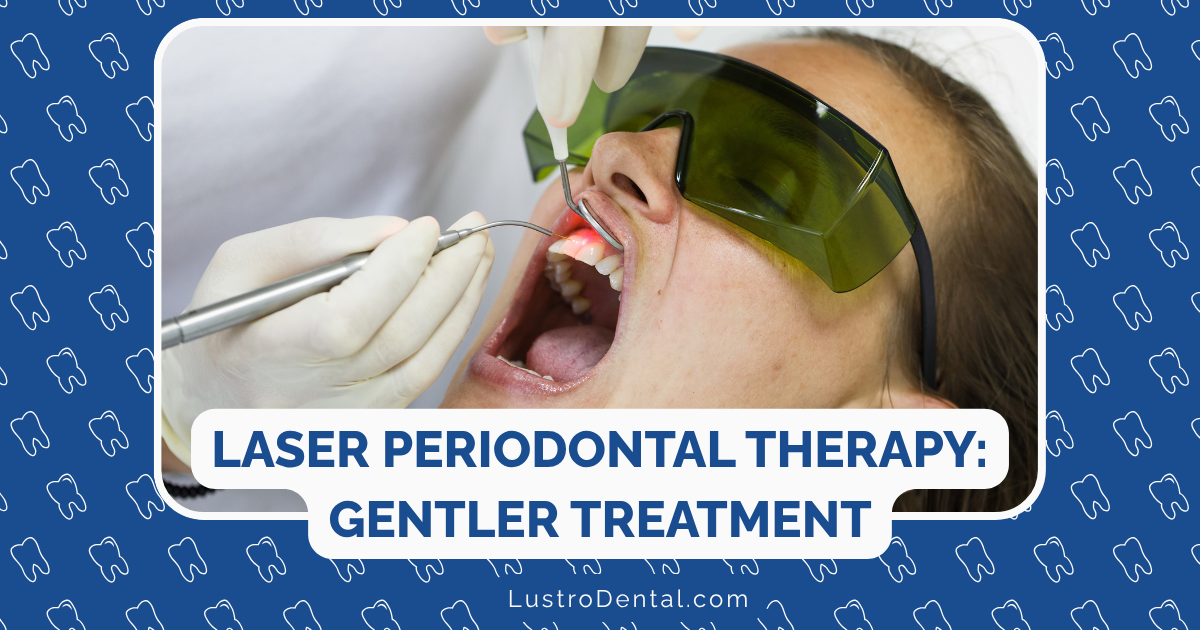
When it comes to gum disease treatment, many patients imagine the traditional approach: scaling and root planing with metal instruments, potential surgical interventions, and a recovery period marked by discomfort. However, modern dentistry has evolved to offer a more patient-friendly alternative—laser periodontal therapy. This innovative approach is changing how we treat periodontal disease, providing gentler care with often superior outcomes.
Before diving into treatment options, it’s important to understand what we’re treating. Periodontal disease affects nearly half of Americans over 30, according to the Centers for Disease Control and Prevention (CDC). This inflammatory condition begins as gingivitis—characterized by red, swollen gums that bleed easily—and can progress to periodontitis, where the supporting structures of the teeth become damaged.
Left untreated, advanced periodontal disease leads to:
What makes periodontal disease particularly concerning is its connection to systemic health issues. Research published in the Journal of Periodontology has linked gum disease to heart disease, diabetes, respiratory conditions, and even certain cancers. This makes effective treatment not just a dental concern, but a whole-body health priority.
Traditional periodontal treatment typically follows a progression:
While effective, these approaches can be uncomfortable, require longer healing times, and may result in gum recession or increased sensitivity.
Laser periodontal therapy—particularly the FDA-cleared LANAP (Laser-Assisted New Attachment Procedure)—represents a significant advancement. According to the Academy of Periodontology, laser therapy offers a minimally invasive alternative that can achieve comparable or better results than traditional methods in many cases.
Dr. Samuel Low, Professor Emeritus at the University of Florida College of Dentistry and past president of the American Academy of Periodontology, notes: “Laser therapy has transformed our approach to treating periodontal disease, allowing us to achieve excellent results with significantly less patient discomfort.”
The LANAP procedure typically follows these steps:
The entire process can often be completed in two 2-hour sessions, with half the mouth treated in each session.
Research published in the International Journal of Periodontics & Restorative Dentistry has documented several advantages of laser periodontal therapy:
Unlike traditional surgery that requires cutting and suturing of gum tissue, laser therapy is minimally invasive. The laser selectively removes diseased tissue while preserving healthy gum tissue.
A comparative study in the Journal of Clinical Periodontology found that patients who received laser therapy reported significantly less pain and required fewer pain medications than those who underwent traditional surgery. Most patients return to their normal activities within 24 hours.
The precision of laser technology means that more healthy tissue remains intact. This contrasts with traditional methods that may remove excessive gum tissue, leading to recession and sensitivity.
Perhaps most impressively, laser therapy doesn’t just remove diseased tissue—it actively promotes healing. The Journal of the American Dental Association has published research showing that LANAP can stimulate regeneration of bone and connective tissue attachment in ways traditional treatments cannot consistently achieve.
The laser sterilizes as it works, killing bacteria in periodontal pockets and creating an optimal environment for healing. This antimicrobial effect can help prevent reinfection during the healing process.
While laser therapy offers impressive benefits, it’s not universally applicable for all cases. Ideal candidates include:
Factors that might influence suitability include:
A comprehensive evaluation by a periodontist or dentist trained in laser therapy is essential for determining the most appropriate treatment approach.
Many patients report that laser periodontal therapy is remarkably different from what they expected based on previous dental experiences or stories they’ve heard about gum surgery.
The cost of laser periodontal therapy varies based on the extent of treatment needed, geographic location, and provider expertise. While typically more expensive per session than conventional cleaning, when comparing to traditional surgical interventions, the cost difference often narrows.
Many dental insurance plans now provide at least partial coverage for laser therapy, recognizing its effectiveness. According to the American Academy of Periodontology, coverage has improved significantly in recent years as evidence supporting laser treatment has accumulated.
Patients should discuss financial considerations with their dental provider, as many offices offer payment plans or financing options to make treatment more accessible.
Regardless of treatment method, periodontal disease requires ongoing management. Studies in the Journal of Clinical Periodontology indicate that patients who adhere to recommended maintenance protocols experience significantly better long-term outcomes.
A typical maintenance program includes:
Laser periodontal therapy represents a significant advancement in our approach to treating gum disease. By offering a less invasive, more comfortable experience with excellent clinical outcomes, this technology is helping more patients address periodontal disease before it leads to tooth loss or contributes to systemic health problems.
As with any dental treatment, the key to success lies in working with qualified professionals who can determine the most appropriate approach for your specific situation. If you’re facing periodontal disease, discussing laser therapy with your dental provider could open the door to a more comfortable treatment experience and a healthier smile for years to come.
Have you experienced laser periodontal therapy? Share your experience in the comments below!