🦷 General Care
✨ Treatments
👶 Family Care
💚 Wellness
💡 Resources

🦷 General Care
✨ Treatments
👶 Family Care
💚 Wellness
💡 Resources

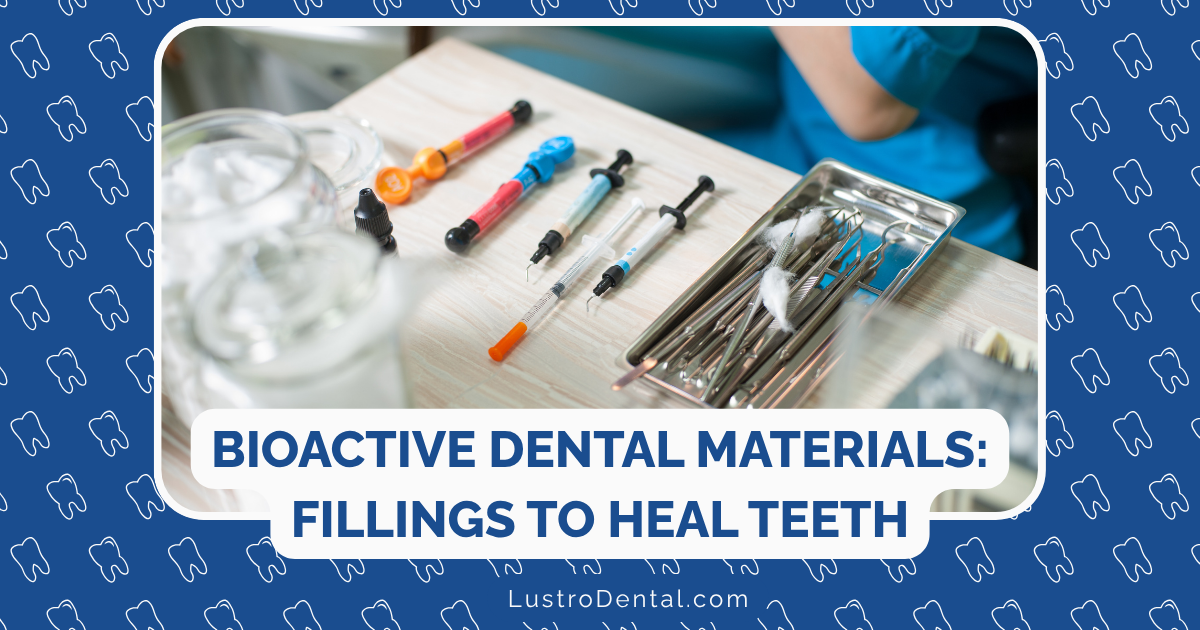
For generations, dental fillings have served a single purpose: to replace tooth structure lost to decay or damage. Traditional materials like amalgam (silver fillings) and even conventional composite resins (tooth-colored fillings) essentially function as passive space-fillers—they restore the tooth’s shape and function but do little else. However, a revolutionary category of dental materials is changing this paradigm. Bioactive dental materials don’t just fill the void—they actively participate in the healing process, potentially extending the life of your restorations and protecting your teeth from future decay.
Unlike traditional restorative materials that remain inert once placed, bioactive materials interact with the surrounding tooth structure in beneficial ways. But what exactly makes a dental material “bioactive”?
According to the FDI World Dental Federation, a truly bioactive dental material must meet specific criteria:
Dr. Sarah Johnson, a researcher in dental biomaterials at the American Dental Association, explains: “Bioactive materials represent a fundamental shift in our approach to restorative dentistry. Instead of simply replacing what’s lost, we’re now using materials that can help prevent further damage and potentially even promote healing of the tooth structure.”
Bioactive dental materials function through several mechanisms that set them apart from conventional fillings:
One of the primary ways bioactive materials promote healing is through the release of beneficial ions:
A hallmark of bioactive materials is their ability to form mineral deposits at the interface between the restoration and tooth:
Many bioactive materials exhibit antibacterial effects through various mechanisms:
Dr. Michael Chen, a clinical dentist specializing in minimally invasive techniques, notes: “What’s particularly exciting about bioactive materials is that they’re actively working to protect the tooth long after the patient leaves the office. It’s like having a continuous dental treatment taking place within the filling itself.”
Several categories of bioactive materials are currently available for clinical use:
Glass ionomers were among the first materials to demonstrate bioactive properties:
Research published in Frontiers in Dental Medicine highlights that GICs release fluoride ions that form fluorohydroxyapatite, which is more resistant to acid demineralization than natural tooth structure.
These hybrid materials combine the bioactivity of glass ionomers with improved mechanical properties:
A meta-analysis in PMC found that in deciduous teeth, RMGICs showed a lower risk of secondary caries compared to conventional GICs, with a relative risk of 0.56.
The newest category of bioactive materials combines the strength and aesthetics of traditional composites with bioactive properties:
According to Pulpdent, their ACTIVA BioACTIVE materials support natural remineralization and provide defense against secondary caries through mineral apatite formation at the material-tooth interface.
Originally developed for endodontic (root canal) procedures, these materials are now being used in restorative dentistry:
Research from Frontiers in Dental Medicine indicates that Biodentine has mechanical resistance similar to human dentin and is particularly effective in pulp therapy due to its biocompatibility and bioactivity.
Ongoing research is developing even more advanced bioactive materials:
The bioactive approach to dental restorations offers several potential advantages for patients:
Perhaps the most significant benefit is protection against secondary (recurrent) caries—decay that forms at the margins of existing restorations:
A meta-analysis published in PMC found that glass ionomer cements demonstrated a lower risk of secondary caries in permanent teeth compared to resin composites and amalgam, with a relative risk of 0.33.
By actively working to strengthen the tooth-restoration interface and combat bacterial challenges, bioactive materials may help restorations last longer:
Bioactive materials support the principles of minimally invasive dentistry:
Dr. Lisa Rodriguez, who focuses on conservative dentistry, notes: “Bioactive materials align perfectly with the minimally invasive approach. When we can place a restoration that not only replaces what’s lost but also helps protect and potentially heal the surrounding tooth structure, we’re providing truly comprehensive care.”
For deeper restorations where the pulp (nerve) of the tooth may be at risk:
According to JADA Foundational Science, clinical trials show high success rates (>85%) in healing apical periodontitis using bioactive materials in regenerative endodontic procedures.
While laboratory studies consistently demonstrate the potential benefits of bioactive materials, what matters most is how they perform in actual patients. Here’s what current research tells us:
A systematic review published in the Journal of the American Dental Association evaluated 80 studies on bioactive dental materials, including 4 randomized clinical trials. While the evidence for clinical benefits remains evolving due to the predominance of in vitro studies, several important findings emerged:
A concern with any new dental material is whether its bioactive properties come at the expense of mechanical strength and durability. Research published in Nature evaluated the mechanical properties of several commercial bioactive materials:
Beyond the scientific measurements, patient experiences with bioactive materials have generally been positive:
James, a patient who received bioactive fillings after experiencing frequent replacement of traditional composite restorations, shares: “My dentist explained that these new fillings could actually help protect my teeth from getting more cavities. After having had so many fillings replaced over the years, the idea that these might last longer and actually help my teeth was really appealing.”
Despite their promising benefits, bioactive materials are not without limitations:
While bioactive materials offer significant advantages in many situations, they may not be the best choice for every restoration:
Research in bioactive dental materials continues to advance rapidly, with several exciting developments on the horizon:
Researchers are developing materials with even greater remineralization potential:
Next-generation bioactive materials aim to overcome current mechanical limitations:
The future may bring bioactive materials tailored to individual patient needs:
Dr. Robert Thompson, a researcher in dental biomaterials, predicts: “Within the next decade, I believe we’ll see bioactive materials become the standard of care for most restorative procedures. The ability to not just restore but actually help heal teeth is too significant an advantage to ignore.”
If you’re considering bioactive materials for your next dental restoration, here are some important points to discuss with your dentist:
It’s important to have realistic expectations about bioactive materials:
While bioactive materials may have higher initial costs:
Bioactive dental materials represent a significant paradigm shift in restorative dentistry—moving from passive repair to active participation in the tooth’s defense and healing processes. While traditional materials simply fill the void left by decay, bioactive materials work continuously to strengthen the tooth-restoration interface, combat bacteria, and promote remineralization.
For patients, especially those at higher risk for decay, these materials offer the potential for longer-lasting restorations, reduced incidence of secondary caries, and overall better long-term outcomes. As research continues and these materials evolve, we can expect even more impressive capabilities from the fillings of the future.
The next time you need a filling, consider discussing bioactive options with your dentist. Your restoration could do more than just fill a hole—it could actively help heal your tooth from within.
Have you had experience with bioactive dental materials? We’d love to hear about your experience in the comments below!