🦷 General Care
✨ Treatments
👶 Family Care
💚 Wellness
💡 Resources

🦷 General Care
✨ Treatments
👶 Family Care
💚 Wellness
💡 Resources

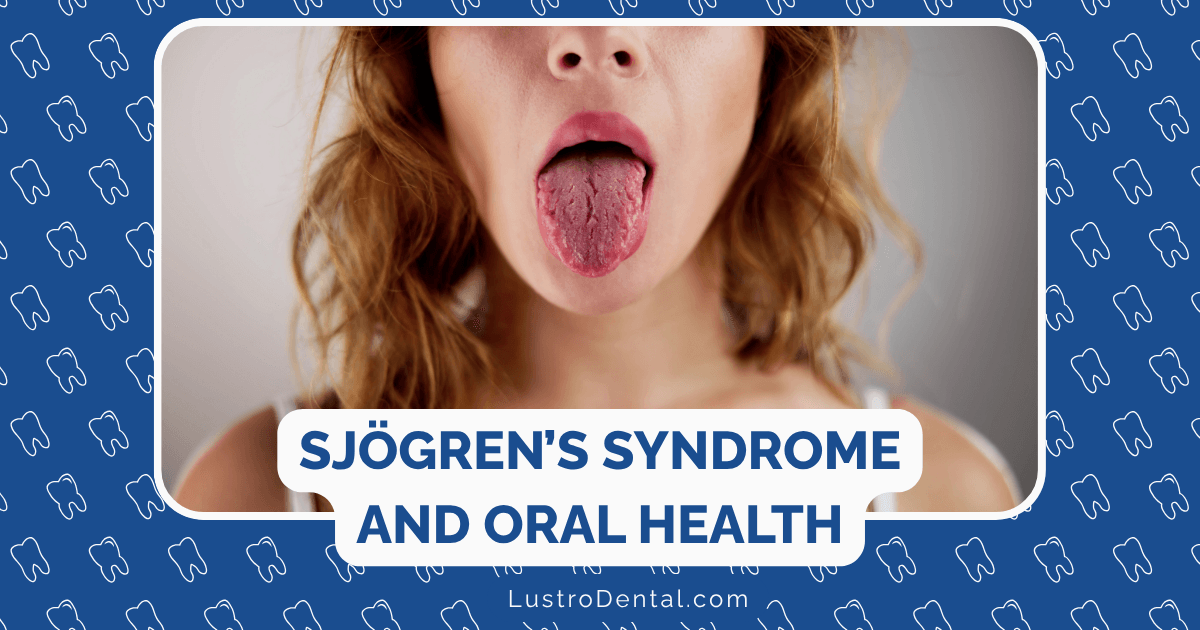
As a dental health advocate who has worked with numerous Sjögren’s syndrome patients throughout my career, I’ve witnessed firsthand the significant oral health challenges these individuals face. Sjögren’s syndrome—an autoimmune condition affecting approximately 3 million Americans—creates a perfect storm of oral health complications, with dry mouth (xerostomia) being the most prominent and problematic.
The impact of Sjögren’s on oral health extends far beyond mere discomfort. Without the protective and cleansing effects of adequate saliva, patients face dramatically increased risks of dental caries, oral infections, and difficulty with everyday functions like speaking, chewing, and swallowing.
In this comprehensive guide, I’ll share evidence-based strategies for managing the oral manifestations of Sjögren’s syndrome, with a focus on practical approaches that can significantly improve quality of life and oral health outcomes.
Before diving into management strategies, it’s important to understand the fundamental nature of Sjögren’s syndrome and how it affects oral health.
Sjögren’s syndrome is a chronic autoimmune disorder where the immune system mistakenly attacks moisture-producing glands, particularly the salivary and lacrimal (tear) glands. According to the American Dental Association, it affects approximately 0.5-1% of the population, with a striking 9:1 female-to-male ratio. Most cases are diagnosed between ages 40-60, though the condition can affect individuals of any age.
Sjögren’s can occur as:
To appreciate the challenges faced by Sjögren’s patients, we must understand what’s lost when salivary function diminishes. Saliva isn’t merely water—it’s a complex biofluid that serves multiple essential functions:
Dr. Sarah Chen, a specialist in oral medicine, explains: “When salivary function is compromised in Sjögren’s syndrome, we’re not just dealing with dryness—we’re dealing with the loss of a sophisticated defense system that protects the entire oral cavity.”
According to research published in PMC, Sjögren’s syndrome can lead to numerous oral health issues:
These manifestations significantly impact quality of life. According to the Sjögren’s Foundation, patients spend an average of $1,580 annually on dental care—the single largest healthcare expense related to their condition.
Managing the oral manifestations of Sjögren’s syndrome requires a multifaceted approach tailored to each patient’s specific needs and disease severity.
For immediate relief of dry mouth symptoms, saliva substitutes can be invaluable:
According to a 2025 study in the Journal of Pharmaceutical and Biomedical Sciences, while these products provide temporary relief, they don’t stimulate natural saliva production or provide all the protective benefits of natural saliva.
Dr. Michael Rodriguez, a prosthodontist specializing in Sjögren’s management, recommends: “For maximum benefit, patients should apply saliva substitutes strategically throughout the day—before eating to aid in chewing and swallowing, before speaking for extended periods, and always before bedtime when natural saliva production is at its lowest.”
Specific recommendations include:
For patients with some remaining salivary gland function, stimulating natural saliva production can be more effective than substitutes alone.
Two primary medications are FDA-approved for treating xerostomia in Sjögren’s syndrome:
Both are cholinergic agonists that stimulate muscarinic receptors in salivary glands. According to the American Dental Association, these medications can increase salivary flow for 1-2 hours after administration.
However, these medications have limitations:
Several approaches can stimulate saliva without medication:
Dimensions of Dental Hygiene notes that gustatory (taste) stimulation can be particularly effective, with citrus and sour flavors providing the strongest salivary response.
Given the dramatically increased caries risk in Sjögren’s patients, aggressive preventive measures are essential.
The Sjögren’s Syndrome Foundation recommends comprehensive fluoride protocols:
Dr. Jennifer Lee, a dental researcher specializing in Sjögren’s syndrome, emphasizes: “For Sjögren’s patients, standard fluoride exposure from regular toothpaste and community water is simply inadequate. Higher-concentration, more frequent fluoride application is necessary to counteract the extreme caries risk.”
Beyond fluoride, other remineralization approaches can help:
While the American Dental Association notes that evidence for these non-fluoride agents is less robust than for fluoride, they may provide additional benefit as part of a comprehensive approach.
Dietary guidance is crucial for caries prevention:
Oral candidiasis (thrush) affects Sjögren’s patients at ten times the rate of the general population, according to research in PMC.
Common presentations include:
Dimensions of Dental Hygiene outlines several treatment strategies:
Treatment typically continues for 2-3 days beyond the resolution of symptoms to prevent recurrence.
Given the high recurrence rate, preventive measures are essential:
Maintaining periodontal health in Sjögren’s patients requires additional vigilance.
The College of Dental Hygienists of Ontario recommends:
Home care recommendations include:
For Sjögren’s patients with missing teeth, prosthetic management requires special considerations.
According to the American Dental Association, Sjögren’s patients often struggle with dentures due to:
Adaptations may include:
A systematic review cited by the ADA found a 4.1% failure rate of dental implants in Sjögren’s patients, with most failures occurring within the first year. However, this still represents a relatively high success rate, making implants a viable option for many patients.
Dr. Rodriguez notes: “While implants generally perform well in Sjögren’s patients, we typically recommend more frequent monitoring during the first year and meticulous home care protocols to ensure long-term success.”
Several innovative approaches show promise for future management of oral manifestations in Sjögren’s syndrome:
A Finnish study reported by DentistryIQ is investigating Lumoral therapy—a light-activated antibacterial treatment that combines mechanical cleaning with photobiomodulation to:
According to the Journal of Pharmaceutical and Biomedical Sciences, researchers are developing:
While still experimental, research is progressing on:
Given the variability in Sjögren’s syndrome presentation and progression, management must be individualized.
A comprehensive assessment should include:
Management typically follows a staged approach:
Optimal management requires collaboration between:
Living with Sjögren’s syndrome presents significant challenges, particularly for oral health. However, with a comprehensive, personalized approach to management, patients can maintain oral health, function, and comfort despite these challenges.
As dental professionals, our role extends beyond clinical interventions to include education, support, and advocacy for these patients. By understanding the complex interplay between Sjögren’s syndrome and oral health, we can provide care that significantly improves quality of life.
For patients with Sjögren’s syndrome, knowledge is power. Understanding the condition and actively participating in management strategies can make a tremendous difference in outcomes. With proper care and vigilance, the oral complications of Sjögren’s syndrome can be effectively managed, allowing patients to maintain not just their oral health, but their dignity, comfort, and overall wellbeing.
Do you have experience with Sjögren’s syndrome, either as a patient or a provider? What strategies have you found most effective for managing dry mouth and related issues? Share your insights in the comments below.