Autoimmune Disorders and Oral Manifestations: Recognition and Care
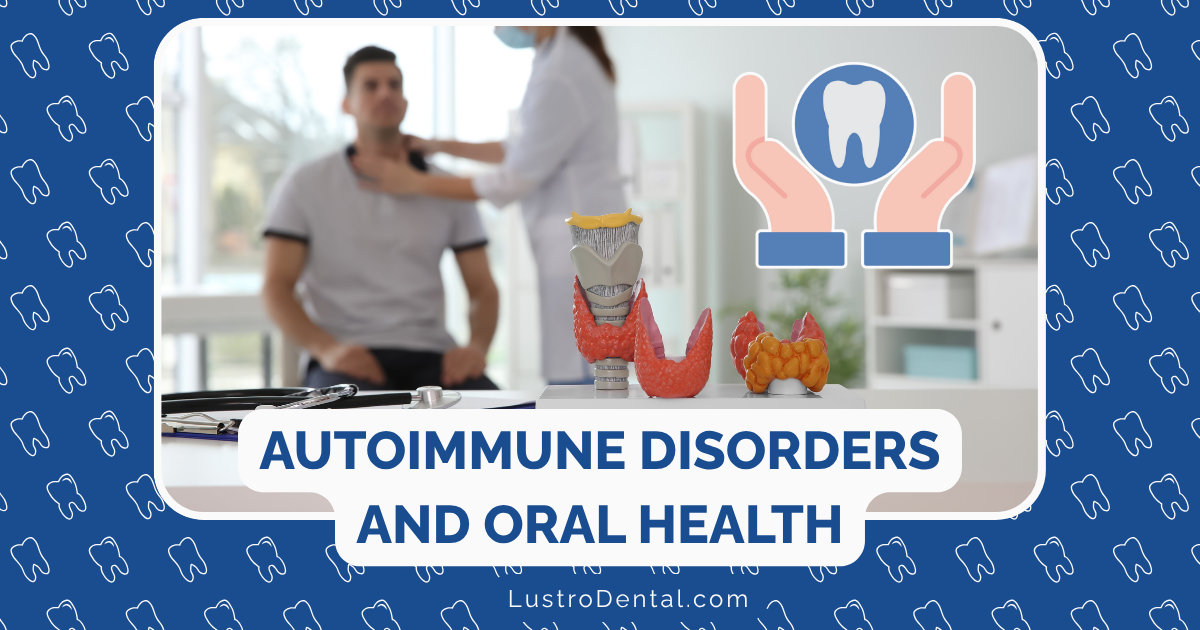
The mouth serves as a mirror reflecting our overall health, often revealing the first signs of systemic conditions long before they manifest elsewhere in the body. This is particularly true for autoimmune disorders—conditions where the immune system mistakenly attacks the body’s own tissues. According to research published in PMC, oral manifestations are frequently the first indicators of autoimmune diseases, making dental professionals crucial in early detection and diagnosis.
With autoimmune diseases affecting approximately 5-8% of Americans and their prevalence increasing by about 12.5% over the past three decades according to Science Direct, understanding their oral manifestations has never been more important—both for healthcare providers and patients alike.
This comprehensive guide explores the common oral manifestations of autoimmune disorders, how to recognize them, and strategies for management and care.
Autoimmune disorders occur when the immune system fails to distinguish between foreign invaders and the body’s own cells, resulting in an attack on healthy tissues. These conditions can affect virtually any part of the body, including the oral cavity.
Several factors contribute to the development of autoimmune diseases:
Hormonal factors (explaining the higher prevalence in women)
Stress and other lifestyle factors
While each autoimmune condition has its unique characteristics, they share common features like inflammation, tissue damage, and periods of flare-ups and remissions. Many also share oral manifestations that can significantly impact quality of life.
Common Autoimmune Disorders with Oral Manifestations
Sjögren’s Syndrome
Sjögren’s syndrome is perhaps the autoimmune condition most closely associated with oral symptoms.
Prevalence and Demographics
Affects 0.5-5% of the general population
Female predominance (9:1 ratio)
Typically presents around age 50
Can occur alone (primary) or alongside other autoimmune conditions (secondary)
Oral Manifestations
The hallmark oral symptom of Sjögren’s syndrome is xerostomia (dry mouth), resulting from lymphocytic infiltration of the salivary glands. This dryness leads to:
Direct immunofluorescence to rule out other autoimmune conditions
Careful medical history to identify potential triggers
Pemphigus Vulgaris
Pemphigus vulgaris is a potentially life-threatening autoimmune blistering disease.
Prevalence and Demographics
Rare condition, affecting 0.1-0.5 per 100,000 people
Primarily affects individuals in their 40s and 50s
No significant gender predilection
Oral Manifestations
Oral manifestations are present in over 50% of cases and are often the first sign of the disease:
Fragile blisters that quickly rupture, leaving painful erosions
Nikolsky sign (epithelial detachment with slight pressure)
Widespread ulcerations that may affect any oral mucosal surface
Difficulty eating and speaking due to pain
Secondary infections due to compromised mucosal barrier
Diagnostic Approach
Diagnosis typically involves:
Clinical evaluation of lesions
Biopsy for histopathological examination
Direct and indirect immunofluorescence studies
Blood tests for anti-desmoglein antibodies
Mucous Membrane Pemphigoid
Mucous membrane pemphigoid (MMP) is a chronic autoimmune blistering disorder that primarily affects mucous membranes.
Prevalence and Demographics
Rare condition, with an estimated incidence of 1.3-2.0 per million per year
Female predominance (2:1 ratio)
Typically affects individuals over 50 years of age
Oral Manifestations
Oral manifestations are common and include:
Desquamative gingivitis (present in 94% of cases)
Vesicles and bullae that rupture, leaving ulcerations
Erosions covered by pseudomembranes
Scarring in severe cases
Adhesions and restricted mobility of the tongue or other oral structures
Diagnostic Approach
Diagnosis typically involves:
Clinical evaluation of lesions
Biopsy for histopathological examination
Direct immunofluorescence showing linear deposits at the basement membrane zone
Indirect immunofluorescence and ELISA for circulating autoantibodies
Behcet’s Disease
Behcet’s disease is a rare, chronic inflammatory disorder characterized by recurrent oral and genital ulcers, along with various systemic manifestations.
Prevalence and Demographics
Higher prevalence in Mediterranean and Asian populations
Typically affects young adults (20-40 years)
Slightly more common in men in Middle Eastern countries, but equal gender distribution or female predominance in Western countries
Oral Manifestations
Oral ulcers are a defining feature of Behcet’s disease:
Recurrent, painful aphthous-like ulcers
Multiple lesions (often more than 3 at a time)
Round or oval shape with well-defined borders
Yellowish-white necrotic base surrounded by an erythematous halo
Healing without scarring in 7-14 days
High frequency of recurrence (at least 3 episodes per year)
Diagnostic Approach
Diagnosis typically involves:
Clinical evaluation based on International Criteria for Behcet’s Disease
Requires at least two of the three key features: oral ulcers, genital ulcers, or eye inflammation
Exclusion of other conditions with similar presentations
Pathergy test (skin hypersensitivity test) may be performed
Diagnostic Approaches for Oral Autoimmune Manifestations
Diagnosing autoimmune disorders based on oral manifestations requires a systematic approach:
Clinical Examination
Thorough examination of all oral mucosal surfaces
Documentation of lesion characteristics (location, size, color, texture, etc.)
Assessment of salivary flow and signs of xerostomia
Evaluation of periodontal health
Histopathological Examination
Biopsy of representative lesions
Specific staining techniques to identify characteristic features
Evaluation of inflammatory patterns and cellular changes
Immunological Studies
Direct immunofluorescence to detect tissue-bound antibodies
Indirect immunofluorescence to identify circulating antibodies
Enzyme-linked immunosorbent assay (ELISA) for specific autoantibodies
Laboratory Tests
Complete blood count
Inflammatory markers (ESR, CRP)
Autoantibody panels specific to suspected conditions
Salivary flow rate measurement and analysis
Imaging Studies
Salivary gland ultrasonography
Sialography
MRI in selected cases
Management and Treatment Strategies
Management of oral manifestations of autoimmune disorders typically involves a multifaceted approach:
Topical Therapies
Corticosteroids
Forms: Ointments, gels, rinses, or adhesive pastes
Monitoring for oral infections due to immunosuppression
Careful planning for dental procedures during disease remission when possible
The Importance of Multidisciplinary Care
According to Elizabeth Oral Surgery Group, collaboration between healthcare providers is essential for comprehensive care of patients with autoimmune disorders:
Empowering patients with knowledge and self-care strategies is crucial for managing oral manifestations of autoimmune disorders:
Daily Oral Hygiene
Gentle brushing with a soft-bristled toothbrush
Non-irritating toothpaste (free of sodium lauryl sulfate for sensitive mucosa)
Careful flossing or use of interdental brushes
Regular use of prescribed mouthwashes or rinses
Symptom Monitoring
Keeping a symptom diary
Photographing oral lesions to track changes
Noting triggers that worsen symptoms
Recognizing signs of infection requiring prompt attention
Lifestyle Modifications
Avoiding spicy, acidic, or hard foods during flares
Staying well-hydrated
Avoiding tobacco and alcohol
Stress management techniques
Adequate rest and nutrition
Emerging Treatments and Research
The field of autoimmune disease management continues to evolve, with several promising approaches under investigation:
Targeted Biologics
New monoclonal antibodies targeting specific immune pathways involved in autoimmune diseases
Low-Level Laser Therapy
Showing promise for pain reduction and healing promotion in oral lesions
Stem Cell Therapy
Potential for regeneration of damaged salivary glands in Sjögren’s syndrome
Photodynamic Therapy
Emerging as a treatment option for oral lichen planus and other mucosal conditions
Nutraceutical Agents
Compounds like curcumin, aloe vera, and green tea polyphenols being studied as adjunctive therapies
Conclusion: The Critical Role of Oral Health in Autoimmune Management
The mouth often serves as an early warning system for autoimmune disorders, with oral manifestations frequently preceding other systemic symptoms. Recognizing these signs early can lead to prompt diagnosis and treatment, potentially altering the disease course and improving quality of life.
For patients living with autoimmune disorders, maintaining optimal oral health is not just about comfort—it’s an essential component of overall disease management. By understanding the specific oral manifestations of these conditions and implementing appropriate care strategies, both healthcare providers and patients can work together to minimize complications and enhance well-being.
The bidirectional relationship between oral health and autoimmune conditions underscores the importance of a holistic approach to care, where dental professionals are integral members of the healthcare team. Through vigilant monitoring, preventive measures, and targeted interventions, the impact of autoimmune disorders on oral health can be significantly mitigated.
Do you have an autoimmune condition that affects your oral health? Share your experiences and management strategies in the comments below to help others navigating similar challenges.