🦷 General Care
✨ Treatments
👶 Family Care
💚 Wellness
💡 Resources

🦷 General Care
✨ Treatments
👶 Family Care
💚 Wellness
💡 Resources

Dental implants have revolutionized the way we approach tooth replacement, offering solutions that closely mimic natural teeth in both function and appearance. As we move through 2025, the field continues to evolve rapidly, with new technologies, materials, and techniques expanding the possibilities for patients seeking to restore their smiles.
Whether you’re missing a single tooth, multiple teeth, or require a full-arch restoration, today’s implant options are more diverse and sophisticated than ever before. This comprehensive guide will walk you through everything you need to know about dental implants in 2025—from cutting-edge technologies to cost considerations and everything in between.
As someone who’s passionate about helping patients understand their dental options, I’m excited to share these advances that are making implant treatment more accessible, comfortable, and successful than ever before.
Before diving into specific options, let’s establish a clear understanding of what dental implants are and how they work:
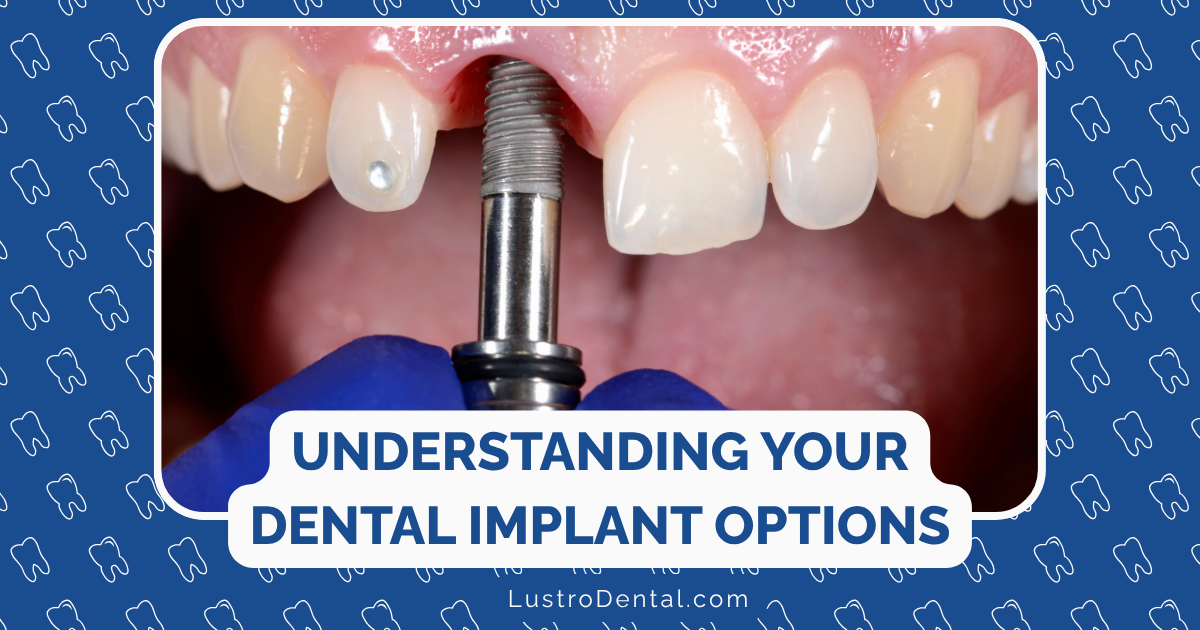
A dental implant is an artificial tooth root, typically made of biocompatible materials like titanium or zirconia, that’s surgically placed into the jawbone. This implant serves as a foundation for attaching replacement teeth—single crowns, bridges, or even full dentures.
The standard dental implant system consists of three components:
The success of dental implants relies on a biological process called osseointegration—the direct structural and functional connection between living bone and the surface of the implant. This process typically takes 2-6 months, depending on various factors including implant type, placement location, and patient health.
According to the American Academy of Implant Dentistry, the success rate for dental implants is now approximately 98%, making them one of the most reliable dental procedures available.
The field of implant dentistry has expanded dramatically, offering solutions for virtually every tooth replacement scenario. Here’s a breakdown of your options in 2025:
What they are: Individual implants that replace a single missing tooth, consisting of one implant fixture, an abutment, and a crown.
Best for: Patients missing one tooth or several non-adjacent teeth.
Latest innovations:
Dr. Sarah Johnson, a prosthodontist at the American College of Prosthodontists, notes: “The advancements in single-tooth implants have made them virtually indistinguishable from natural teeth. With today’s materials and techniques, even dentists sometimes have trouble identifying which tooth is the implant in a full smile.”
What they are: Bridges supported by two or more implants that replace multiple adjacent missing teeth.
Best for: Patients missing several adjacent teeth who want a fixed solution without grinding down healthy adjacent teeth (as required for traditional bridges).
Latest innovations:
“Implant-supported bridges have become a go-to solution for multiple missing teeth,” explains Dr. Michael Chen, an implantologist. “The ability to replace several teeth without compromising adjacent healthy teeth represents a significant advantage over traditional bridges.”
What they are: Complete replacement of all teeth in an arch using multiple implants to support a full set of prosthetic teeth.
Best for: Patients who are missing all teeth in an arch or have severely compromised remaining teeth.
Options include:
This approach uses four to six strategically placed implants to support an entire arch of fixed teeth. The posterior implants are angled to maximize contact with available bone and avoid anatomical structures like the sinus cavities or nerve canals.
2025 innovations:
These removable dentures snap onto implants via attachment systems, offering improved stability compared to conventional dentures while being more affordable than fixed options.
2025 innovations:
These screw-retained prostheses are permanently attached to implants but can be removed by a dentist for maintenance.
2025 innovations:
What they are: Smaller-diameter implants (typically 1.8-3.3mm compared to standard 3.4-5.8mm implants) that require less bone volume for placement.
Best for:
2025 innovations:
Dr. Lisa Rodriguez, a specialist in implant dentistry, explains: “Mini implants have come a long way in recent years. While they were once considered primarily for temporary or transitional use, improvements in design and surgical protocols have made them a viable long-term option for specific situations.”
What they are: Implants with reduced length (typically 6-8mm compared to traditional 10-16mm implants) designed for areas with limited vertical bone height.
Best for: Patients with insufficient bone height who want to avoid extensive bone grafting procedures.
2025 innovations:
According to research published in the International Journal of Oral & Maxillofacial Implants, short implants now show 5-year success rates comparable to standard implants when properly placed and restored.
What they are: Metal-free implants made from zirconium dioxide (zirconia), offering an alternative to traditional titanium implants.
Best for:
2025 innovations:
“The demand for zirconia implants has grown significantly,” notes Dr. James Wilson, a holistic dentist. “Not only do they address metal sensitivity concerns, but their white color eliminates the risk of grayish discoloration around the gumline that can sometimes occur with titanium implants.”
The field of implant dentistry continues to evolve rapidly, with several technologies significantly enhancing outcomes:
CBCT (Cone Beam Computed Tomography) has become the standard for implant planning, providing detailed 3D images of bone structure, nerve locations, and sinus positions. In 2025, these systems offer:
Digital planning software combined with surgical guides has revolutionized implant placement:
A 2024 study in the Journal of Dental Research found that guided implant surgery reduces placement deviation by up to 70% compared to freehand techniques.
The combination of intraoral scanning, CAD/CAM technology, and in-office milling has made same-day implant restorations increasingly common:
Implant surfaces have evolved significantly, with features designed to enhance osseointegration:
Advanced approaches to bone and tissue regeneration have expanded implant candidacy:
Thanks to technological advances, more patients than ever are candidates for implant treatment:
Modern implant solutions have expanded options for patients previously considered poor candidates:
Patients with bone loss: Techniques like bone grafting, sinus lifts, ridge augmentation, and the use of short or angled implants have made treatment possible for many patients with significant bone loss.
Medically compromised patients: Improved protocols have made implant treatment safer for patients with controlled conditions like diabetes or osteoporosis, though careful case selection and monitoring remain essential.
Patients with periodontitis: With proper periodontal therapy before implant placement and rigorous maintenance afterward, patients with a history of gum disease can now enjoy successful implant treatment.
Dr. Robert Garcia, an oral surgeon at the American Association of Oral and Maxillofacial Surgeons, explains: “The advances in regenerative techniques and implant design have dramatically expanded the pool of potential implant candidates. We’re now able to successfully treat many patients who would have been turned away just a few years ago.”
The implant journey typically involves several phases, though modern protocols have streamlined the process considerably:
Dental implant treatment represents a significant investment in your oral health and quality of life. Here’s what to expect cost-wise in 2025:
Several variables influence the total investment required:
Several approaches can help make implant treatment more affordable:
Dr. Lisa Williams, a financial coordinator at a dental implant center, advises: “When evaluating costs, consider the long-term value. Quality implant treatment may have a higher upfront cost but often proves more economical over time compared to alternatives that require frequent replacement or adjustment.”
With proper care, dental implants can last decades or even a lifetime. Here’s how to protect your investment:
While implants offer numerous advantages, it’s worth considering how they compare to other tooth replacement options:
Advantages of implants:
Advantages of bridges:
Advantages of implants:
Advantages of partials:
Advantages of implant solutions:
Advantages of conventional dentures:
Looking beyond 2025, several exciting developments are on the horizon:
Implants with embedded sensors that can:
Next-generation materials that:
Advancements in bioprinting may eventually allow for:
Research continues into using stem cells to:
When considering dental implants, ask yourself and your dental provider these key questions:
Dental implants in 2025 represent the pinnacle of tooth replacement technology, offering solutions that closely mimic natural teeth in both function and appearance. With continued advancements in materials, techniques, and digital technologies, implant treatment has become more accessible, predictable, and comfortable than ever before.
Whether you’re missing a single tooth or require full-mouth rehabilitation, today’s diverse implant options can be tailored to your specific needs, preferences, and budget. By working with a qualified implant dentist and following recommended maintenance protocols, you can enjoy the benefits of your implant restoration for decades to come.
The investment in dental implants is ultimately an investment in your quality of life—restoring not just your smile, but your ability to eat, speak, and interact with confidence. As technology continues to evolve, the future of implant dentistry looks brighter than ever, with even more innovative solutions on the horizon.
Have you had dental implant treatment or are you considering it? We’d love to hear about your experience in the comments below!