🦷 General Care
✨ Treatments
👶 Family Care
💚 Wellness
💡 Resources

🦷 General Care
✨ Treatments
👶 Family Care
💚 Wellness
💡 Resources

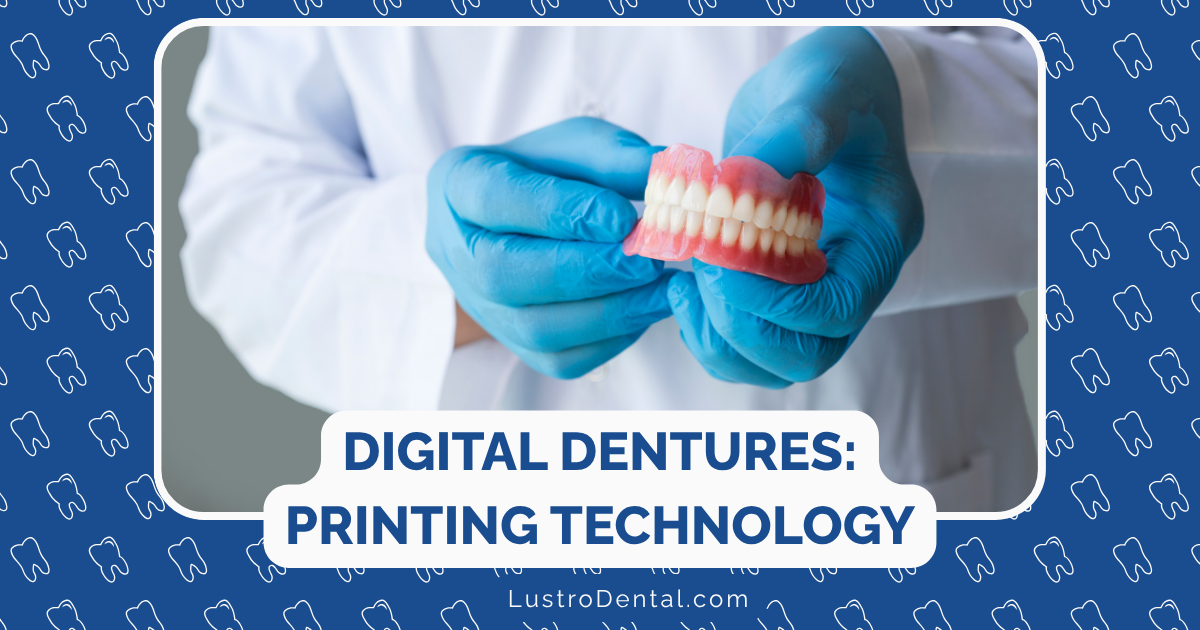
For decades, the process of creating dentures remained largely unchanged—a labor-intensive series of impressions, wax try-ins, and manual adjustments that often resulted in prosthetics that were, at best, a reasonable approximation of what patients needed. But the digital revolution has finally transformed denture fabrication, with 3D printing technology leading the charge toward more precise, comfortable, and personalized dental prosthetics.
As someone who’s witnessed this transformation firsthand, I can tell you that digital dentures represent one of the most significant advances in prosthetic dentistry of the past century. Let’s explore how this technology is creating better-fitting dentures and changing patients’ lives in the process.
To understand the magnitude of the digital denture revolution, we need to first look at the traditional process most patients have endured for generations:
This process typically required 4-6 appointments spread over 4-6 weeks, with numerous opportunities for human error and material distortion along the way. According to the American College of Prosthodontists, patient satisfaction with traditional dentures hovers around 60%, with fit and comfort being primary concerns.
Digital denture fabrication leverages advanced technologies to create prosthetics with unprecedented accuracy and efficiency:
Instead of messy impression materials, digital dentures begin with intraoral scanning—a process that captures thousands of precise measurements of the oral tissues.
Dr. Sarah Johnson, a prosthodontist at Digital Denture Institute, explains: “Intraoral scanners can capture details down to 50 microns—about half the width of a human hair. This level of precision simply wasn’t possible with traditional impression materials, which can distort during setting, removal, or transportation.”
These digital impressions are converted into highly accurate 3D models that serve as the foundation for the entire denture design process.
Once the digital impressions are captured, specialized dental CAD software allows for precise design of every aspect of the denture:
“The CAD process gives us unprecedented control,” notes Dr. Michael Chen of Advanced Prosthetic Solutions. “We can make micro-adjustments that would be impossible with traditional waxing techniques, and we can preview the final result before fabrication begins.”
Once designed, the digital denture file is sent to manufacturing equipment that creates the physical prosthetic. There are two primary approaches:
Computer-controlled milling machines carve dentures from solid blocks of pre-polymerized resin. This subtractive manufacturing approach:
The most exciting advances are happening in additive manufacturing, where specialized 3D printers build dentures layer by layer:
According to research published in the Journal of Prosthodontics, 3D-printed dentures can achieve fit accuracy within 100 microns—approximately the thickness of a human hair—compared to 300+ microns with traditional methods.
The field is advancing rapidly, with several breakthrough technologies emerging in 2025:
The NextDent 300 MultiJet printer, introduced by 3D Systems in early 2025, represents a quantum leap in denture fabrication. This technology:
“The ability to print a complete denture as a single unit eliminates one of the biggest problems in traditional denture fabrication—the potential for teeth to debond from the base,” explains Lisa Rodriguez, CDT, a dental laboratory specialist at Digital Denture Solutions.
Material science has made remarkable strides, with new denture-specific resins offering:
Detax’s dx denture flex and Carbon’s FP3D resin, both introduced in 2025, represent the cutting edge of these material advances.
The latest digital denture systems incorporate automation throughout the workflow:
These automation features not only improve efficiency but also enhance consistency and reduce the potential for human error.
The advantages of digital dentures extend far beyond the technology itself:
Research published in the International Journal of Prosthodontics shows that patients report significantly higher comfort levels with digital dentures compared to traditional ones, particularly in the critical first weeks of wear.
This improved fit results from:
The digital workflow dramatically shortens the denture creation process:
For busy patients, this efficiency is a significant advantage. Dr. Robert Wilson of Contemporary Dental Prosthetics notes: “We can now deliver high-quality dentures to patients who simply couldn’t accommodate the traditional process in their schedules.”
Digital dentures offer superior aesthetics through:
The result is dentures that look more natural and better complement the patient’s facial features.
Perhaps one of the most underappreciated benefits is the ability to store the digital denture design indefinitely:
“If a patient loses or damages their denture, we can fabricate an exact duplicate from the stored digital file,” explains Dr. Jennifer Martinez of Digital Dental Solutions. “This capability alone has been transformative for many patients, especially those who travel frequently.”
Digital dentures typically offer:
These material advantages translate to longer-lasting prosthetics with fewer maintenance issues.
Clinical research is confirming what many practitioners have observed. A 2024 systematic review published in the Journal of Prosthetic Dentistry analyzed 22 studies comparing digital and conventional dentures, finding:
However, it’s worth noting that some studies found comparable patient satisfaction between digital and traditional dentures, particularly after adjustment periods. This suggests that while the digital process offers many advantages, skilled prosthodontists can still achieve excellent results with traditional methods.
Despite their many advantages, digital dentures aren’t without challenges:
The transition to digital workflows requires significant training and adaptation:
Many dental schools are now incorporating digital denture fabrication into their curricula, but for established practitioners, the learning curve can be steep.
While digital dentures can be more cost-effective in the long run, the initial investment in equipment and training is substantial:
For smaller practices, these costs can be prohibitive, though many are finding that digital denture services from centralized laboratories offer a viable alternative.
While rapidly improving, some digital denture materials still have limitations:
Dr. Lisa Nguyen of the Advanced Materials Research Institute notes: “Material science is advancing rapidly, but we’re still working to match all the properties of traditional denture materials in a printable format.”
The field continues to evolve rapidly, with several exciting developments on the horizon:
Research is underway to develop biocompatible materials that could:
Artificial intelligence is beginning to play a role in denture design:
As printing speeds increase and materials improve, same-day delivery of definitive (not just temporary) dentures is becoming possible:
According to industry forecasts from Dental Market Research, same-day definitive dentures are expected to be widely available by 2027.
If you’re considering dentures, here are some factors to consider when deciding between digital and traditional options:
The transition to digital dentures represents more than just a technological upgrade—it’s a fundamental shift in how we approach prosthetic dentistry. By combining precision digital scanning, computer-aided design, and advanced manufacturing techniques, dental professionals can now create dentures that fit better, look more natural, and can be delivered in less time than ever before.
While traditional denture fabrication still has its place, the evidence increasingly supports the advantages of digital workflows for most patients. As technology continues to advance and become more accessible, we can expect digital dentures to become the standard of care, improving outcomes and experiences for the millions of people who rely on dentures worldwide.
The future of dentures is digital, and that future is creating better-fitting prosthetics that enhance comfort, function, and confidence for patients everywhere.