🦷 General Care
✨ Treatments
👶 Family Care
💚 Wellness
💡 Resources

🦷 General Care
✨ Treatments
👶 Family Care
💚 Wellness
💡 Resources


If you’ve ever watched your grandparents pop their dentures out and plop them into a glass of water for the night, you might have a rather outdated impression of what dentures are like today. The clacking, slipping “false teeth” of yesteryear have undergone a remarkable transformation. Modern denture technology has revolutionized how we approach tooth replacement, offering solutions that are more comfortable, natural-looking, and functional than ever before.
Dentures have come a long way since the days of George Washington’s infamous (though mythical) wooden teeth. Early dentures were often made from ivory, bone, or even human teeth pulled from the dead—a rather macabre solution to tooth loss. By the 20th century, acrylic resin became the standard material, creating the classic “false teeth” many of us associate with our grandparents.
These traditional dentures came with a host of problems: they often fit poorly, caused sore spots, slipped during eating or speaking, and required messy adhesives. The artificial teeth looked unnaturally perfect—too white, too uniform, and obviously fake.
But that was then. This is now.
Modern dentures utilize advanced materials that prioritize both function and aesthetics. According to the American College of Prosthodontists, today’s prosthetics are crafted from high-quality biocompatible resins that are:
The artificial teeth themselves are made from advanced ceramics and composite materials that mimic the translucency, texture, and natural variations of real teeth. No more “chiclet” teeth that look like they came from a cartoon character!
“Modern denture materials have completely transformed what’s possible in terms of aesthetics,” says Dr. Jennifer Kalochie, a prosthodontist at the University of Pennsylvania School of Dental Medicine. “We can now create dentures that are virtually indistinguishable from natural teeth.”
Perhaps the most significant advancement in modern dentures is how they’re designed and created. Traditional dentures required multiple appointments with uncomfortable impressions using goopy materials that often triggered gag reflexes.
Today’s digital denture fabrication process is an entirely different experience:
Instead of messy impression materials, dentists now use intraoral scanners to create precise digital models of your mouth. These scanners capture thousands of data points in minutes, creating a highly accurate three-dimensional map of your oral tissues.
A 2023 study published in the Journal of Prosthodontics found that digital impressions for dentures resulted in 37% better fit accuracy compared to traditional methods.
Using specialized software, dentists and lab technicians can design every aspect of your dentures digitally. This allows for unprecedented precision in:
“The digital design process gives us control that was simply impossible with analog methods,” explains Dr. Michael Chen of Digital Denture Solutions. “We can make micro-adjustments to the design until it’s perfect, and the patient can even preview their new smile before fabrication begins.”
Once designed, modern dentures can be created through two primary methods:
Milling: Computer-controlled machines carve dentures from solid blocks of pre-polymerized resin, eliminating the shrinkage and porosity issues associated with traditional processing methods.
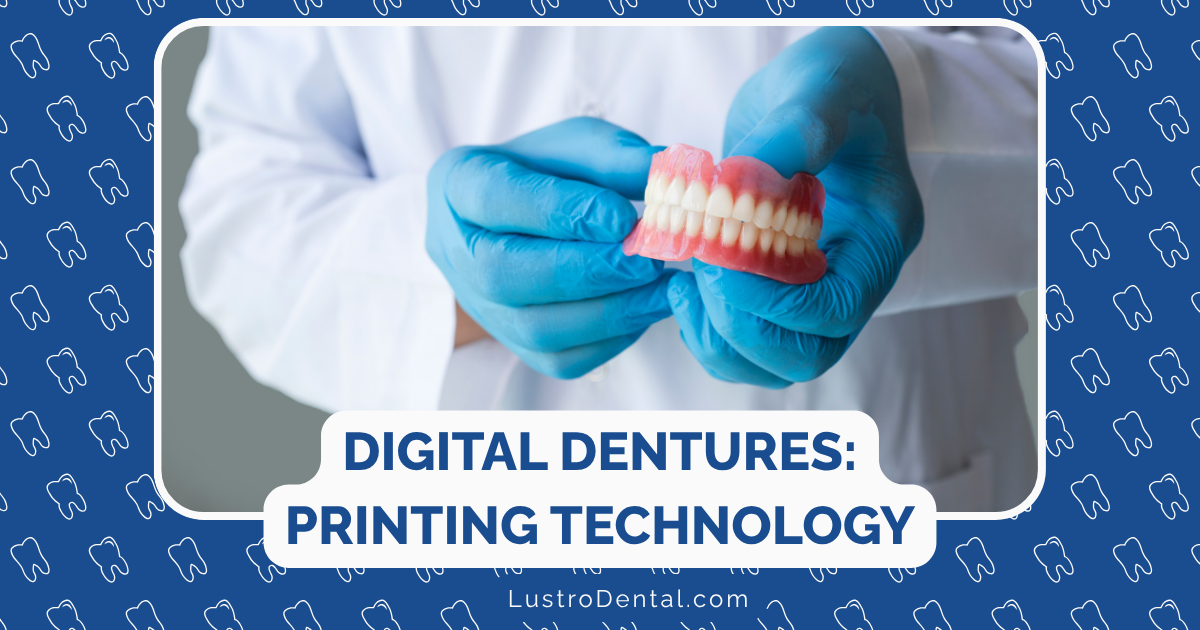
3D Printing: Layer by layer, specialized 3D printers build dentures using FDA-approved biocompatible resins like Dentca Denture Resin or Flexcera Dental Resin. This technology allows for incredible detail in both the denture base and teeth.
The result? Dentures that fit better, feel more comfortable, and look more natural than anything possible just a decade ago.
While improved materials and digital fabrication have significantly enhanced traditional dentures, the true revolution in tooth replacement comes from combining dentures with dental implants.
Implant-supported dentures are secured to titanium posts surgically placed in the jawbone, creating a stable foundation that eliminates the primary complaints about traditional dentures.
Depending on your needs and budget, your dentist might recommend:
Snap-in overdentures: These dentures attach to 2-4 implants using special connectors, allowing them to be removed for cleaning but providing much greater stability than traditional dentures. According to research from the Mayo Clinic, patients with implant-supported overdentures report 89% higher satisfaction compared to conventional dentures.
Fixed hybrid dentures: Sometimes called “All-on-4” or “Teeth in a Day,” these permanent dentures are secured to 4-6 implants and can only be removed by a dentist. They function essentially like natural teeth.
Full-arch implant bridges: For the ultimate in stability and function, a full set of individual crowns can be permanently attached to 6-8 implants.
Implant-supported dentures don’t just stay in place better—they fundamentally change the denture experience:
Perhaps the most significant difference between your grandparents’ dentures and today’s options is the level of customization possible. Modern dentures aren’t one-size-fits-all appliances; they’re personalized prosthetics designed specifically for you.
Advanced denture design now incorporates neuromuscular dentistry principles, considering how your jaw muscles function during speaking and chewing. This approach, highlighted by the International College of Cranio-Mandibular Orthopedics, results in dentures that work in harmony with your natural oral movements.
Today’s dentures can be customized to match your unique facial features and personal preferences:
“We can now create dentures that don’t just replace teeth but actually complement and enhance a person’s appearance,” says Dr. Sarah Johnson, cosmetic dentist at Aesthetic Dental Solutions. “The goal isn’t perfect teeth—it’s the perfect teeth for you.”
Let’s address the elephant in the room: modern dentures, particularly implant-supported options, typically cost more than traditional dentures. According to the American Dental Association, prices for advanced denture solutions can range from:
However, considering the improved quality of life, durability, and bone preservation benefits, many patients and dental professionals view advanced dentures as an investment rather than an expense. Many dental practices now offer financing options to make these solutions more accessible.
With so many options available, how do you know which denture solution fits your needs? Consider these factors:
A comprehensive consultation with a prosthodontist or denture specialist is the best way to explore your options. Many practices now offer digital previews that let you “test drive” your new smile before committing to treatment.
The denture revolution continues to advance. Research into bioprinting, where living tissues are created layer by layer, promises even more lifelike tooth replacement options in the future.
Scientists at Harvard’s Wyss Institute are exploring regenerative dentistry techniques that may one day allow us to regrow natural teeth. While these technologies remain on the horizon, they underscore how far we’ve come from the days of uncomfortable, unnatural-looking “false teeth.”
Modern denture technology has transformed what it means to live with replacement teeth. Through advanced materials, digital design and fabrication, and integration with dental implants, today’s dentures offer comfort, function, and aesthetics that were unimaginable just a generation ago.
If you’re facing tooth loss or struggling with older dentures, know that your options are vastly different from what your grandparents experienced. Today’s solutions can restore not just your smile, but your confidence and quality of life.