🦷 General Care
✨ Treatments
👶 Family Care
💚 Wellness
💡 Resources

🦷 General Care
✨ Treatments
👶 Family Care
💚 Wellness
💡 Resources

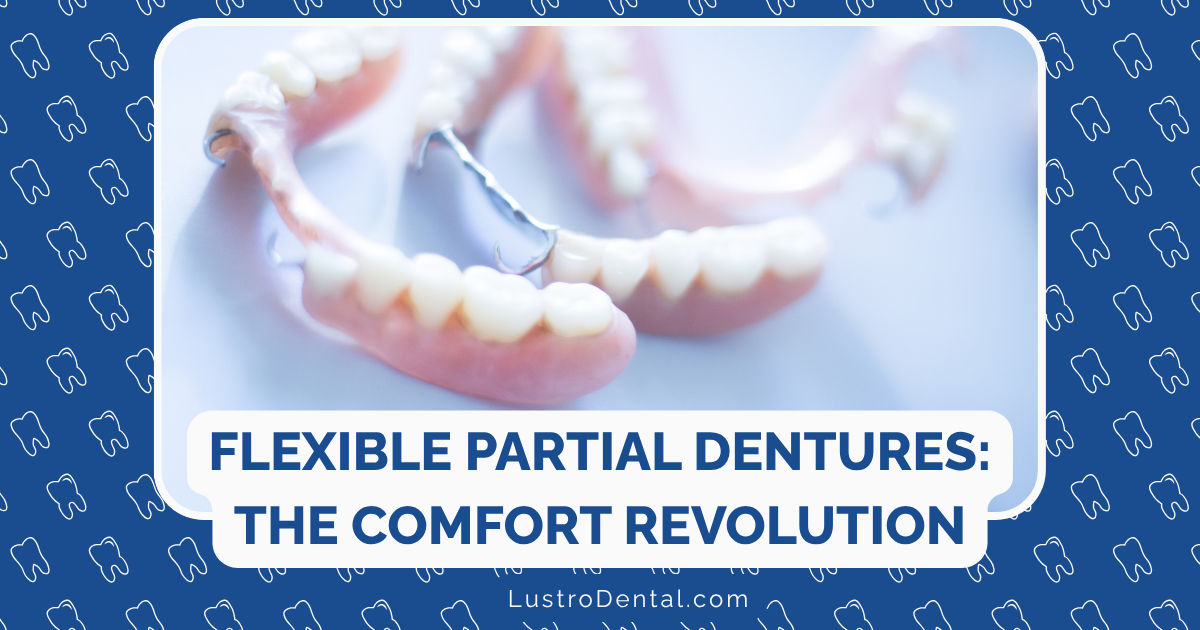
If you’ve been considering partial dentures or are looking to upgrade your current ones, 2025 is proving to be a landmark year for innovations in flexible denture technology. The days of uncomfortable, obvious metal clasps and rigid materials are rapidly becoming a thing of the past, replaced by remarkable advances in comfort, aesthetics, and durability.
As someone who’s worked with dental patients for years, I’ve witnessed firsthand how these evolving technologies can transform not just smiles, but confidence and quality of life. Let’s explore the cutting-edge developments making flexible partial dentures more comfortable and natural than ever before.
Traditional partial dentures typically featured a rigid metal framework with acrylic bases and visible metal clasps. While functional, they often presented challenges in comfort, aesthetics, and adaptability to the mouth’s natural movement.
The introduction of flexible materials in the early 2000s—most notably nylon-based thermoplastics like Valplast—marked a significant improvement. These materials offered greater comfort and a more natural appearance by eliminating metal components and adapting to the mouth’s contours.
Fast forward to 2025, and we’re experiencing what many dental professionals are calling a “comfort revolution” in flexible partial dentures. According to the American College of Prosthodontists, nearly 15 million Americans now wear partial dentures, with flexible options becoming increasingly preferred due to their comfort advantages.
The most significant breakthrough in 2025 comes from Carbon’s new FP3D resin, unveiled at LMT Lab Day Chicago. This innovative material utilizes dual-cure chemistry—combining light-activated initial curing with secondary heat-activated strengthening.
Dr. Sarah Johnson, prosthodontist and researcher at the Digital Dentistry Institute, explains: “The dual-cure approach solves one of the biggest challenges we’ve faced with 3D-printed dentures—balancing flexibility with durability. Previous materials would either be too rigid or too weak, but this new technology gives us the perfect middle ground.”
Key advantages of FP3D resin include:
While still awaiting FDA clearance (expected late 2025), early clinical trials show patient satisfaction rates exceeding 90%—significantly higher than with traditional flexible materials.
Detax’s dx denture flex, another 2025 breakthrough, represents the next generation of thermoplastic denture materials. This material offers:
“What makes dx denture flex truly revolutionary is its adaptive properties,” notes Dr. Michael Chen of Advanced Prosthetic Research. “The material actually responds to temperature changes in the mouth, becoming slightly more flexible during meals to enhance comfort while eating, then returning to its optimal rigidity for speaking and resting.”
Building on the foundation of traditional nylon-based materials like Valplast, 2025 has seen the introduction of next-generation nylon derivatives specifically engineered for enhanced comfort:
These materials represent significant improvements over earlier flexible dentures, with clinical studies published in the Journal of Prosthetic Dentistry showing a 40% reduction in tissue irritation and soreness compared to first-generation flexible materials.
Perhaps the most transformative aspect of 2025’s flexible denture innovations comes not just from new materials, but from revolutionary fabrication methods.
The marriage of flexible materials with high-precision 3D printing has fundamentally changed what’s possible in partial denture comfort:
“The precision we can achieve with today’s digital workflows is remarkable,” explains Lisa Rodriguez, CDT, a dental laboratory specialist at Digital Denture Solutions. “We’re talking about fit accuracy within 50 microns—about half the width of a human hair. This level of precision simply wasn’t possible with traditional fabrication methods.”
The comfort journey begins long before fabrication, with digital scanning and design processes that have seen significant advances in 2025:
According to research from the International Journal of Prosthodontics, digital design and fabrication methods have reduced adjustment appointments by 67% compared to traditional methods, largely due to superior initial comfort and fit.
One of the most promising trends in 2025 is the combination of different technologies to create hybrid flexible dentures that maximize comfort:
These innovative designs feature:
Dr. James Williams of the Center for Prosthetic Innovation explains: “The hybrid approach gives us the best of all worlds. We can use flexible materials where comfort is paramount, while incorporating more rigid components where stability and function are critical.”
For patients seeking maximum stability without sacrificing comfort, 2025 has seen growing popularity of implant-assisted flexible partials:
This approach has shown particular promise for lower dentures, where movement during speaking and eating has traditionally been more problematic.
To help you understand how today’s innovations compare to traditional options, consider this comparison:
| Feature | Traditional Metal Partials | First-Gen Flexible Partials (e.g., Valplast) | 2025 Advanced Flexible Options |
| Comfort | Often rigid and bulky | Good flexibility but uniform throughout | Targeted flexibility zones for optimal comfort |
| Aesthetics | Visible metal clasps | No metal, but limited shade options | Multiple shade options and transparent versions |
| Durability | Very durable but can break | Flexible but may deform over time | Enhanced durability with dual-cure technology |
| Adjustability | Can be adjusted and relined | Limited adjustment potential | Improved adjustability with new materials |
| Fabrication | Traditional impressions | Traditional or digital methods | Fully digital workflow with AI optimization |
| Weight | Heavier due to metal | Lightweight | Ultra-lightweight with optimized thickness |
| Tissue Health | May cause pressure points | Generally good tissue compatibility | Enhanced biocompatibility with pressure mapping |
| Cost | $$$$ | $$$ | $$$$ (but with greater longevity) |
While the comfort advances benefit all patients, certain groups may find these innovations particularly valuable:
The micro-cushioning properties and biocompatible materials of newer flexible dentures make them ideal for:
The enhanced durability combined with flexibility makes 2025’s options perfect for:
The natural appearance of new flexible options benefits:
It’s important to address the financial aspect of these innovations. In 2025, advanced flexible partial dentures typically range from $1,200 to $2,500 per arch—generally higher than traditional options but offering significant advantages.
Dr. Robert Chen of Prosthetic Economics Institute provides perspective: “When evaluating cost, we need to consider not just the initial investment but the total value. The new generation of flexible partials often requires fewer adjustments, causes less tissue damage, and lasts longer—all of which translate to better value over time.”
Many dental insurance plans have begun recognizing the advantages of these materials, with improved coverage compared to previous years. Additionally, the American Dental Association reports that financing options specifically for advanced dental prosthetics have expanded in 2025, making these options more accessible.
To maximize the comfort and longevity of today’s flexible partials, follow these care guidelines:
Looking ahead, researchers are already working on the next generation of comfort innovations:
Dr. Lisa Nguyen of the Future Dental Technologies Institute shares: “The ultimate goal is to create partial dentures that patients essentially forget they’re wearing. With each generation of materials and digital technologies, we’re getting closer to that ideal.”
The comfort innovations of 2025 have made flexible partial dentures a compelling option for many patients, but the right choice always depends on your specific situation. Consider:
The best approach is to consult with a prosthodontist or denture specialist who stays current with these technologies. Many practices now offer digital previews that let you “test” different options virtually before making a decision.
With the remarkable comfort advances of 2025, there’s never been a better time to explore how flexible partial dentures might enhance not just your smile, but your daily comfort and confidence.