🦷 General Care
✨ Treatments
👶 Family Care
💚 Wellness
💡 Resources

🦷 General Care
✨ Treatments
👶 Family Care
💚 Wellness
💡 Resources

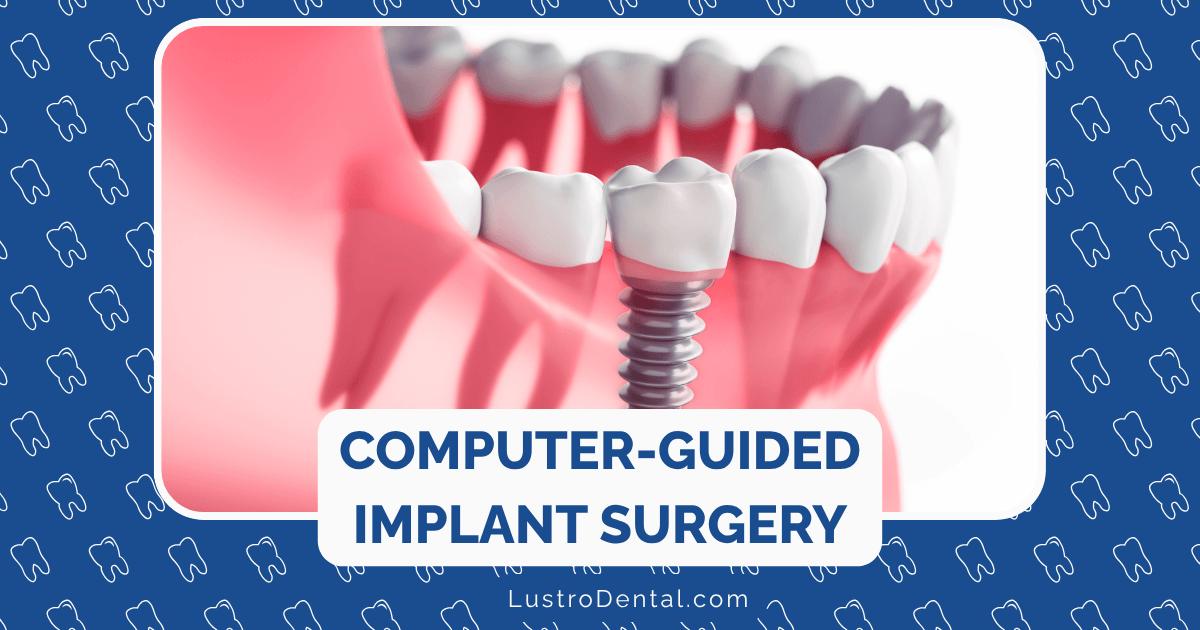
Dental implants have revolutionized tooth replacement, offering a solution that looks, feels, and functions like natural teeth. But the success of an implant depends largely on its precise placement—a challenging task even for experienced surgeons. This is where computer-guided implant surgery enters the picture, transforming a traditionally freehand procedure into a meticulously planned and executed operation.
As someone who’s passionate about helping patients understand their dental treatment options, I’ve seen firsthand how this technology can reduce anxiety and improve outcomes. In this comprehensive guide, I’ll walk you through what computer-guided implant surgery is, how it works, and why it might be the right choice for your implant journey.
Computer-guided implant surgery uses advanced digital technology to plan and execute dental implant placement with unprecedented precision. Unlike traditional freehand methods, which rely heavily on the surgeon’s skill and judgment during the procedure, guided surgery follows a detailed digital plan created before you ever sit in the dental chair.
Dr. Sarah Johnson of Houston Oral Healthcare Specialists explains, “Computer-guided implant surgery is like having a GPS for dental implants. It provides a roadmap that helps us navigate the complex anatomy of your mouth with greater confidence and accuracy.”
The computer-guided implant process integrates several advanced technologies:
The journey begins with detailed 3D imaging of your mouth, typically using cone beam computed tomography (CBCT). This provides a comprehensive view of your:
Unlike traditional 2D X-rays, CBCT scans create a detailed three-dimensional model of your oral structures, allowing for precise measurements and visualization from any angle.
Using specialized software, your dental team then plans the optimal position, angle, and depth for each implant. This planning considers:
Dr. Michael Chen of Dahlgren Dental notes, “The beauty of digital planning is that we can visualize the end result before we begin. We can see how the implants will support the final restoration and make adjustments in the virtual environment before any surgical intervention.”
Once the plan is finalized, a custom surgical guide is created using computer-aided manufacturing (CAM) technology. This guide—typically 3D printed or milled from a resin material—fits precisely over your teeth, gums, or bone and contains precisely positioned sleeves that direct the implant drills and implants to the exact locations planned in the software.
Understanding the process can help ease concerns about what to expect:
Your journey begins with a thorough examination and 3D imaging of your mouth. This provides the data needed for precise planning.
Your dental team uses specialized software to create a virtual model of your mouth and plan the optimal position for each implant. This plan considers both surgical requirements and the final prosthetic outcome.
Based on the digital plan, a custom surgical guide is fabricated. This guide will direct the precise placement of your implants during surgery.
During the procedure:
After the implants are placed, the standard healing process (osseointegration) occurs, followed by the placement of the final restoration.
Research and clinical experience have demonstrated numerous advantages of computer-guided implant surgery:
According to a systematic review published in the Journal of Applied Sciences, computer-guided surgery can achieve impressive accuracy:
While these numbers may seem technical, they represent a significant improvement over freehand techniques, particularly in challenging cases.
With the planning done before surgery and the guide directing the procedure, operating time is often significantly reduced. A study from Dolan Dental found that guided surgery can cut procedure time by up to 70% compared to traditional methods.
Many computer-guided implant cases can be performed using a “flapless” technique, which means:
Dr. Lisa Wong of Nelson Dental Care explains, “The minimally invasive nature of guided surgery means patients often experience less pain and swelling afterward. Many of my patients are surprised by how comfortable they feel even the day after surgery.”
By visualizing the entire procedure before it happens, your dental team can:
The 3D planning software allows your dentist to show you exactly what will happen during surgery and how your final restoration will look. This visual communication helps:
Computer-guided surgery makes implant treatment possible for some patients who might not be candidates for traditional approaches:
While the benefits are significant, it’s important to understand the limitations of computer-guided implant surgery:
According to research published in BMC Oral Health, several factors can affect the accuracy of guided surgery:
The technology requires specialized training and experience. A study in the Journal of Implant Dentistry found that the operator’s experience significantly influences the accuracy of guided implant placement.
Computer-guided surgery typically involves additional costs for:
However, many patients find the investment worthwhile given the benefits in precision, comfort, and long-term outcomes.
While guided surgery offers significant advantages, traditional freehand techniques remain appropriate for many straightforward cases, particularly in the hands of experienced surgeons.
While many patients can benefit from guided surgery, it’s particularly valuable for:
The technology continues to evolve rapidly, with several exciting developments on the horizon:
These systems provide real-time guidance during surgery, allowing for adjustments without the need for a physical guide. According to research in the Journal of Oral and Maxillofacial Surgery, dynamic systems offer comparable accuracy to static guides with added flexibility.
Emerging robotic systems promise even greater precision. A 2024 meta-analysis in Science Direct found that robotic-assisted implant placement demonstrated superior accuracy compared to both freehand and traditional computer-guided techniques.
AI algorithms are beginning to assist with treatment planning by:
When considering dental implants, discuss these questions with your dental provider:
If you choose computer-guided implant surgery, your experience will likely include:
Computer-guided implant surgery represents one of the most significant advances in modern dentistry. By combining digital imaging, computer-aided design, and precision manufacturing, it transforms implant placement from an art form dependent solely on the surgeon’s skill to a predictable, precise procedure with enhanced outcomes.
While not every implant case requires this technology, the benefits of improved accuracy, reduced surgical time, and minimally invasive approaches make it an excellent option for many patients. As with any dental procedure, the key is working with an experienced professional who can help you determine if computer-guided surgery is right for your specific situation.
Have you had experience with computer-guided implant surgery, or are you considering it for your dental implants? Share your questions or experiences in the comments below to help others on their implant journey.