🦷 General Care
✨ Treatments
👶 Family Care
💚 Wellness
💡 Resources

🦷 General Care
✨ Treatments
👶 Family Care
💚 Wellness
💡 Resources

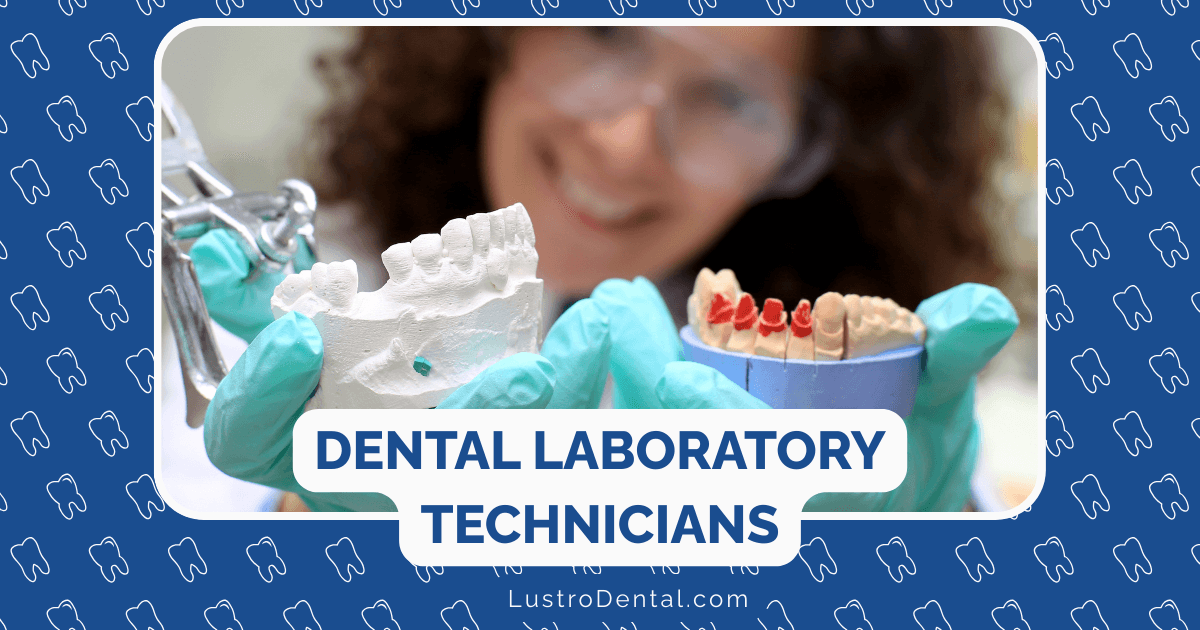
When you admire your new crown in the mirror or feel the comfortable fit of your dental bridge, you’re experiencing the culmination of not just your dentist’s work, but also the artistic craftsmanship of a professional you likely never meet: the dental laboratory technician. These skilled artisans blend science, technology, and artistic talent to create the dental restorations that restore both function and beauty to your smile.
While dentists rightfully receive recognition for their clinical expertise, dental lab technicians remain the unsung heroes of restorative dentistry—creating custom prosthetics that transform dental health and confidence with meticulous attention to detail and aesthetic sensibility. This comprehensive exploration reveals the fascinating world of dental laboratory technicians and the crucial role they play in your dental care.
Dental laboratories serve as specialized workshops where technicians transform dental impressions and digital scans into functional, aesthetically pleasing restorations. According to the National Association of Dental Laboratories, these facilities combine elements of traditional craftsmanship with cutting-edge technology to create everything from crowns and bridges to dentures and orthodontic appliances.
What makes dental laboratory technology particularly fascinating is its position at the intersection of multiple disciplines:
Dr. Michael Chen, a prosthodontist who works closely with dental laboratories, explains: “Dental technicians are truly artists with a profound understanding of both form and function. They must create restorations that not only look natural but also function properly within the complex biomechanics of the oral environment.”
Dental laboratory technicians typically work behind the scenes, but their expertise significantly impacts the success of your dental treatment.
According to Explore Health Careers, dental laboratory technicians develop their skills through:
While not all states require formal certification, many technicians pursue voluntary certification through the National Board for Certification in Dental Laboratory Technology, which offers credentials in six specialty areas: crown and bridge, ceramics, complete dentures, partial dentures, orthodontics, and implants.
Just as dentistry has various specialties, dental laboratory technicians often specialize in specific types of restorations:
This specialization allows technicians to develop exceptional skill in their particular area, resulting in higher quality restorations for patients.
The journey of creating a dental restoration involves multiple steps, each requiring precision and artistic judgment.
The process begins when your dentist sends the laboratory:
“The quality of the information we receive from the dentist is crucial,” notes Sarah Johnson, a master ceramist with over 20 years of experience. “Clear communication about the patient’s needs, expectations, and unique oral characteristics helps us create truly customized restorations.”
Depending on the type of restoration, the technician begins by:
For crowns and bridges, this often involves creating a substructure—traditionally made of metal but increasingly crafted from high-strength ceramics like zirconia—that provides the necessary strength while supporting the aesthetic outer layers.
This is where the true artistry emerges, as technicians:
“Creating natural-looking restorations isn’t about making perfect teeth,” explains James Wilson, a dental ceramist. “It’s about understanding how natural teeth look—with all their subtle imperfections and individualized characteristics—and recreating that in the restoration.”
Before a restoration leaves the laboratory, technicians meticulously:
Many laboratories now include photographs of the finished restoration alongside natural teeth to help dentists with shade verification and placement.
The field of dental laboratory technology has experienced significant transformation with the advent of digital technologies, creating an interesting blend of traditional craftsmanship and cutting-edge innovation.
According to Dental Lab Network, modern dental laboratories increasingly utilize:
These technologies enhance precision and efficiency while reducing the time required to create restorations.
Despite technological advances, the human touch remains essential. Dr. Lisa Martinez, a cosmetic dentist, observes: “The most beautiful restorations I’ve seen come from laboratories that effectively combine digital precision with traditional artistic techniques. Technology provides accuracy, but the artistic eye of the technician brings life to the restoration.”
Many laboratories now employ a hybrid approach where:
This combination maximizes both precision and aesthetic outcomes.
The skill of dental laboratory technicians directly affects patient satisfaction in several key ways:
According to a 2025 issue of Dental Technology Today, the aesthetic quality of dental restorations significantly impacts patient satisfaction. Technicians contribute to this through:
When patients can’t tell which tooth is the restoration, the technician has achieved aesthetic success.
Beyond appearance, technicians ensure that restorations:
“A truly successful restoration should disappear in the patient’s awareness,” notes Robert Thompson, CDT. “When patients forget they have a crown or bridge because it feels so natural, we’ve done our job well.”
The technical expertise of laboratory technicians affects how long restorations last through:
These factors can significantly extend the lifespan of dental restorations, providing better long-term value for patients.
The best dental restorations emerge from strong collaborative relationships between dentists and laboratory technicians.
Effective collaboration includes:
“I consider my laboratory technician a true partner in patient care,” says Dr. James Wilson, a restorative dentist. “The cases where we collaborate closely—sharing photos, discussing options, and problem-solving together—invariably yield the best results for patients.”
While many dentists work with laboratories remotely, there are special benefits when technicians can:
These interactions, though not always possible, can enhance the personalization of restorations.
The field continues to evolve rapidly, with several emerging trends shaping its future:
According to the U.S. Bureau of Labor Statistics, dental technicians increasingly work with:
These materials expand the possibilities for creating restorations that are both beautiful and durable.
The digital revolution continues with:
These advancements streamline the restoration process while potentially improving outcomes.
The future points toward increasingly individualized restorations based on:
This personalization promises restorations that function more naturally throughout a patient’s lifetime.
Despite its importance, the dental laboratory profession faces several challenges:
According to DentalPost, the industry faces:
These factors create both challenges and opportunities for those entering the field.
Modern laboratories must navigate:
The most successful laboratories find ways to leverage technology while preserving the artistic elements that make restorations truly exceptional.
The industry increasingly faces:
These pressures require laboratories to clearly articulate their value proposition, particularly regarding quality and personalized service.
As a patient, understanding the role of dental laboratory technicians can enhance your appreciation for the restorations in your mouth and inform your dental care decisions.
Consider asking:
These questions can help ensure you receive restorations that meet both functional and aesthetic expectations.
Just as with any craft, quality varies among laboratories. Higher quality typically involves:
While higher quality often comes with higher costs, the difference in longevity and satisfaction can make it a worthwhile investment.
The next time you receive a crown, bridge, or other dental restoration, take a moment to appreciate the unseen artistry that went into its creation. Behind every beautiful, functional restoration is a skilled dental laboratory technician who combined scientific knowledge, technical precision, and artistic talent to create something uniquely suited to your mouth.
As Dr. Emily Johnson, a prosthodontist, reflects: “In many ways, dental laboratory technicians represent the perfect union of artist and scientist—using their hands to craft restorations that must be simultaneously beautiful, functional, and biocompatible. Their work transforms patients’ lives, often without the patients ever knowing who was responsible for the transformation.”
These dedicated professionals, though rarely seen by patients, play an indispensable role in restorative dentistry. Their craftsmanship not only restores oral function but also helps rebuild confidence through natural-looking smiles—truly making them the unsung artists of the dental profession.