🦷 General Care
✨ Treatments
👶 Family Care
💚 Wellness
💡 Resources

🦷 General Care
✨ Treatments
👶 Family Care
💚 Wellness
💡 Resources

When patients sit in my chair for a dental bonding procedure, they often express the same concern: “Will it look natural?” It’s a valid question. After all, the success of cosmetic dental work isn’t just measured by how well it functions, but by how invisible it appears. A perfectly matched dental bonding should be your little secret—something that enhances your smile without announcing its presence.
What many patients don’t realize is that matching composite resin to natural tooth color is both a science and an art form. It requires technical precision, an understanding of light physics, and an artist’s eye for color and texture. Let’s pull back the curtain on this fascinating process and explore how dentists achieve those seamless, natural-looking results.
The first thing to understand is that teeth aren’t simply “white.” They’re complex structures with varying degrees of translucency, opacity, and color gradients. A single tooth can display multiple shades and optical properties from the gumline to the biting edge.
Dr. Amanda Johnson, a cosmetic dentistry specialist at the American Academy of Cosmetic Dentistry, explains: “Natural teeth aren’t uniform in color. They typically have a gradient—more yellowish near the gumline and more translucent toward the biting edge. Recreating this subtlety is what separates good bonding from great bonding.”
This complexity means that matching tooth color isn’t as simple as holding up a paint swatch at a hardware store. It requires a nuanced approach that considers multiple factors.
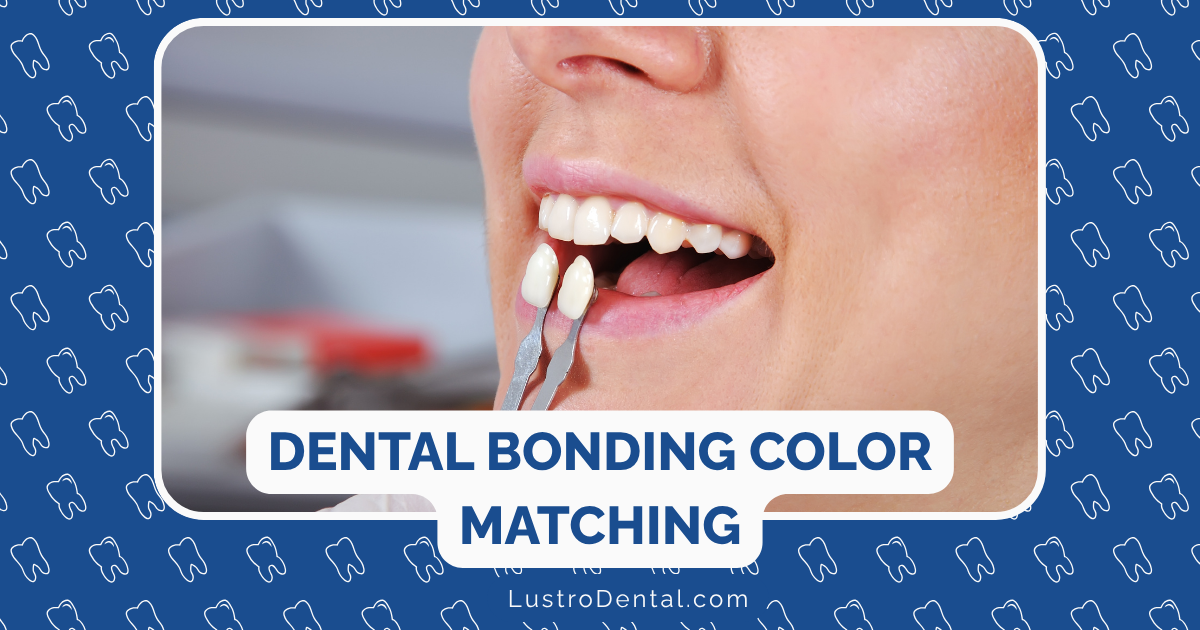
The color matching process typically begins with a shade guide—a standardized tool containing multiple tooth-colored tabs arranged by hue, value, and chroma (color intensity). The most commonly used systems include:
The dentist holds these tabs next to your natural teeth under various lighting conditions to find the closest match. However, this is just the starting point.
Modern dentistry has embraced technology to enhance the accuracy of color matching:
According to a 2023 study in the Journal of Prosthetic Dentistry, digital shade matching can improve accuracy by up to 30% compared to visual methods alone. However, most experts agree that technology works best when combined with a skilled human eye.
Once the base shade is selected, the real artistry begins. Teeth aren’t a single solid color—they have depth, translucency, and character. To recreate this natural appearance, dentists use a technique called stratification or layering.
Dr. Michael Roberts, a renowned cosmetic dentist, notes: “The magic happens in the layering. I might use three to five different shades of composite to create one restoration that perfectly blends with the surrounding tooth structure. It’s like painting—you don’t create a masterpiece with just one color.”
A 2024 clinical study found that this multi-layering approach significantly improved the “blending effect” of composite restorations, making them virtually indistinguishable from natural teeth.
Several variables can affect how well a dentist can match your tooth color:
The type of light used during shade selection dramatically impacts color perception. Natural daylight is considered ideal, but many dental offices use specialized color-corrected lighting that simulates natural light.
“We call it the ‘restaurant effect,'” explains Dr. Lisa Martinez, cosmetic dentistry specialist. “A restoration that looks perfect in the dental office might look different under fluorescent lighting or candlelight. That’s why we evaluate under multiple light sources.”
The human eye perceives color in relation to surrounding colors. Dentists must consider how adjacent teeth, gums, and even lip color might influence the perception of the bonding.
Dehydrated teeth appear whiter and brighter than their natural state. This is why dentists often select shades at the beginning of an appointment before the teeth dry out from exposure to air.
The thickness of the composite material affects its final appearance. Thicker areas may appear more opaque, while thinner sections allow more of the underlying tooth color to show through. Skilled dentists account for these variations during application.
Even with perfect color matching, a restoration can look artificial if the surface texture doesn’t match natural teeth. Dentists use specialized finishing tools to recreate the subtle ridges, grooves, and light-reflecting properties of natural enamel.
After the basic shape and color are established, dentists add the final artistic touches that truly make bonding indistinguishable from natural teeth:
Natural teeth aren’t perfectly smooth—they have vertical grooves, horizontal growth lines, and areas of varying reflectivity. Using fine diamonds, discs, and polishing instruments, dentists recreate these subtle texture variations.
The edges of teeth, particularly front teeth, often have a translucent, slightly bluish appearance. Skilled dentists recreate this using specialized translucent composites at the edges of the bonding.
Some teeth have unique characteristics like white spots, tiny cracks, or color variations. Rather than creating a “perfect” but unnatural restoration, skilled cosmetic dentists often incorporate subtle imperfections that match surrounding teeth.
Interestingly, research in cosmetic dentistry has found that perfectly uniform restorations often look artificial. The Journal of Esthetic Dentistry published a study showing that patients and dentists alike rated slightly imperfect restorations (those with minor natural variations) as more attractive and natural-looking than “perfect” ones.
“Sometimes we have to deliberately incorporate subtle imperfections to make bonding look natural,” explains Dr. Roberts. “The brain is wired to detect patterns and uniformity—too much perfection triggers our ‘artificial detection’ sensors.”
Some situations present unique challenges for color matching:
When a single tooth is significantly darker or differently colored than surrounding teeth, dentists may need to use more opaque materials or special masking techniques to create a uniform appearance.
If you’ve recently whitened your teeth, dentists typically recommend waiting 2-3 weeks before bonding to allow color stabilization. The composite material cannot be whitened later, so timing is crucial.
When bonding multiple teeth, creating consistent color across all restorations while maintaining natural variations requires exceptional skill and planning.
The most successful dental bonding results often come from collaboration between patient and dentist. While dentists have the technical expertise, patients bring valuable perspective about their aesthetic goals.
During the shade selection process, don’t hesitate to:
Once you have beautifully matched dental bonding, proper maintenance helps preserve both the appearance and longevity:
The field of cosmetic dentistry continues to evolve, with several exciting developments improving color matching accuracy:
Dental bonding color matching exemplifies the unique intersection of science and art that defines modern cosmetic dentistry. While technological advances continue to improve the process, the artistic eye and skilled hand of an experienced dentist remain irreplaceable.
The next time you admire a flawlessly bonded tooth—whether your own or someone else’s—appreciate that you’re not just looking at a dental restoration. You’re witnessing a carefully crafted artistic creation, designed to be both beautiful and invisible at the same time.
When done well, dental bonding doesn’t just repair teeth—it restores confidence, enhances smiles, and does so while honoring the unique beauty of natural teeth. That’s the true art of dental bonding.
Have you experienced dental bonding? Were you surprised by the color matching process? Share your experience in the comments below!