🦷 General Care
✨ Treatments
👶 Family Care
💚 Wellness
💡 Resources

🦷 General Care
✨ Treatments
👶 Family Care
💚 Wellness
💡 Resources

Remember when planning a smile makeover meant looking at static images in a catalog or trusting your dentist’s vision with blind faith? Those days are rapidly fading into dental history. Today, we’re witnessing a remarkable transformation in cosmetic dentistry—one where you can actually “try on” your new smile before committing to treatment.
Digital Smile Design (DSD) combined with virtual reality (VR) is changing not just outcomes, but the entire patient experience in cosmetic dentistry. As someone who’s witnessed countless patients transform not just their smiles but their confidence, I’m particularly excited about how these technologies are making treatments more predictable, personalized, and emotionally rewarding.
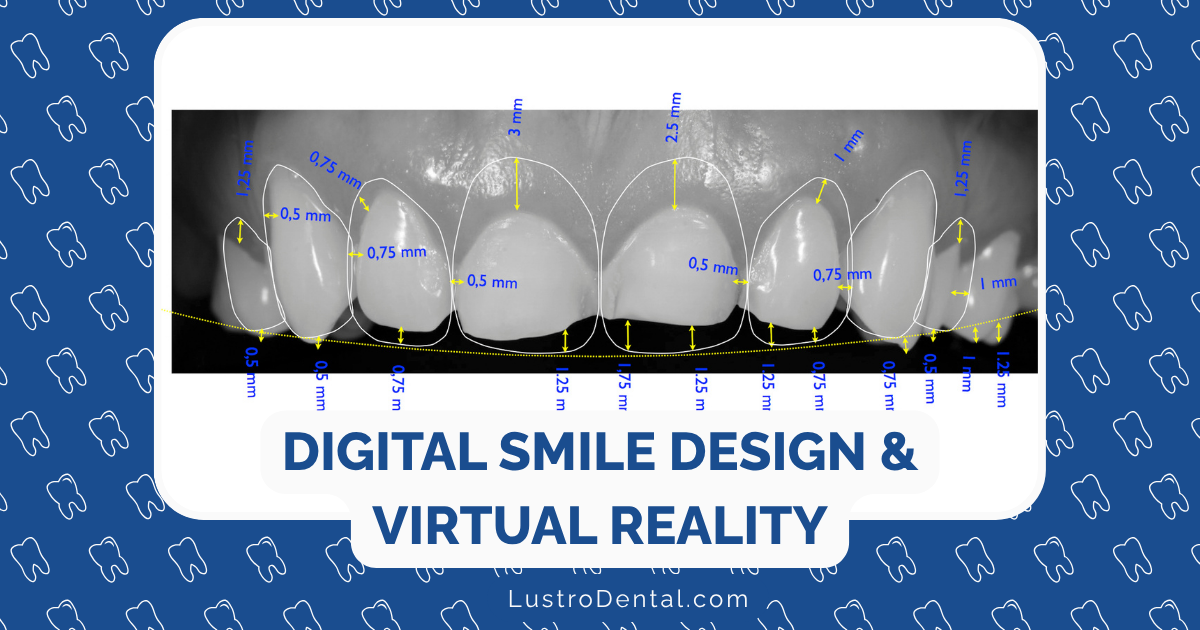
Digital Smile Design is a comprehensive treatment planning protocol that combines digital technology, artistic principles, and clinical expertise to create customized smile transformations. Unlike traditional approaches that relied heavily on a dentist’s subjective judgment, DSD uses precise measurements, facial analysis, and 3D imaging to create scientifically-backed, aesthetically pleasing results.
The process begins with high-resolution photos and videos of your face and teeth in various expressions. These images are then analyzed using specialized software that maps your facial proportions, lip dynamics, and existing dental structures. This data becomes the foundation for designing a smile that harmonizes perfectly with your unique facial features.
As research published in Applied Sciences has shown, this digital approach significantly improves communication between patients and dentists through interactive 3D models, leading to higher satisfaction rates and more predictable outcomes.
While digital smile design has been evolving for over a decade, the integration of virtual reality represents a quantum leap in the patient experience. VR takes the digital design from your dentist’s computer screen and places it directly on your face—in a virtual environment you can explore from different angles.
Here’s how the VR-enhanced process typically works:
According to a systematic review published in 2023, patients who experienced 3D treatment simulations reported significantly higher satisfaction rates compared to those who received traditional consultations. The review also found that patients treated with DSD reported lower pain levels during and after procedures—likely due to better preparation and reduced anxiety.
The psychological benefits of this technology cannot be overstated. For many patients, dental anxiety stems from uncertainty about results. Will these veneers look natural? Will this smile suit my face? Traditional methods offered limited previews, leaving much to the imagination.
VR-enhanced smile design eliminates this uncertainty. By experiencing your new smile virtually before treatment begins, you develop confidence in the outcome and trust in the process. This psychological preparation is transformative for many patients.
Sarah, a 42-year-old patient who recently completed a full smile makeover using DSD and VR technology, described her experience: “Seeing my new smile on my face before we even started treatment was incredible. It wasn’t just about knowing what my teeth would look like—it was about seeing how they would change my whole appearance, my expressions, even the way I smiled. That preview made me completely comfortable moving forward.”
Michael, a 38-year-old executive, had been considering cosmetic dentistry for years but feared unpredictable results. During his consultation, he experienced a VR preview of his proposed smile makeover involving eight veneers and minor gum recontouring.
The ability to “test drive” his new smile convinced him to proceed with treatment. Six months after completion, Michael reported that the final result matched his virtual preview with remarkable accuracy, and he experienced none of the “adjustment regret” he had feared.
Lisa, 45, required comprehensive treatment including implants, crowns, and veneers following years of dental neglect. The complexity of her case made visualization particularly challenging.
Using DSD with VR integration, her dental team created a complete virtual reconstruction that showed not just the aesthetic outcome but also demonstrated how her bite function would improve. This comprehensive preview helped Lisa understand the value of her investment and commit to the multi-phase treatment plan.
According to her dentist, the digital planning reduced treatment time by approximately 30% compared to traditional methods, as potential issues were identified and resolved virtually before physical treatment began.
Several key technological developments have made this revolution possible:
These handheld devices have replaced messy impression materials, creating highly accurate digital models of teeth and gums in minutes. Modern scanners can even capture color information for more realistic simulations.
Advanced cameras and scanning systems capture facial movements and expressions, allowing software to analyze how your smile interacts with facial dynamics—crucial for natural-looking results.
Artificial intelligence now assists in analyzing facial proportions and suggesting optimal tooth arrangements based on thousands of successful cases, though the dentist maintains artistic control over the final design.
The dramatic improvement in VR headset quality and comfort has made extended virtual try-on sessions practical in clinical settings.
The ability to quickly produce physical models from digital designs allows for testing mock-ups in the mouth before creating permanent restorations.
According to predictions from the International Dental Show 2025, we can expect several exciting developments in the near future:
Comprehensive clinical apps will allow preliminary data capture and treatment visualization using just a smartphone, making the technology more accessible to practices of all sizes.
High-resolution imagery, live video consultations, and augmented reality overlays will further improve the patient experience and understanding of treatment options.
Artificial intelligence will enhance treatment planning by automatically identifying optimal tooth proportions, suggesting the most conservative approaches, and predicting long-term outcomes.
Faster 3D printing and milling technologies will enable same-day creation of temporary restorations that precisely match the virtual design, further streamlining the treatment process.
While the technology offers tremendous benefits, it’s particularly valuable for:
The technology is less critical for simple procedures like single tooth replacements or basic whitening, though even these can benefit from enhanced visualization.
If you’re interested in experiencing this technology firsthand, look for dentists who have completed specialized training in Digital Smile Design. The official DSD website maintains a directory of certified providers who have mastered both the technical and artistic aspects of the protocol.
When consulting with potential providers, ask:
Despite all this impressive technology, the most successful smile transformations still depend on the human element. The dentist’s artistic vision, technical skill, and ability to understand your personal preferences remain crucial.
The best practitioners use digital tools to enhance communication and precision—not to replace the personal connection that makes dentistry both an art and a science. Technology serves as a bridge between your vision and their expertise, creating a collaborative process that simply wasn’t possible before.
Digital Smile Design with virtual reality integration represents one of the most significant advances in cosmetic dentistry of the past decade. By removing uncertainty from the equation, it transforms not just the technical aspects of treatment but the entire emotional journey.
Patients now approach smile makeovers with confidence rather than anxiety, dentists work with greater precision and predictability, and the final results more consistently match expectations. It’s a win for everyone involved.
If you’ve been considering cosmetic dental treatment but hesitating due to uncertainty about the results, this technology might provide exactly the reassurance you need to move forward. After all, seeing is believing—and now you can see your new smile before a single tooth is touched.
Have you experienced Digital Smile Design or virtual try-ons for dental treatment? Share your experience in the comments below!