🦷 General Care
✨ Treatments
👶 Family Care
💚 Wellness
💡 Resources

🦷 General Care
✨ Treatments
👶 Family Care
💚 Wellness
💡 Resources

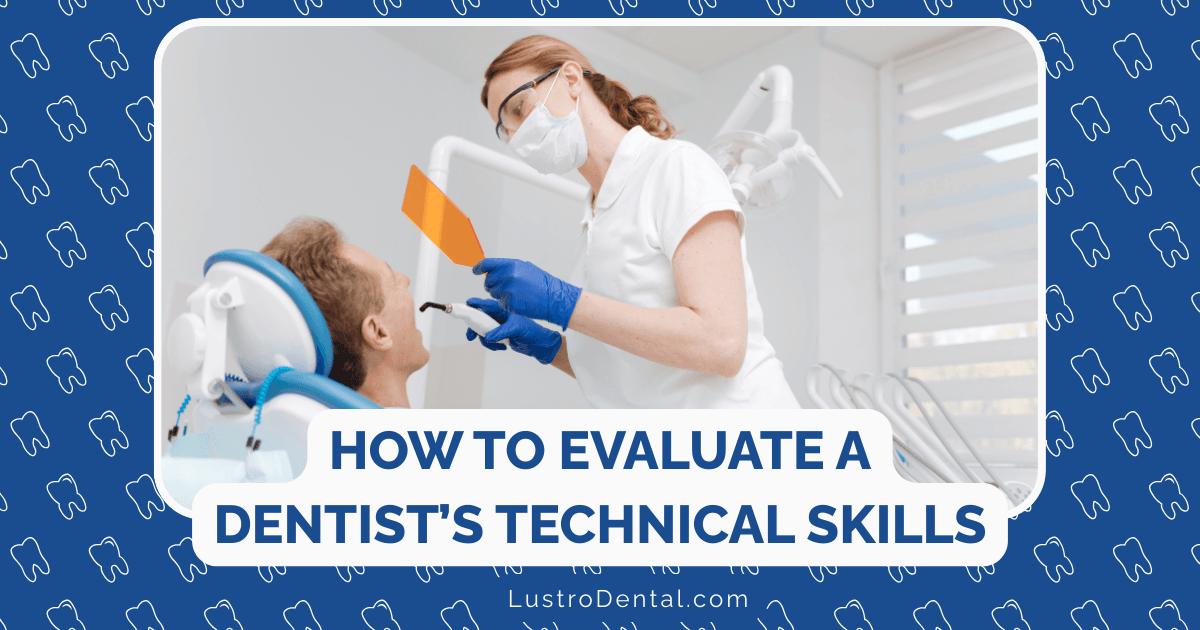
Let’s be honest—choosing a dentist isn’t like picking a restaurant for dinner. A bad meal might ruin your evening, but a dentist without proper technical skills? That could impact your oral health for years to come.
While online reviews can tell you if a dentist has a friendly manner or if their office has Wi-Fi, they rarely give you insight into what really matters: the dentist’s actual technical ability to perform quality dental work. So how do you look beyond the five-star ratings and friendly smiles to evaluate what’s really important?
Most dental patients aren’t qualified to evaluate clinical excellence. We might know if a filling feels comfortable or if a crown looks natural, but we don’t necessarily know if the margins are properly sealed or if the bite alignment is optimal for long-term function.
As one study published in the Journal of Medical Internet Research found, online reviews tend to focus on bedside manner, wait times, and front office experiences—rarely addressing the technical quality of care.
When evaluating a dentist’s technical skill, start by looking at their credentials:
Unlike the basic dental license (which every practicing dentist must have), board certification represents an additional level of achievement. The American Board of Dental Specialties recognizes dentists who have demonstrated exceptional knowledge and skill.
Look for dentists who regularly exceed the minimum continuing education requirements for their state. Dentistry evolves rapidly, and those committed to ongoing learning typically deliver better technical care.
Many general dentists pursue additional training in specific procedures. For example, a dentist with certification from the American Academy of Cosmetic Dentistry (AACD) has demonstrated exceptional skill in aesthetic procedures. According to the AACD, only about 350 dentists worldwide hold their prestigious accreditation status, which requires passing rigorous examinations and demonstrating excellence in cosmetic dental practices.
Similarly, implant dentistry credentials like the Board Certified In Implantology (BCI) from the American Board of Oral Implantology/Implant Dentistry indicate specialized training in that area.
A skilled dentist should be proud to show their work. Request to see before and after photos of cases similar to yours. Look for:
While fancy gadgets don’t automatically make someone a better dentist, certain technologies enable more precise work:
As the American Dental Association notes, technology adoption often correlates with a commitment to providing state-of-the-art care.
During your consultation, ask questions that reveal technical competence:
Dentists who teach at dental schools or lead continuing education courses have typically mastered their craft. Their peers and institutions have recognized their expertise.
Has your dentist contributed to dental journals or research? While not essential, publication in peer-reviewed journals demonstrates subject matter expertise and professional engagement.
One of the most telling indicators is who other dental professionals trust. If you know dental hygienists, assistants, or other dentists, ask them privately who they would see for their own care.
After treatment, pay attention to these indicators of technical quality:
According to the National Institute of Dental and Craniofacial Research, quality dental restorations can last 10-15 years or longer when properly executed and maintained.
Be wary of dentists who:
Finding a technically skilled dentist requires more effort than simply reading online reviews, but your oral health is worth it. By examining credentials, asking thoughtful questions, and evaluating actual results, you can find a dentist whose technical skills match their bedside manner.
Remember that the best dentists welcome informed patients and are happy to demonstrate their expertise. If a dentist seems defensive about questions regarding their technical approach or credentials, consider that a warning sign.
Your smile deserves the best technical care possible—not just the friendliest office or the most convenient location. Take the time to look beyond the reviews, and you’ll likely enjoy better dental outcomes for years to come.
Have you found ways to evaluate your dentist’s technical skills beyond online reviews? Share your experiences in the comments below.