🦷 General Care
✨ Treatments
👶 Family Care
💚 Wellness
💡 Resources

🦷 General Care
✨ Treatments
👶 Family Care
💚 Wellness
💡 Resources

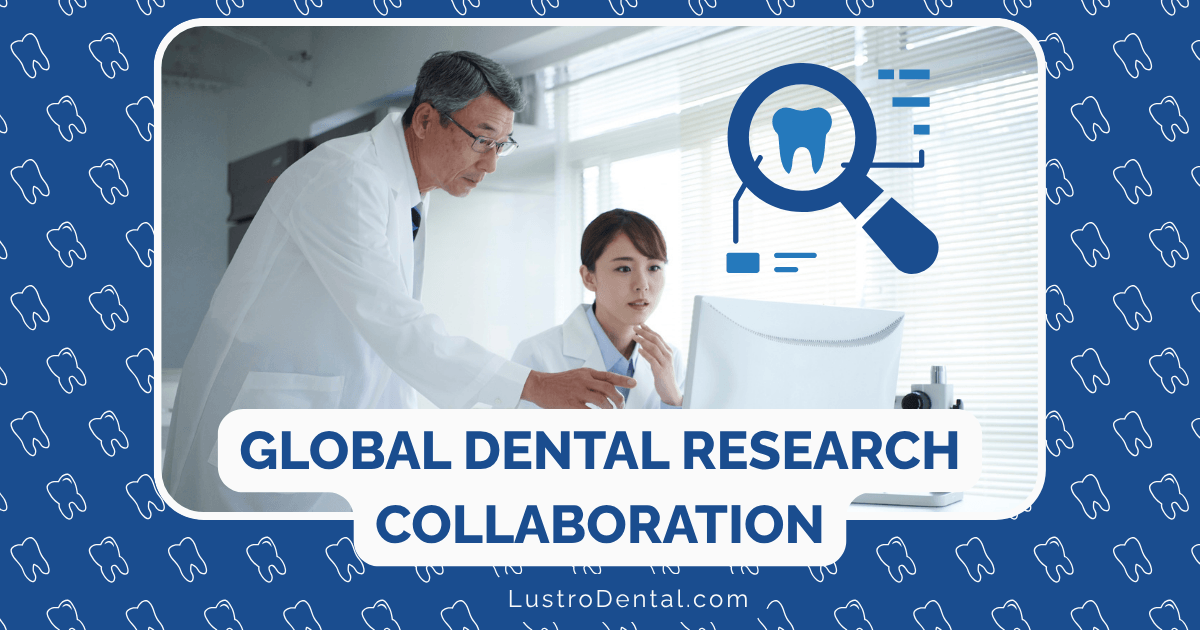
In an era where health challenges transcend borders, the future of dental care increasingly depends on international collaboration. Researchers, clinicians, and institutions around the world are joining forces to tackle oral health issues, develop innovative technologies, and ensure that advancements in dental care reach everyone—from high-tech urban centers to remote rural communities. Let’s explore how global research partnerships are transforming dentistry and improving oral health outcomes worldwide.
The complex challenges facing dental care today—from antimicrobial resistance to the oral health implications of aging populations—require diverse perspectives and multidisciplinary approaches. Global research collaboration offers several distinct advantages:
When researchers from different countries collaborate, they bring together:
International collaboration speeds up the research-to-practice pipeline by:
Perhaps most importantly, international research partnerships help address the stark disparities in oral health that exist worldwide:
According to the World Health Organization (WHO), collaborative research is essential for achieving the goal of universal oral health coverage and reducing the global burden of oral diseases, which affects nearly 3.5 billion people worldwide.
Several organizations are at the forefront of promoting international collaboration in dental research:
With over 10,000 members globally, the IADR serves as a crucial platform for international collaboration. Their initiatives include:
The WHO has designated several dental institutions as Collaborating Centers, creating a global network focused on improving oral health. For example:
While based in the United States, this network collaborates internationally to conduct practice-relevant research:
International research partnerships have led to significant advances in several key areas:
Perhaps the most exciting frontier in dental research, regenerative dentistry aims to regrow damaged dental tissues rather than simply replacing them with artificial materials.
Global Collaboration Example: A multinational team from the United Kingdom, Japan, and the United States has made significant progress in tooth regeneration using stem cells. Their research has demonstrated the potential to grow entire tooth structures in laboratory settings, potentially eliminating the need for artificial dental implants in the future.
According to research published in the Journal of Dental Research, these collaborative efforts have led to:
Artificial intelligence is revolutionizing dental diagnostics by improving accuracy, speed, and accessibility.
Global Collaboration Example: The Digital Dentistry Consortium (DDC), an international group of researchers and clinicians, has developed AI algorithms that can detect early signs of dental caries with greater accuracy than human practitioners. Their collaborative work has resulted in:
The integration of 3D printing technology with biological materials is opening new possibilities for dental restoration and regeneration.
Global Collaboration Example: A collaborative project between research institutions in the United States, China, and Germany has pioneered AI-driven 3D bioprinting for dental applications:
This technology has the potential to transform dental care by enabling the fabrication of living dental tissues tailored to individual patients.
Understanding and manipulating the oral microbiome—the community of microorganisms living in the mouth—is emerging as a powerful approach to preventing and treating oral diseases.
Global Collaboration Example: The International Microbiome Consortium, with researchers from Brazil, Sweden, China, and the United States, has made significant discoveries about how the oral microbiome affects dental health:
Global research collaboration is particularly valuable for improving dental care in developing countries, where resources for research and implementation may be limited.
International partnerships help build research capacity in developing countries through:
The IADR’s Global Oral Health Inequalities Research Network (GOHIRN) specifically focuses on building research capacity in low and middle-income countries to address oral health disparities.
Collaborative research has led to technologies specifically designed for low-resource settings:
The FDI World Dental Federation partnered with Unilever to implement the ‘Live.Learn.Laugh.’ program across 36 countries:
According to evaluation studies, these collaborative initiatives have significantly improved oral health knowledge, behaviors, and outcomes in the target communities.
Despite its benefits, international dental research collaboration faces several challenges:
Different countries have varying regulations regarding:
Navigating these differences requires careful planning and cross-cultural understanding.
Collaborations often involve partners with vastly different resources:
Successful partnerships must address these disparities while respecting the contributions of all partners.
Practical challenges include:
Looking ahead, several trends are likely to shape international collaboration in dental research:
Advanced digital tools are making collaboration easier than ever:
Future collaborations will increasingly focus on how to effectively implement proven interventions in diverse settings:
Dental research is becoming more integrated with general health research:
Individual dental professionals can contribute to and benefit from global research collaboration in several ways:
The challenges facing dental care in the 21st century—from antimicrobial resistance to the oral health impacts of aging populations and climate change—are too complex for any single country or institution to solve alone. Global research collaboration offers our best hope for developing effective, equitable solutions that improve oral health for everyone.
As noted by the WHO, “No single country, however rich, can tackle the full spectrum of oral health research needs. International collaboration is essential for leveraging diverse expertise, resources, and perspectives to advance dental science and practice.”
By working together across borders, dental researchers and practitioners are not only advancing scientific knowledge but also ensuring that innovations in dental care reach all populations, regardless of geography or economic status. The future of dentistry is collaborative, and through these global partnerships, we are building a world where everyone can enjoy good oral health.
Have you been involved in or benefited from international dental research collaboration? Share your experiences in the comments below!