🦷 General Care
✨ Treatments
👶 Family Care
💚 Wellness
💡 Resources

🦷 General Care
✨ Treatments
👶 Family Care
💚 Wellness
💡 Resources

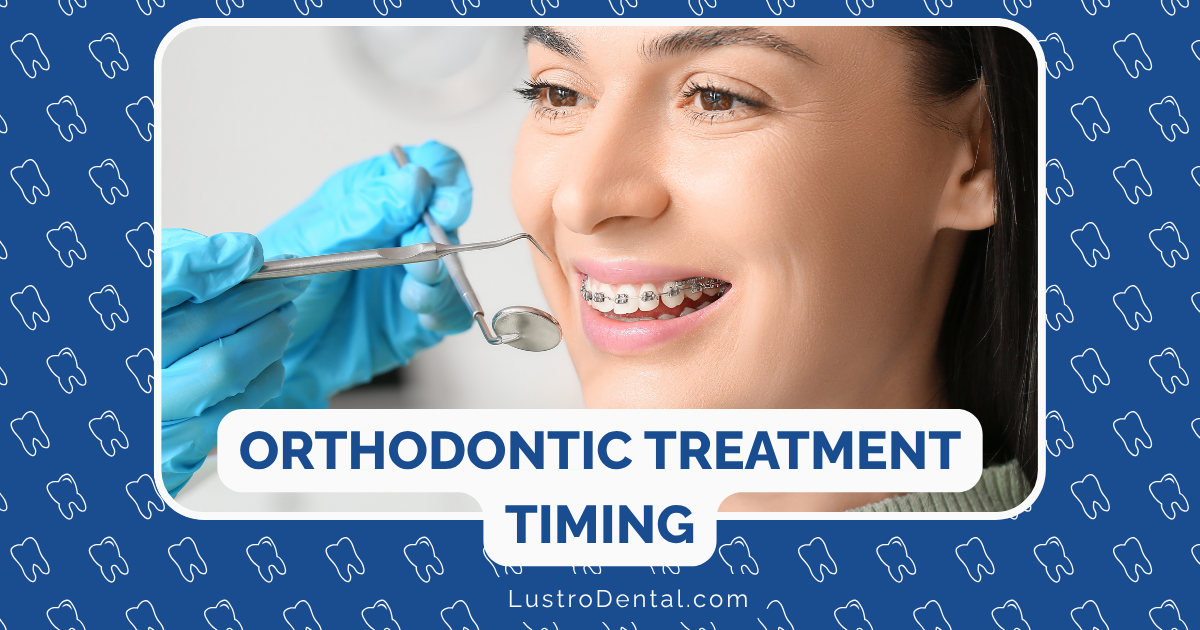
I still remember the day Sarah’s mom brought her in for a consultation. At just 7 years old, Sarah had a noticeable crossbite and some crowding issues. Her mother, like many parents I meet, was torn between conflicting advice: her family dentist suggested early intervention, while a friend whose teenager had braces insisted it was better to wait until all permanent teeth had erupted.
“What’s the right call?” she asked me, concern evident in her voice. “I don’t want to put her through unnecessary treatment, but I also don’t want to miss an opportunity to help her.”
This dilemma represents one of the most common questions in modern orthodontics: When is the right time to begin treatment? The answer isn’t one-size-fits-all, and navigating this decision requires understanding both the science and the individual needs of each child.
In orthodontics, there are generally two approaches to treatment timing:
Early Intervention (Phase 1): Treatment that begins while a child still has primary (baby) teeth, typically between ages 6-10. This approach aims to address developing problems early, potentially preventing more serious issues later.
Comprehensive Treatment: Waiting until most or all permanent teeth have erupted, usually around ages 11-13, before beginning treatment. This approach addresses all orthodontic issues in a single, comprehensive phase.
Both approaches have their merits, and recent research provides valuable insights into when each might be more appropriate.
According to the American Association of Orthodontists, all children should have their first orthodontic evaluation by age 7. This doesn’t mean treatment will begin at this age, but rather that certain conditions can be identified early and monitored or addressed as needed.
Research shows that specific conditions respond particularly well to early treatment:
A crossbite occurs when upper teeth sit inside the lower teeth when biting down. A 2023 systematic review found that early intervention for posterior crossbites produced favorable dental occlusion outcomes that remained stable over time.
Why treat early? Crossbites can cause:
Interestingly, a survey published in the Journal of Clinical Orthodontics revealed that 73.7% of orthodontists identified anterior crossbite as the most frequent reason for early treatment.
Children with significantly protruding front teeth face an increased risk of dental trauma. A study in the European Journal of Orthodontics found that early intervention reduced trauma risk from 25% to 14%.
Mark, one of my young patients, came in after breaking his front tooth during a fall at the playground. Had his protrusion been addressed earlier, this injury might have been prevented.
When permanent teeth are severely off course or impacted (unable to emerge properly), early intervention can guide them into proper position. This is particularly important for canine teeth, which play a crucial role in your smile and bite function.
Prolonged thumb-sucking, tongue thrusting, or mouth breathing can alter facial growth patterns and tooth position. Early intervention can address these habits and their effects before permanent damage occurs.
Some jaw growth problems, particularly underbites (Class III malocclusions), respond better to early treatment. According to a 2025 study published in Nature, early intervention for Class III malocclusions can significantly improve maxillofacial development and reduce treatment duration.
Despite the benefits of early intervention in specific cases, research also shows that waiting until all permanent teeth have erupted is preferable in many situations:
For most cases of mild to moderate crowding, waiting until the late mixed or permanent dentition stage (around age 11-13) often provides more predictable and efficient results. A comprehensive review found that blanket delivery of early treatment for crowding is unsupported by clinical evidence.
Gaps between teeth, including a midline diastema (gap between front teeth), often change as children grow and more permanent teeth erupt. Treating too early may result in the need for retreatment later.
Contrary to what many believe, research indicates that early treatment of Class II malocclusions (where the upper teeth significantly overlap the lower teeth) shows no statistical difference in final outcomes compared to later treatment. In fact, the 2023 systematic review found that late treatment could be more efficient.
The ideal timing for Class II correction appears to be during or after the pubertal growth spurt, when growth modification is most effective.
Studies indicate that early treatment of deep bite (where upper teeth excessively overlap lower teeth vertically) had no significant effect on long-term outcomes compared to treatment during puberty, particularly when there’s no tissue damage occurring.
When considering early treatment versus waiting, several factors beyond clinical outcomes must be weighed:
Early intervention often means a longer overall treatment time. A typical two-phase approach includes:
In contrast, waiting for all permanent teeth typically means a single treatment phase of 18-30 months.
A 2023 study found that patients consider a treatment time reduction meaningful only if it exceeds one month—something to consider when evaluating the efficiency of different approaches.
Two-phase treatment typically costs more than a single comprehensive phase. According to the American Association of Orthodontists, however, early intervention for specific conditions can help avoid more costly or invasive treatments later, such as:
The psychological aspect of treatment timing cannot be overlooked:
Benefits of early intervention:
Benefits of waiting:
How do you decide what’s right for your child? Consider this decision-making framework:
The American Association of Orthodontists recommends all children have an orthodontic check-up by age 7. This evaluation should include:
When discussing treatment options with your orthodontist, ask:
Beyond the clinical aspects, consider:
Let me share how this decision-making process played out for two of my patients:
Case 1: Emma (Age 8)
Case 2: Jason (Age 9)
The most current research supports a selective approach to early orthodontic intervention. A 2023 systematic review examining 32 studies with 2,854 participants concluded:
“Early orthodontic treatment should be reserved for specific conditions or localized malocclusions that provide psychosocial benefits or significantly reduce the severity of problems for comprehensive treatment in the permanent dentition.”
This balanced approach—intervening early when truly beneficial and waiting when appropriate—represents the current best practice in orthodontics.
Returning to Sarah, the 7-year-old with the crossbite I mentioned earlier: After careful evaluation, we determined that her crossbite was causing asymmetric jaw growth and had the potential to create long-term problems. We proceeded with limited early treatment focused specifically on correcting the crossbite.
Twelve months later, her bite was corrected, and her jaw growth was back on track. She’ll likely need comprehensive braces in a few years for general alignment, but we’ve prevented a more serious structural problem from developing.
For Sarah’s mother, understanding both the benefits and limitations of early treatment helped her make an informed decision that was right for her daughter.
The decision between early orthodontic intervention and waiting for permanent teeth isn’t about finding the universally “right” approach—it’s about finding the right approach for each individual child.
By understanding the conditions that truly benefit from early treatment, the advantages of waiting in other situations, and considering the whole child—not just their teeth—parents and orthodontists can work together to make timing decisions that provide the best outcomes with the most efficient treatment.
Have you been wondering about the right time to start orthodontic treatment for your child? What factors are most important in your decision-making process? I’d love to hear your thoughts and answer your questions in the comments below.