🦷 General Care
✨ Treatments
👶 Family Care
💚 Wellness
💡 Resources

🦷 General Care
✨ Treatments
👶 Family Care
💚 Wellness
💡 Resources

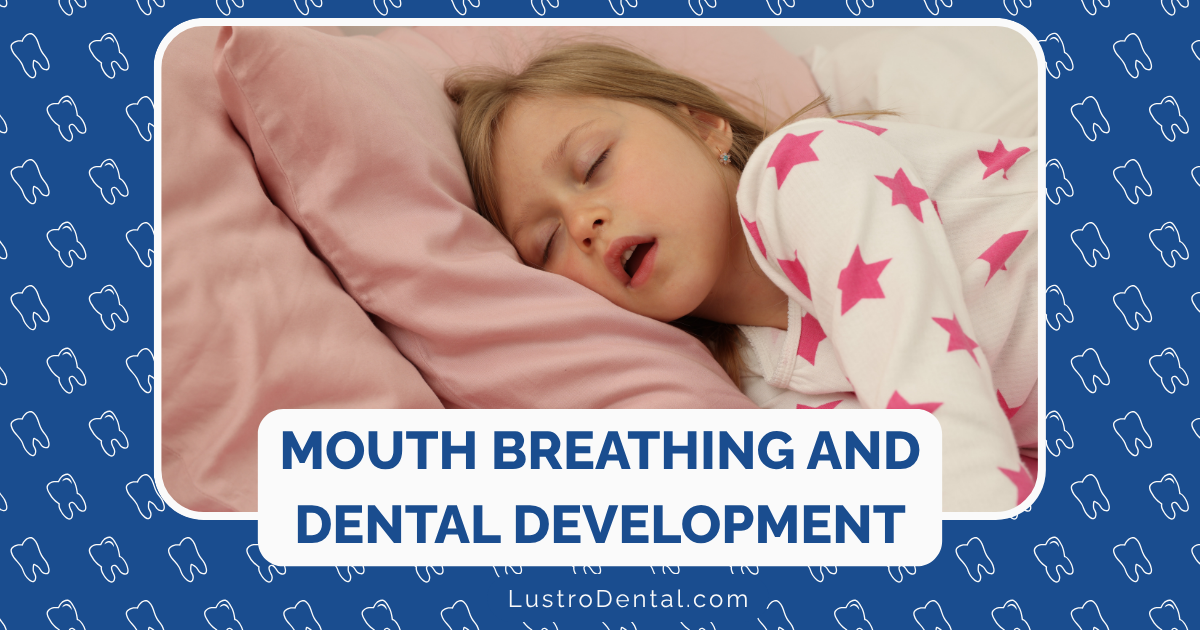
As a dental health advocate, I’ve noticed a concerning trend in my practice: children who breathe through their mouths rather than their noses often develop distinct dental and facial issues. While it might seem like a harmless habit, mouth breathing can significantly impact your child’s dental development and overall health. Let’s explore this important connection and what you can do to address it early.
Mouth breathing occurs when a person consistently breathes through their mouth instead of their nose. While occasional mouth breathing (like during heavy exercise or when you have a cold) is normal, chronic mouth breathing is not. Our bodies are designed to breathe through the nose, which filters, warms, and humidifies air before it reaches our lungs.
You might notice mouth breathing in your child if they:
Before discussing the effects, it’s important to understand the causes. According to research published in the Journal of International Oral Health, common causes include:
The effects of mouth breathing on dental development can be far-reaching and sometimes difficult to reverse without intervention. Here’s what the research shows:
When a child breathes through their mouth, their tongue position changes. Instead of resting against the roof of the mouth (where it naturally belongs), it drops to the floor of the mouth. This seemingly small change has major consequences.
A study published in the European Journal of Orthodontics found that this altered tongue position fails to provide the proper support for the developing upper jaw. As a result:
The altered jaw development directly impacts how teeth align. Mouth breathers commonly develop:
Research in the International Journal of Orthodontic Science confirms that mouth breathing is significantly associated with these malocclusions, particularly crossbites and open bites.
Beyond just dental concerns, mouth breathing can alter a child’s facial appearance, leading to:
These changes aren’t just cosmetic—they can affect self-esteem and social development during crucial formative years.
Mouth breathing leads to dry mouth by reducing saliva flow. Saliva is our natural defense against cavity-causing bacteria, helping to:
Without adequate saliva, children who mouth breathe face a higher risk of cavities and gum inflammation. The upper front teeth are particularly vulnerable, as they’re most exposed to the drying effects.
The impacts extend beyond dental concerns:
Children who mouth breathe often don’t sleep well. This poor-quality sleep can lead to:
A landmark study in the Journal of Developmental & Behavioral Pediatrics found significant connections between sleep-disordered breathing (which includes mouth breathing) and neurobehavioral issues in children.
The altered tongue position and dental structure can also impact speech development. Children who chronically mouth breathe may struggle with certain sounds, particularly those requiring proper tongue-to-palate contact.
Early identification is crucial. Look for these signs:
Dentists and orthodontists are often the first healthcare providers to identify chronic mouth breathing. During routine check-ups, they might notice:
If your dental professional suspects mouth breathing, they may refer you to an ear, nose, and throat specialist (ENT) to identify and address any underlying causes.
Treating mouth breathing typically requires collaboration between several specialists:
If enlarged tonsils, adenoids, allergies, or nasal obstructions are causing the mouth breathing, addressing these is the first step:
For children who have already developed dental or facial changes, orthodontic treatment may be necessary:
The American Association of Orthodontists recommends all children have an orthodontic evaluation by age 7, which is particularly important for mouth breathers.
This specialized therapy helps retrain oral and facial muscles:
A systematic review in the International Journal of Orofacial Myology found that myofunctional therapy can be highly effective in establishing nasal breathing patterns.
For children who continue mouth breathing out of habit after obstructions are addressed:
Whenever possible, prevention is ideal:
Consider Emma, a 9-year-old patient with chronic allergies who had been mouth breathing since toddlerhood. By the time her parents brought her in, she had developed:
After a coordinated treatment approach involving an allergist, orthodontist, and myofunctional therapist over 18 months, Emma’s transformation was remarkable. Not only did her dental development improve with a palatal expander and early orthodontic intervention, but her parents also reported better sleep, improved school performance, and greater confidence.
If you notice signs of mouth breathing in your child, don’t wait to address it. The earlier the intervention, the better the outcomes. Consider consulting:
The way we breathe impacts far more than just our lungs—it shapes our dental development, facial structure, and overall health. By understanding the critical link between mouth breathing and dental development, parents can take proactive steps to ensure their children develop healthy breathing patterns and, consequently, healthy smiles.
Remember, what might seem like a simple breathing habit can have lasting effects on your child’s development. The good news is that with early identification and appropriate intervention, these effects can often be minimized or even reversed.
Have you noticed signs of mouth breathing in your child? What steps have you taken to address it? Share your experiences in the comments below.