🦷 General Care
✨ Treatments
👶 Family Care
💚 Wellness
💡 Resources

🦷 General Care
✨ Treatments
👶 Family Care
💚 Wellness
💡 Resources

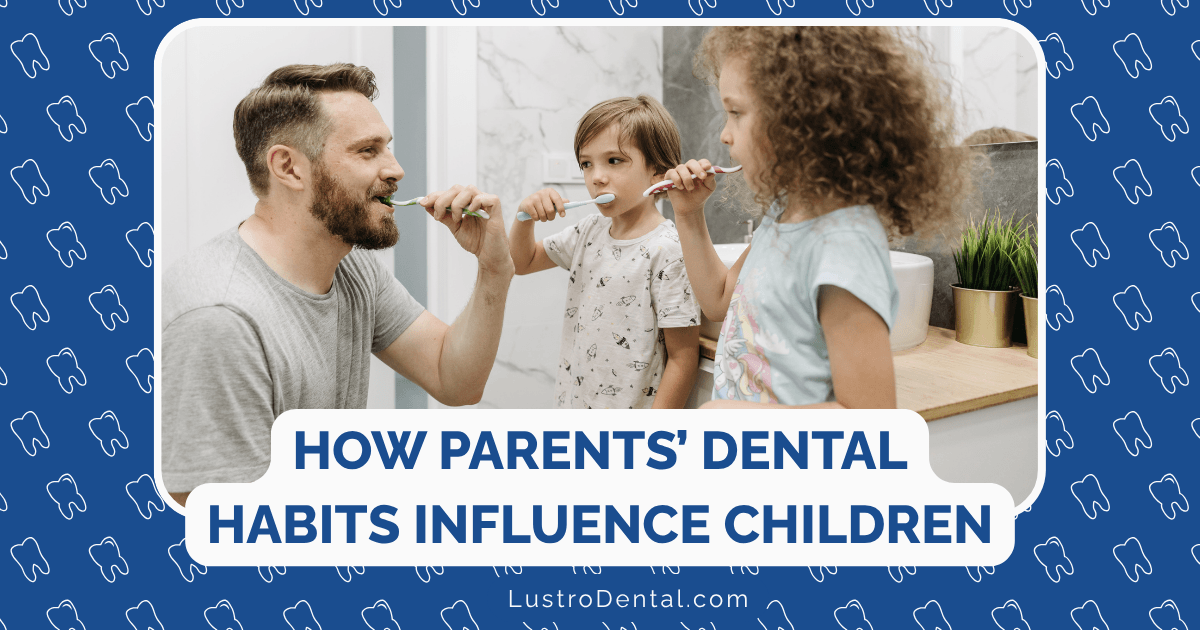
When it comes to dental health, the old adage “do as I say, not as I do” simply doesn’t work. Research consistently shows that children are more likely to adopt the oral health habits they observe in their parents rather than those they’re merely told to follow. This powerful influence extends from basic brushing techniques to attitudes about dental visits and even food choices that impact oral health.
In this comprehensive guide, we’ll explore how parental modeling shapes children’s dental behaviors, backed by the latest research, and provide practical strategies for parents to positively influence their children’s lifelong oral health habits.
Children’s brains are wired to learn through observation. Neuroscientists have identified specialized brain cells called “mirror neurons” that activate both when a child performs an action and when they observe someone else performing the same action. This neurological mechanism makes children particularly susceptible to mimicking their parents’ behaviors—including dental habits.
A 2024 study published in BMC Oral Health examined 1,102 preschool children and found a significant correlation between parents’ health literacy and behavior and their children’s oral health status. The research highlighted that children’s oral health behaviors are primarily learned during their developmental years, with parental actions serving as the strongest influence.
The numbers tell a compelling story:
Dr. Sarah Johnson, pediatric dentist at Children’s Dental Center, explains: “Parents are the primary architects of their children’s dental habits. The patterns established in early childhood often persist throughout life, making parental modeling one of the most powerful tools for ensuring lifelong oral health.”
Parental modeling impacts children differently at various developmental stages:
During these foundational years, babies observe their parents’ routines and begin forming associations with dental care.
Key parental influences:
Research insight: A study from the Journal of Clinical Pediatric Dentistry found that infants whose parents maintained visible oral hygiene routines had significantly less dental anxiety by age 3.
This period marks the development of autonomy, with children eager to imitate adult behaviors.
Key parental influences:
Research insight: The Connecticut Children’s Medical Center reports that children who brush alongside their parents develop more consistent habits and better technique than those who brush alone.
During these years, children become more independent but still look to parents as role models.
Key parental influences:
Research insight: A 2023 study in the International Journal of Paediatric Dentistry found that parental supervision and participation in oral hygiene routines remained significant predictors of children’s oral health even as children gained independence.
While teens seek independence, parental influence remains powerful, often operating beneath the surface.
Key parental influences:
Research insight: According to research published in the Journal of Adolescent Health, teenagers whose parents maintained regular dental visits were 62% more likely to continue regular dental care into early adulthood.
Transform daily dental care from a chore into a meaningful family routine:
Parent tip: “We turned brushing into our ‘dance party time’ with a rotating playlist of favorite songs. Now my kids actually look forward to brushing because it’s associated with fun family time.” – Maria, mother of three
Children are highly attuned to parents’ emotional responses to dental appointments:
Expert insight: Dr. Michael Chen, family dentist, notes: “Children whose parents exhibit dental anxiety are five times more likely to develop dental fears themselves. Conversely, children of parents who display confidence during dental visits typically show similar comfort levels.”
Everyday decisions about food and drinks powerfully influence children’s understanding of oral health:
Research-backed strategy: A study from the Journal of Nutrition Education and Behavior found that children whose parents regularly discussed the health implications of food choices were more likely to make similar considerations independently by age 10.
The dental care products you use send powerful messages to your children:
Parent tip: “When I upgraded to an electric toothbrush, my son became fascinated with it. We made it a ‘growing up’ milestone for him to get his own when he turned seven, which made proper brushing something he aspired to rather than something he had to be reminded about.” – James, father of two
Many adults carry dental fears from their own childhoods, creating a challenging cycle:
Strategies for breaking the cycle:
Expert insight: Psychologist Dr. Lisa Fernandez specializes in dental anxiety: “Parents who acknowledge their own dental fears while actively working to overcome them actually provide a powerful model of resilience for their children. This can be more beneficial than pretending to be fearless.”
Modern family life often leaves little time for extended hygiene routines:
Practical solutions:
Research-backed approach: Studies show that habits linked to existing routines have an 80% higher success rate than those requiring entirely new behavior patterns.
Parents with dental problems may feel hypocritical encouraging better habits than they followed:
Constructive approaches:
Parent perspective: “I grew up without regular dental care and had several visible problems. Rather than hiding them from my kids, I’ve been open about getting them fixed. My daughter was actually proud of me when I got my first filling, and it’s helped her see dental care as something positive rather than something to fear.” – Thomas, father of two
Dental habits often reflect broader cultural and family traditions:
Breaking negative cycles: Research from the Journal of Public Health Dentistry suggests that first-generation changes in dental habits can create powerful shifts that impact multiple future generations.
Access to dental care varies widely based on economic circumstances:
Resource navigation: Organizations like the American Dental Association’s Give Kids A Smile program and community health centers offer resources for families facing financial barriers to dental care.
The influence of parental dental modeling extends far beyond childhood:
Research published in the Journal of Dental Research demonstrates that dental habits formed in childhood correlate strongly with adult oral health outcomes:
The way parents approach dental care shapes children’s long-term attitudes:
Perhaps most powerfully, the habits parents model will likely be passed down to their children’s children:
Every parent has the opportunity to establish positive dental traditions that can benefit generations to come:
Take time to consider the dental habits you observed growing up:
Create an intentional approach to oral health in your home:
Move from intention to action with sustainable approaches:
Recognize that effective modeling changes with your child’s development:
The research is clear: when it comes to dental health, children learn what they live. Parents who brush and floss consistently, visit the dentist regularly, make tooth-healthy food choices, and display positive attitudes about dental care are likely to raise children who do the same.
This influence represents both a significant responsibility and a tremendous opportunity. By mindfully modeling good dental habits, parents can help their children develop lifelong practices that will protect their health, confidence, and quality of life for decades to come.
As family dentist Dr. James Wilson observes, “In thirty years of practice, I’ve never seen a child with excellent dental habits whose parents didn’t demonstrate those same habits. The most powerful dental health tool isn’t in my office—it’s the example parents set at home every day.”
What dental habits from your childhood have you carried into adulthood? How are you working to model positive dental behaviors for the children in your life? Share your experiences and strategies in the comments below.