🦷 General Care
✨ Treatments
👶 Family Care
💚 Wellness
💡 Resources

🦷 General Care
✨ Treatments
👶 Family Care
💚 Wellness
💡 Resources

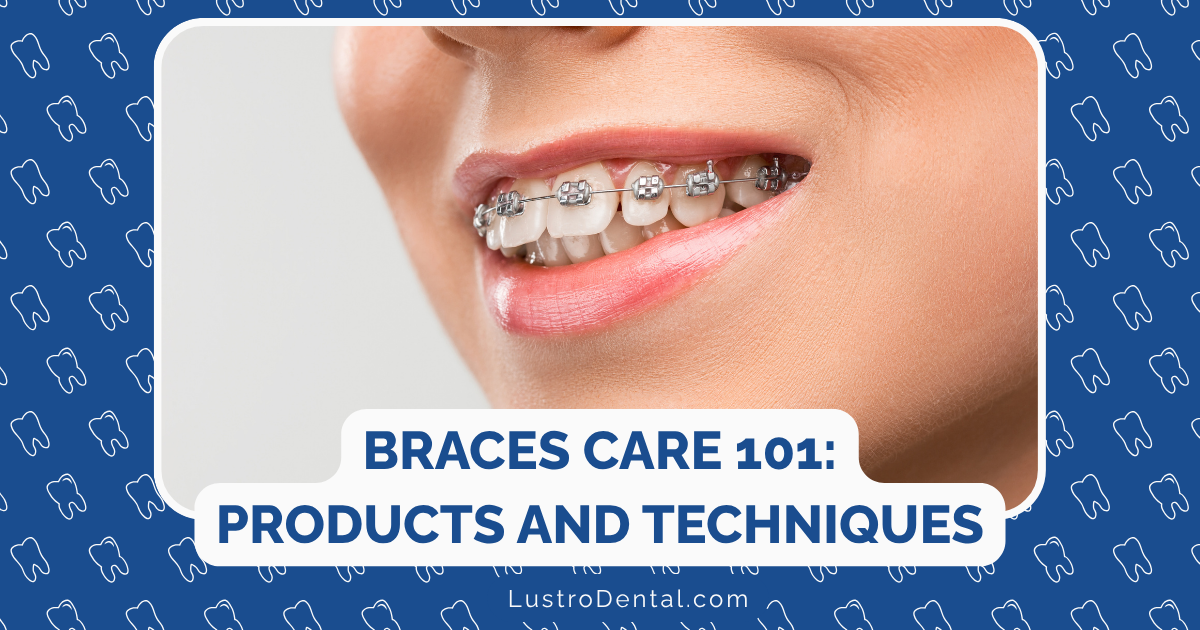
Getting braces is an investment in your future smile—but that investment requires proper maintenance to yield the best returns. As someone who’s guided thousands of orthodontic patients through their treatment journeys, I’ve seen firsthand how the right care routine can make the difference between mediocre and magnificent results.
The reality is that braces create numerous tiny spaces where food particles and plaque can hide, potentially leading to problems like cavities, gum disease, and those dreaded white spots that can appear when braces come off. The good news? With the right tools and techniques, you can keep your teeth and braces spotless, ensuring that when those brackets finally come off, your smile is everything you hoped for.
In this comprehensive guide, I’ll walk you through everything you need to know about caring for your braces, from must-have products to step-by-step cleaning techniques that will help you achieve optimal results from your orthodontic treatment.
Before diving into specific products and techniques, it’s important to understand why proper braces care is so crucial:
According to a study published in the American Journal of Orthodontics and Dentofacial Orthopedics, nearly 50% of patients develop at least one white spot lesion during orthodontic treatment. These permanent discolorations occur when acids from plaque demineralize the tooth enamel around brackets.
Poor oral hygiene can lead to complications that extend your treatment time. The Journal of Clinical Orthodontics reports that patients with inadequate oral hygiene often need an average of 3-6 months of additional treatment time.
With the average cost of braces ranging from $3,000 to $7,000, protecting your investment through proper care just makes financial sense.
The right tools make all the difference when it comes to keeping your braces clean. Here’s what you need in your daily care kit:
What to Look For:
Top Recommendations for 2025:
Expert Tip: “Replace your toothbrush every 6-8 weeks when you have braces, not the standard 3 months,” advises Dr. Jennifer Lee, orthodontist at Clear Smile Orthodontics. “The brackets wear down bristles much faster than normal.”
What to Look For:
Top Recommendations for 2025:
Research Insight: A 2023 study in the Journal of Dental Research found that electric toothbrushes with specialized orthodontic heads removed up to 27% more plaque around brackets compared to manual brushing.
What to Look For:
Top Recommendations for 2025:
User Experience: “My water flosser changed everything about my braces experience,” shares Michael, a 28-year-old patient. “I went from dreading flossing to actually looking forward to that clean feeling after using it.”
What to Look For:
Top Recommendations for 2025:
Orthodontist Insight: “Interdental brushes are often overlooked, but they’re absolutely essential for cleaning around brackets and under wires,” notes Dr. Michael Chen of Advanced Orthodontic Solutions. “I recommend keeping them in your pocket, purse, or backpack for on-the-go cleaning.”
What to Look For:
Top Recommendations for 2025:
Technique Tip: “Thread the floss under the main wire, then wrap it around your fingers in a C-shape to hug each tooth surface,” recommends dental hygienist Sarah Johnson.
What to Look For:
Top Recommendations for 2025:
Application Tip: “Roll the wax into a small ball and warm it between your fingers before applying to make it stick better,” suggests orthodontic assistant Maria Rodriguez.
What to Look For:
Top Recommendations for 2025:
Research Insight: A 2024 study in the Journal of Clinical Dentistry found that using a high-fluoride toothpaste during orthodontic treatment reduced white spot lesions by up to 31%.
What to Look For:
Top Recommendations for 2025:
Expert Tip: “Always keep a travel kit in your backpack, purse, or car,” advises Dr. Lisa Patel. “The best oral hygiene routine is the one you actually follow, and convenience is key.”
Having the right tools is only half the battle—you also need to know how to use them effectively. Here’s your step-by-step guide to a thorough braces cleaning routine:
Step 1: Rinse thoroughly Before brushing, rinse with water to dislodge loose food particles.
Step 2: Brush at a 45-degree angle Position your toothbrush at a 45-degree angle to the gumline, using gentle circular motions.
Step 3: Clean above brackets Angle the brush downward to clean the area above each bracket.
Step 4: Clean below brackets Angle the brush upward to clean the area below each bracket.
Step 5: Clean the brackets themselves Brush directly at the brackets to remove any remaining debris.
Step 6: Clean the chewing surfaces Use back-and-forth motions on the chewing surfaces of your teeth.
Step 7: Brush your tongue and gums Don’t forget these areas, which harbor bacteria that can cause bad breath and gum disease.
Timing: Brush for at least 2 minutes, spending 30 seconds on each quadrant of your mouth. With braces, consider extending this to 3 minutes for thorough cleaning.
Frequency: Brush after every meal and snack, or at minimum, three times daily.
Step 1: Fill the reservoir Use warm water and, if recommended by your orthodontist, add a small amount of alcohol-free mouthwash.
Step 2: Start with low pressure Begin with the lowest pressure setting and increase gradually as you become comfortable.
Step 3: Close lips slightly Allow water to flow out naturally into the sink while keeping lips partially closed to prevent splashing.
Step 4: Aim at the gumline Position the tip at a 90-degree angle to the gumline, not directly at the brackets.
Step 5: Pause between teeth Spend about 3-5 seconds between each tooth, focusing on the gumline and around brackets.
Step 6: Follow a pattern Start at the back of one arch and work your way around systematically.
Frequency: Use once daily, ideally before bedtime after brushing.
Step 1: Select the right size The brush should fit snugly but not forcefully between teeth or around brackets.
Step 2: Insert gently Slide the brush between the wire and teeth or between brackets.
Step 3: Use a back-and-forth motion Gently move the brush back and forth a few times in each space.
Step 4: Rinse the brush frequently This prevents transferring debris from one area to another.
Frequency: Use after meals or at least once daily, especially in areas prone to trapping food.
Step 1: Use a floss threader Thread about 18 inches of waxed floss through the eye of the threader.
Step 2: Insert under the wire Carefully pass the threader under the main archwire between two teeth.
Step 3: Grasp the floss Once through, hold both ends of the floss and wrap it around your fingers.
Step 4: Use a C-shape motion Curve the floss around each tooth in a C-shape, gently moving up and down.
Step 5: Be gentle near the gums Avoid snapping the floss into the gums, which can cause irritation.
Frequency: Floss at least once daily, preferably before bedtime.
Your teeth may feel tender for 2-3 days after adjustments. During this time:
For common braces emergencies:
Poking Wire:
Loose Bracket:
Lost Elastic:
Maintain your routine even on the road:
Solution:
Solution:
Solution:
What you eat significantly impacts your braces care routine:
Hard Foods:
Sticky Foods:
Sugary Items:
Calcium-Rich Foods:
Phosphorus-Rich Foods:
Vitamin C Foods (for gum health):
Consistency is key for effective braces care. Here’s how to build habits that last:
Maintaining excellent braces care is easier when you can see your progress:
Take monthly photos of your smile from the same angle and with the same lighting. This visual record helps you:
Create a hygiene calendar (paper or digital) to track your daily care routine. Consider:
Your home care routine is complemented by professional care:
Typically scheduled every 4-8 weeks, these appointments allow your orthodontist to:
Most orthodontists recommend more frequent dental cleanings during braces treatment:
Expert Tip: “Don’t skip your regular dental cleanings during orthodontic treatment,” emphasizes Dr. Robert Johnson. “These appointments are actually more important than ever when you have braces.”
As your treatment progresses, start preparing for that exciting day when your braces come off:
Caring for braces requires dedication, but the results are well worth the effort. By investing in the right products, mastering proper techniques, and maintaining consistency in your care routine, you’re setting yourself up for the best possible outcome—a healthy, beautiful smile that lasts a lifetime.
Remember that the habits you develop during orthodontic treatment often become lifelong oral hygiene practices. The discipline and care you show now will benefit your dental health for decades to come.