🦷 General Care
✨ Treatments
👶 Family Care
💚 Wellness
💡 Resources

🦷 General Care
✨ Treatments
👶 Family Care
💚 Wellness
💡 Resources

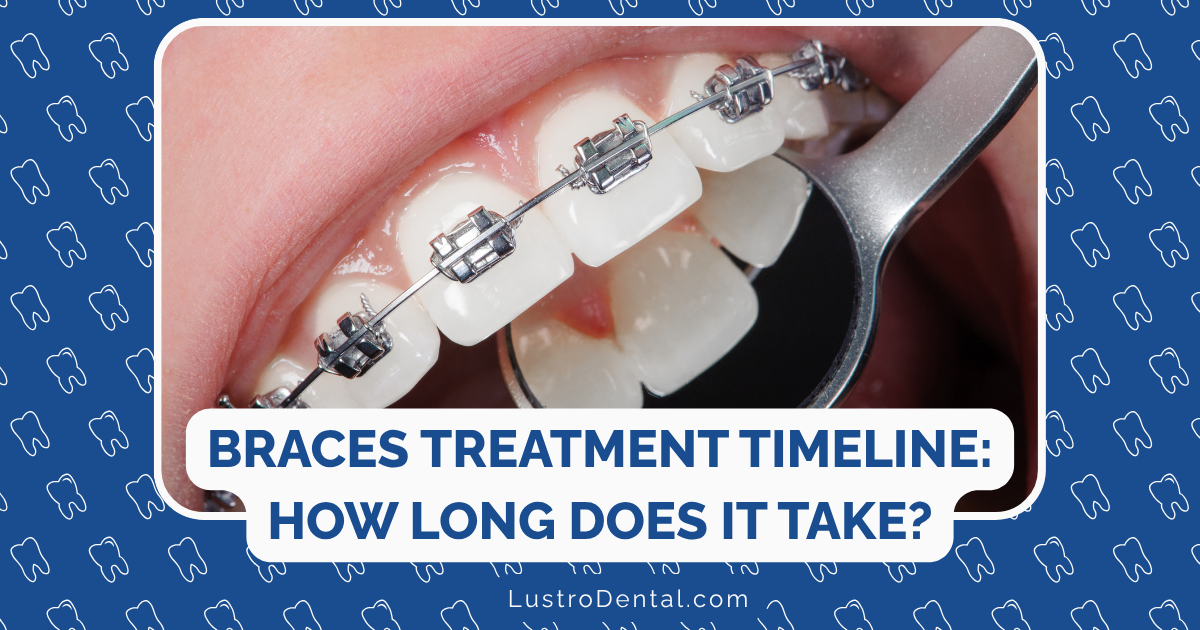
As an orthodontic specialist, this is undoubtedly the most common question I hear from patients—often asked with a mix of hope and anxiety. It’s also one of the most difficult to answer with precision because the truth is: it depends.
While orthodontists often quote an “average” treatment time of 18-24 months, this one-size-fits-all timeline can be misleading. The reality is far more nuanced, with treatment durations varying dramatically based on the specific orthodontic issues being addressed, patient age, compliance, and the type of appliances used.
In this comprehensive guide, I’ll break down the real timelines you can expect for different orthodontic situations, based on clinical experience and the latest research in 2026. Whether you’re considering braces for yourself or a family member, understanding these timelines will help you set realistic expectations and prepare for the orthodontic journey ahead.
Before diving into specific timelines, it’s important to understand the key factors that influence how long you’ll need to wear braces:
The complexity and severity of your dental problems are the most significant determinants of treatment duration. Simple alignment issues typically resolve much faster than complex bite problems or severe crowding.
Younger patients generally experience faster tooth movement due to their more active bone metabolism and growth. According to research published in the American Journal of Orthodontics and Dentofacial Orthopedics, children and teenagers may see results up to 30% faster than adults with similar conditions.
Different orthodontic appliances work at different speeds. Traditional metal braces, ceramic braces, lingual braces, and clear aligners each have their own typical treatment timelines.
Following your orthodontist’s instructions regarding elastic wear, appliance use, and appointment attendance can significantly impact treatment duration. Poor compliance is one of the leading causes of extended treatment time.
Individual biological factors like bone density, gum health, and how your body responds to orthodontic forces can influence treatment speed. Some people naturally experience faster tooth movement than others.
Let’s examine realistic treatment timelines for different orthodontic situations:
Typical Duration: 6-12 months
What to Expect:
Real Patient Example: Sarah, 28, had minor spacing between her front teeth and slight crowding on her lower arch. Using clear aligners with excellent compliance, her treatment was completed in just 7 months.
Orthodontist Insight: “For mild cases focused primarily on aesthetics, we can often achieve excellent results in under a year,” explains Dr. Michael Chen of Advanced Orthodontic Solutions. “These cases typically involve movement of less than 3mm per tooth and don’t require significant bite correction.”
Typical Duration: 12-18 months
What to Expect:
Real Patient Example: Jason, 15, had moderate crowding in both arches with slight rotation of several teeth. With traditional metal braces, his treatment was completed in 16 months.
Orthodontist Insight: “Moderate cases make up the majority of our practice and typically fall within the 12-18 month range,” notes Dr. Lisa Patel. “With good compliance and regular adjustments every 4-6 weeks, we can achieve excellent results in this timeframe for most teenage patients.”
Typical Duration: 24-36 months
What to Expect:
Real Patient Example: Marcus, 22, had severe crowding with several teeth completely blocked out of the arch. His treatment involved the extraction of four premolars and took 30 months to complete with traditional braces.
Orthodontist Insight: “Severe crowding cases are among our most challenging and time-consuming,” explains Dr. Robert Johnson. “When teeth are severely displaced or impacted, we need to create space first, then align the teeth, and finally detail the bite. Each phase requires adequate time for biological adaptation.”
Typical Duration:
What to Expect:
Real Patient Example: Emma, 14, had a deep overbite where her upper teeth completely covered her lower teeth. Her treatment with braces and elastics took 22 months to achieve proper bite alignment.
Orthodontist Insight: “Overbite correction requires not just tooth movement but often changes in jaw relationships,” says Dr. Jennifer Williams. “The deeper the bite, the longer the treatment, with severe cases sometimes requiring growth modification in younger patients or surgical intervention in adults.”
Typical Duration:
What to Expect:
Real Patient Example: Tyler, 12, had a moderate underbite that was caught early. With an expansion appliance followed by braces, his treatment was completed in 28 months.
Orthodontist Insight: “Underbites are typically more challenging to treat than overbites,” notes Dr. Carlos Ramirez from the University Orthodontic Center. “The earlier we can intervene, the better. In growing children, we can often modify growth to avoid surgery, but this requires a longer overall treatment time.”
Typical Duration:
What to Expect:
Real Patient Example: Sophia, 9, had a posterior crossbite with a functional shift. Treatment with a rapid palatal expander followed by braces took a total of 18 months.
Orthodontist Insight: “Crossbites often require preliminary expansion before we can even begin comprehensive orthodontic treatment,” explains Dr. David Thompson. “The expansion phase typically takes 3-6 months, followed by a retention period, and then comprehensive braces or aligners.”
Typical Duration: 18-36 months
What to Expect:
Real Patient Example: Aiden, 16, had an anterior open bite due to a persistent tongue thrust habit. His treatment included habit-breaking appliances and braces, lasting 24 months.
Orthodontist Insight: “Open bites are among the most challenging malocclusions to treat and maintain,” says Dr. Michelle Lee. “Because they’re often associated with habits like tongue thrust, successful treatment requires not just moving teeth but changing neuromuscular patterns, which takes time and consistent reinforcement.”
The type of orthodontic appliance used can significantly impact treatment duration:
Average Duration: 18-24 months Advantages: Effective for complex movements, non-compliance issues eliminated Best For: Severe cases, younger patients, those who might struggle with removable appliance compliance
Average Duration: 18-30 months Advantages: More aesthetic than metal, similar effectiveness Potential Drawbacks: Slightly longer treatment time due to increased friction and more careful adjustments to prevent bracket breakage
Average Duration: 12-24 months Advantages: Potentially faster treatment due to reduced friction Best For: Moderate to severe cases seeking potentially reduced treatment time
Average Duration: 18-36 months Advantages: Invisible from the front Potential Drawbacks: More difficult adjustments can extend treatment time; more challenging for severe cases
Average Duration:
Advantages: Removable, aesthetic, potentially shorter treatment for mild cases Potential Drawbacks: Heavily dependent on patient compliance; not always suitable for complex bite issues
According to a 2024 study published in the Journal of Clinical Orthodontics, clear aligner treatment for comparable cases takes, on average, 2-4 months longer than traditional braces when addressing moderate to severe malocclusions. However, this gap is narrowing with advances in aligner technology.
Your age at the start of treatment can significantly impact how long braces will take:
Average Duration:
What to Expect:
Average Duration: 18-24 months
What to Expect:
Average Duration: 24-36 months
What to Expect:
Orthodontist Insight: “Adult treatment typically takes about 20-30% longer than adolescent treatment for comparable cases,” explains Dr. Sarah Johnson of Metropolitan Orthodontics. “This is primarily due to biological factors—adult bone is denser and no longer growing, which means tooth movement requires more time.”
For patients seeking faster results, several accelerated orthodontic techniques have gained traction in 2026:
Potential Time Reduction: 30-50%
How It Works: This minimally invasive procedure involves creating small perforations in the bone around teeth, stimulating the body’s inflammatory response and accelerating tooth movement.
Research Findings: A 2024 clinical study published in the American Journal of Orthodontics found that MOPs can increase the rate of tooth movement by up to 2.3 times compared to conventional methods.
Potential Time Reduction: 20-30%
How It Works: Devices like AcceleDent and VPro apply gentle vibrations to the teeth for several minutes daily, potentially increasing cellular activity and accelerating tooth movement.
Research Findings: While earlier studies showed mixed results, newer research from 2024 indicates more consistent benefits, particularly when used with clear aligners.
Potential Time Reduction: 15-25%
How It Works: Special LED devices emit specific wavelengths of light that may stimulate cellular metabolism and accelerate tooth movement.
Research Findings: A 2023 systematic review in the Journal of Dental Research found moderate evidence supporting light therapy’s effectiveness in reducing treatment time.
Orthodontist Insight: “While accelerated techniques show promise, they’re not magic solutions,” cautions Dr. William Chen. “They work best for specific types of tooth movements and in compliant patients. The biological process of bone remodeling still requires adequate time, and rushing too much can potentially lead to root resorption or instability.”
Understanding what might lengthen your time in braces can help you avoid these pitfalls:
Each missed appointment can add weeks to your treatment. Regular adjustments (typically every 4-8 weeks) are crucial for continuous progress.
Not wearing elastics as prescribed can significantly extend treatment. Similarly, clear aligner patients who don’t wear their trays for the recommended 20-22 hours daily will experience delays.
Broken brackets, wires, or aligners interrupt the treatment process and can add weeks or months to your timeline if they occur frequently.
Excessive plaque and inflammation can slow tooth movement and may require treatment pauses to address periodontal issues.
Some patients’ teeth simply move more slowly due to biological factors. This unpredictable aspect can sometimes extend treatment despite perfect compliance.
Many patients don’t realize that a significant portion of orthodontic treatment time is dedicated to fine-tuning and perfecting the final result:
Typical Duration: 3-6 months of the total treatment time
What Happens:
Orthodontist Insight: “The finishing phase is where the magic happens,” explains Dr. Rebecca Wong. “While patients often think they’re ‘almost done’ when their teeth look straight, those final months of detailing make the difference between a good result and an excellent one. This phase cannot be rushed.”
It’s important to understand that your orthodontic journey doesn’t end when braces come off:
Duration: Lifetime (though protocols vary)
What to Expect:
Why It Matters: Research published in the European Journal of Orthodontics shows that without proper retention, up to 70% of patients experience some degree of relapse within 10 years of treatment.
To ensure your treatment progresses as efficiently as possible:
Brush after every meal and floss daily. Consider adding a water flosser or interdental brushes to your routine.
Wear elastics, aligners, or other appliances exactly as prescribed. Even small deviations can significantly impact your timeline.
Follow food restrictions with braces and use mouthguards during sports to prevent breakage.
Schedule your orthodontic visits as a top priority and avoid rescheduling whenever possible.
If you notice anything unusual (loose bracket, pain, etc.), contact your orthodontist immediately rather than waiting until your next appointment.
While everyone wants the shortest possible treatment time, it’s important to maintain perspective. The goal of orthodontic treatment isn’t just straight teeth—it’s a properly functioning bite, stable results, and healthy supporting structures.
As Dr. James Anderson, president of the American Association of Orthodontists, notes: “The most important outcome isn’t how quickly treatment is completed, but how well it’s completed. A few extra months in treatment is a small price to pay for results that will benefit you for decades to come.”
Your orthodontist should provide you with a personalized treatment timeline at your initial consultation, but understand that this is an estimate that may need adjustment as treatment progresses. The biological process of moving teeth is somewhat unpredictable and varies from person to person.
By understanding the factors that influence treatment duration and maintaining excellent compliance, you can help ensure that your time in braces is as efficient as possible while achieving the best possible result—a healthy, beautiful smile that lasts a lifetime.