🦷 General Care
✨ Treatments
👶 Family Care
💚 Wellness
💡 Resources

🦷 General Care
✨ Treatments
👶 Family Care
💚 Wellness
💡 Resources

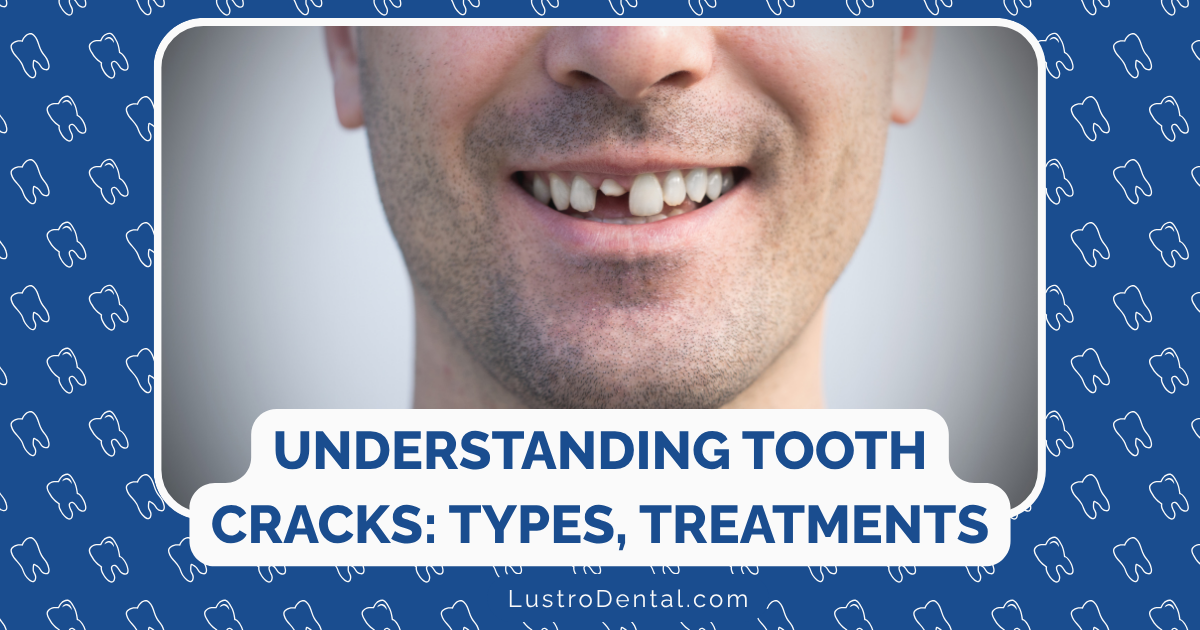
That sharp pain when you bite down on something or that unexpected sensitivity to hot or cold might be more than just a passing discomfort—it could be signaling a cracked tooth. As someone who’s guided countless patients through dental challenges, I’ve seen firsthand how confusing and concerning tooth cracks can be.
The good news? Modern dentistry offers effective solutions for nearly every type of tooth crack. But treatment success depends largely on identifying the specific type of crack you’re dealing with and addressing it promptly.
In this comprehensive guide, we’ll explore the five main types of tooth cracks (as classified by the American Association of Endodontists), their symptoms, and the most effective treatment options for each. Whether you’re experiencing symptoms or simply want to be informed, this knowledge will empower you to make the best decisions for your dental health.
Before we dive into specific types, it’s worth noting that cracked teeth are incredibly common. In fact, they’re the third leading cause of tooth loss after cavities and gum disease. Many people have minor cracks without even realizing it, while others experience painful symptoms that prompt them to seek immediate care.
Dr. Sarah Johnson, endodontist at University Dental Institute, explains: “Tooth cracks develop in three stages—initiation, propagation, and manifestation. Many cracks remain in the early stages for years before causing noticeable symptoms. This is why regular dental check-ups are crucial for early detection.”
Now, let’s explore each type of crack and what it means for your dental health.
Craze lines are tiny, hairline cracks that affect only the outer enamel layer of the tooth. They’re extremely common in adult teeth and are often visible as small vertical lines on the tooth surface.
Identifying Characteristics:
Causes:
Treatment Options:
No Treatment Necessary
In most cases, craze lines are purely cosmetic and require no treatment at all. They don’t compromise the structural integrity of your tooth and don’t increase your risk for more serious dental issues.
Cosmetic Treatment (If Desired)
If craze lines affect your smile’s appearance, cosmetic options include:
Prognosis:
Excellent. Craze lines don’t typically progress to more serious cracks and don’t require intervention for dental health reasons. According to research published in the Journal of the American Dental Association, less than 3% of teeth with craze lines develop more significant fractures within a three-year period.
A fractured cusp occurs when a piece of the tooth’s chewing surface (cusp) weakens and breaks off. This type of crack often happens around dental fillings or in teeth with substantial decay.
Identifying Characteristics:
Causes:
Treatment Options:
Dental Bonding
For minor fractured cusps, composite resin bonding may be sufficient. This involves:
Onlay
For moderate fractures, an onlay may be recommended:
Dental Crown
For more extensive fractures, a full crown is often the best option:
Dr. Michael Chen of Advanced Dental Specialists notes, “For fractured cusps, full-coverage crowns show significantly better long-term outcomes compared to onlays, with studies showing up to 95% survival at 5 years versus 85% for onlays.”
Prognosis:
Very good to excellent. When properly treated, teeth with fractured cusps have a success rate of over 90%. Since the fracture typically doesn’t extend into the pulp, root canal treatment is rarely needed unless decay or the fracture is extensive.
A cracked tooth refers to a crack that extends from the chewing surface vertically toward the root. Unlike a fractured cusp, this type of crack doesn’t typically result in a piece breaking off immediately. Instead, the crack may gradually spread over time.
Identifying Characteristics:
Causes:
Treatment Options:
The treatment approach depends largely on the extent of the crack:
For Cracks That Don’t Extend Below the Gumline:
Dental Bonding
For very minor cracks caught early:
Dental Crown
The most common and successful treatment:
For Cracks Extending into the Pulp:
Root Canal Therapy + Crown
When the crack has affected the pulp (nerve):
For Cracks Extending Below the Gumline:
Crown Lengthening + Crown
When the crack extends slightly below the gumline:
Prognosis:
Good to guarded, depending on extent. Research from the Journal of Endodontics indicates that cracked teeth treated with appropriate intervention (crown or root canal + crown) have survival rates between 85-93% at 2 years. However, if the crack extends far below the gumline or has been present for a long time, the prognosis becomes more guarded.
“The key with cracked teeth is early intervention,” emphasizes Dr. Lisa Wong, endodontist at University Dental Center. “A crack caught early and treated with a crown has a dramatically better prognosis than one that’s been allowed to progress for months or years.”
A split tooth is the result of a cracked tooth that has progressed until the tooth has separated into distinct segments. This is essentially the end stage of an untreated cracked tooth.
Identifying Characteristics:
Causes:
Treatment Options:
Unfortunately, split teeth generally cannot be saved intact. However, depending on the position and extent of the split, there may be options:
Partial Tooth Retention
For some molars with multiple roots:
Extraction and Replacement
In most cases, extraction is necessary:
Prognosis:
Poor for tooth retention. Once a tooth has split completely, saving the entire tooth is generally not possible. However, the prognosis for replacement options like implants is excellent, with success rates over 95% at 10 years.
A vertical root fracture begins in the root of the tooth and extends toward the chewing surface—essentially the opposite direction of most other cracks. These fractures are often difficult to detect and may be present for some time before symptoms appear.
Identifying Characteristics:
Causes:
Treatment Options:
Treatment options are limited for vertical root fractures:
Extraction
In most cases, extraction is the only viable option:
Hemisection or Root Amputation
In rare cases involving multi-rooted teeth:
Prognosis:
Poor for tooth retention. Vertical root fractures generally have the poorest prognosis of all crack types. According to the American Association of Endodontists, most teeth with vertical root fractures require extraction. However, as with split teeth, replacement options offer excellent long-term outcomes.
When facing a cracked tooth, several factors should guide your treatment decision:
As we’ve seen, the type of crack largely determines the available treatment options and prognosis. A thorough examination by your dentist or endodontist is crucial for accurate classification.
Sometimes the most expensive option isn’t necessarily the best long-term choice. For example:
Dr. Johnson advises, “I always discuss both the best-case and worst-case scenarios with my patients. While we always try to save natural teeth when reasonable, sometimes the more predictable option is extraction and replacement, especially for extensive cracks.”
While some tooth cracks are unavoidable, many can be prevented with proper care:
If you suspect you have a cracked tooth, don’t wait to seek treatment. Early intervention significantly improves outcomes. Contact your dentist immediately if you experience:
Understanding the different types of tooth cracks and their treatment options empowers you to make informed decisions about your dental health. Remember that early intervention is key—what starts as a minor, treatable crack can progress to a split tooth requiring extraction if left untreated.
Modern dentistry offers excellent solutions for most types of cracks, with success rates for properly treated cracked teeth exceeding 90% in many cases. By working closely with your dental professional and addressing cracks promptly, you can maintain your natural smile for years to come.
Have you experienced a cracked tooth? Share your experience or questions in the comments below.