🦷 General Care
✨ Treatments
👶 Family Care
💚 Wellness
💡 Resources

🦷 General Care
✨ Treatments
👶 Family Care
💚 Wellness
💡 Resources

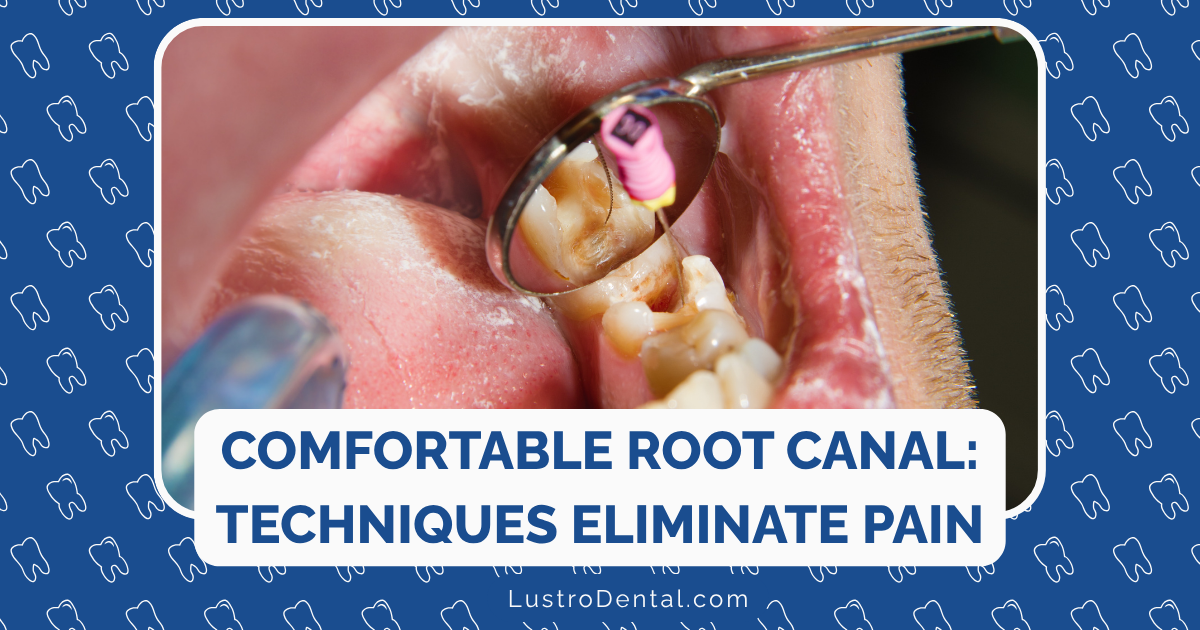
Few dental procedures carry the reputation that root canals do. For decades, the phrase “I’d rather have a root canal” has been shorthand for something extremely painful or unpleasant. But if you’ve been avoiding necessary endodontic treatment based on this outdated reputation, I have good news: modern root canal therapy bears little resemblance to the procedures of the past.
Thanks to remarkable advances in pain management techniques and technologies, today’s root canals are not only effective but surprisingly comfortable. As someone who’s witnessed this evolution in endodontic care firsthand, I’m excited to share how these innovations are transforming the patient experience.
Before diving into specific advances, it’s worth addressing the disconnect between perception and reality. A study cited in the Journal of Endodontics found that patients who have actually undergone root canal treatment are six times more likely to describe it as “painless” compared to people who have never had one.
The truth is that most discomfort associated with root canals comes from the infection itself, not the treatment. In fact, root canal therapy relieves pain by removing the infected pulp tissue that’s causing it.
Dr. James Gutmann, professor emeritus at Texas A&M College of Dentistry, explains: “The goal of endodontic treatment has always been to relieve pain, not cause it. What’s changed is our ability to make the entire experience comfortable through advances in anesthesia, instrumentation, and patient-centered approaches.”
Local anesthesia is the foundation of pain control during root canal treatment, and recent innovations have dramatically improved its effectiveness and comfort.
One of the most significant advances addresses the burning sensation many patients experience during anesthetic injections.
How it works: Traditional local anesthetics are acidic (pH around 3.5), which contributes to the burning sensation during injection. Buffered anesthetics add sodium bicarbonate to raise the pH to a more neutral level (around 7.4), closer to the body’s natural pH.
Benefits:
According to research published in Restorative Dentistry & Endodontics, buffered anesthetics have shown significant improvements in patient comfort and anesthetic success rates, particularly for teeth with irreversible pulpitis—a condition that traditionally makes achieving profound anesthesia challenging.
Traditional syringes rely on the dentist’s manual pressure, which can cause discomfort if anesthetic is delivered too quickly. Computer-controlled local anesthetic delivery (CCLAD) systems have revolutionized this aspect of pain management.
How it works: Systems like The Wand® or Calaject™ use computer-regulated flow rates to deliver anesthetic at the optimal pressure and volume.
Benefits:
A clinical study published in Anesthesia Progress found that CCLAD systems reduced injection pain by up to 50% compared to traditional syringes, with particularly significant improvements for palatal injections—historically among the most uncomfortable.
Advances in anesthetic formulations have also contributed to more comfortable root canals.
How it works: Articaine differs from traditional lidocaine in its molecular structure, allowing it to penetrate tissue more effectively.
Benefits:
A 2023 study published in the Journal of Dental Anesthesia and Pain Medicine found that articaine needle-free anesthesia had a significantly higher success rate (93.62%) compared to traditional lidocaine nerve blocks (80.85%) in patients with irreversible pulpitis.
For patients with needle phobia, new delivery methods are eliminating the need for traditional injections in some cases.
How it works: Systems like Kovanaze® (tetracaine HCl and oxymetazoline HCl) nasal spray can provide pulpal anesthesia for upper teeth without injections, while jet injection devices use pressure to force anesthetic through the tissue without needles.
Benefits:
Beyond anesthesia, several innovations are making the root canal procedure itself more comfortable:
Traditional root canal cleaning relies on mechanical files that can create microfractures and debris. The GentleWave® system represents a paradigm shift in how root canals are cleaned and disinfected.
How it works: Instead of relying solely on mechanical instrumentation, GentleWave® uses multisonic energy to create powerful fluid dynamics that clean and disinfect the entire root canal system, including microscopic spaces that files can’t reach.
Benefits:
According to data from GentleWave, over one million patients have been treated with this technology, with clinical success rates of 97.3% for endodontic treatment.
Modern endodontics has embraced magnification and illumination technologies that allow unprecedented precision.
How it works: Operating microscopes provide up to 25x magnification, allowing endodontists to see minute details that would be invisible to the naked eye.
Benefits:
Dental lasers are increasingly being incorporated into endodontic procedures for their ability to disinfect canals effectively while minimizing discomfort.
How it works: Specific wavelengths of laser energy are delivered into the canal system to kill bacteria and remove debris without mechanical instrumentation.
Benefits:
Beyond specific technologies, the endodontic community has embraced holistic approaches to patient comfort:
Rather than reacting to pain after it occurs, modern protocols focus on preventing it from developing in the first place.
How it works: Medications are administered before treatment to block pain pathways before they become activated.
Benefits:
A common protocol includes taking a non-steroidal anti-inflammatory drug (NSAID) like ibuprofen before treatment, which has been shown to significantly reduce post-endodontic discomfort.
Recognizing that psychological comfort is as important as physical comfort, modern endodontics incorporates various anxiety management approaches:
Options include:
Dr. Sarah Johnson, endodontist at University of Pennsylvania School of Dental Medicine, notes: “We’ve found that addressing anxiety is just as important as physical pain management. When patients are relaxed, they not only perceive less discomfort, but their bodies actually respond better to anesthesia and heal more effectively.”
Simple but effective devices are making the initial anesthetic injection more comfortable.
How it works: Devices like DentalVibe® use vibration to stimulate the area where an injection will be administered, based on the gate control theory of pain.
Benefits:
Studies have shown that vibration devices can reduce injection pain by up to 60%, making the most anxiety-provoking part of treatment much more tolerable.
Innovations in managing discomfort after root canal treatment have also contributed to the overall improvement in patient experience:
New formulations provide extended pain relief after the procedure is complete.
How it works: Anesthetics like bupivacaine provide numbness for 8-12 hours (compared to 3-5 hours with traditional options), bridging the gap until oral medications take effect.
Benefits:
Rather than prescribing opioids, which can have significant side effects and addiction potential, modern protocols focus on more effective and safer alternatives.
How it works: Specific combinations of over-the-counter medications target different pain pathways simultaneously.
Benefits:
The most effective protocol, according to research published in the Journal of the American Dental Association, alternates ibuprofen and acetaminophen, providing more effective pain relief than prescription opioids for most dental procedures.
These advances aren’t just theoretical—they’re making a real difference in patient experiences:
“I put off my root canal for months because I was terrified based on stories I’d heard. When I finally couldn’t stand the pain anymore, I was amazed at how comfortable the actual procedure was. The GentleWave technology my endodontist used made it completely different than what I expected. I literally fell asleep during the procedure!” — Maria, 42
“After a bad experience years ago, I was dreading another root canal. But the buffered anesthesia and computer-controlled delivery made such a difference—I barely felt the injection, and I was completely numb throughout the procedure. It was actually less stressful than getting a filling.” — James, 58
“I’ve had root canals both ways—the old method and with all the new technology my endodontist uses now. It’s night and day. With the microscope and modern techniques, there was no pain during the procedure and minimal discomfort afterward. I was back to normal activities the same day.” — Sarah, 35
The field continues to evolve, with several promising developments on the horizon:
Rather than removing pulp tissue and replacing it with an inert material, regenerative approaches aim to restore the tooth’s natural vitality.
Potential benefits:
Emerging research is exploring how genetic factors influence individual responses to pain medications and anesthetics.
Potential benefits:
Artificial intelligence is beginning to play a role in predicting treatment outcomes and optimizing approaches.
Potential benefits:
If fear of pain has been keeping you from getting needed endodontic treatment, it’s time to reconsider. Modern root canal therapy, with its advanced pain management techniques and technologies, offers a level of comfort that was unimaginable just a decade ago.
Dr. Michael Wilson, endodontist at Mayo Clinic, summarizes it well: “The goal of endodontic treatment has always been to relieve pain, not cause it. With today’s advances, we can not only achieve that goal more effectively than ever, but we can make the entire experience surprisingly comfortable. Patients who have been putting off treatment based on outdated perceptions are often amazed at how different the modern experience is.”
By embracing these advances and working with an endodontist who utilizes current technologies and techniques, you can preserve your natural teeth with minimal discomfort—and put the outdated reputation of root canal therapy where it belongs: in the past.
Have you experienced modern root canal treatment? Share your experience in the comments below.