🦷 General Care
✨ Treatments
👶 Family Care
💚 Wellness
💡 Resources

🦷 General Care
✨ Treatments
👶 Family Care
💚 Wellness
💡 Resources

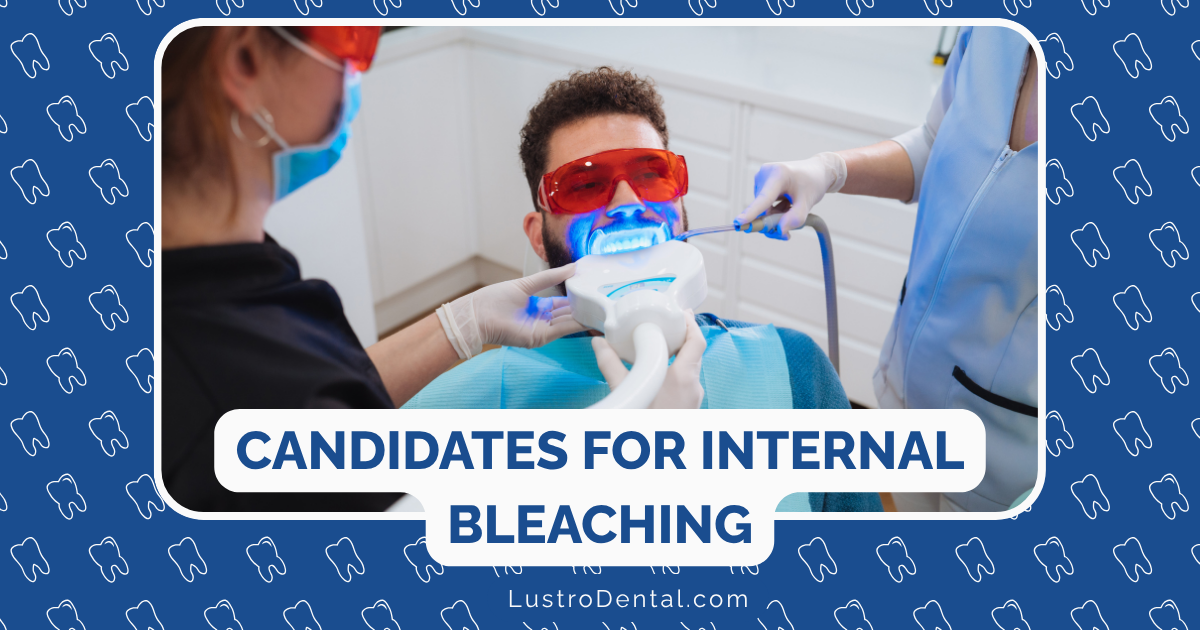
When a single discolored tooth affects your smile confidence, internal bleaching can seem like a miracle solution. But is it right for you? As a dental health advocate who’s guided many patients through this decision, I’ve found that understanding who makes an ideal candidate—and who doesn’t—is crucial for setting realistic expectations and achieving successful outcomes.
Internal bleaching (also called non-vital bleaching or walking bleach technique) offers a conservative approach to whitening teeth from the inside out. However, it’s not a universal solution for all discolored teeth. Let’s explore when internal bleaching is the perfect answer and when alternative treatments might serve you better.
Internal bleaching works best for specific situations. You might be an excellent candidate if:
The most common scenario for internal bleaching is a tooth that has darkened following root canal therapy. Dr. Sarah Johnson, endodontist at University Dental Institute, explains: “After root canal treatment, teeth can darken due to blood components breaking down inside the tooth or from materials used during the procedure. Since the tooth no longer has a blood supply, these stains can’t be naturally cleared away, leading to discoloration.”
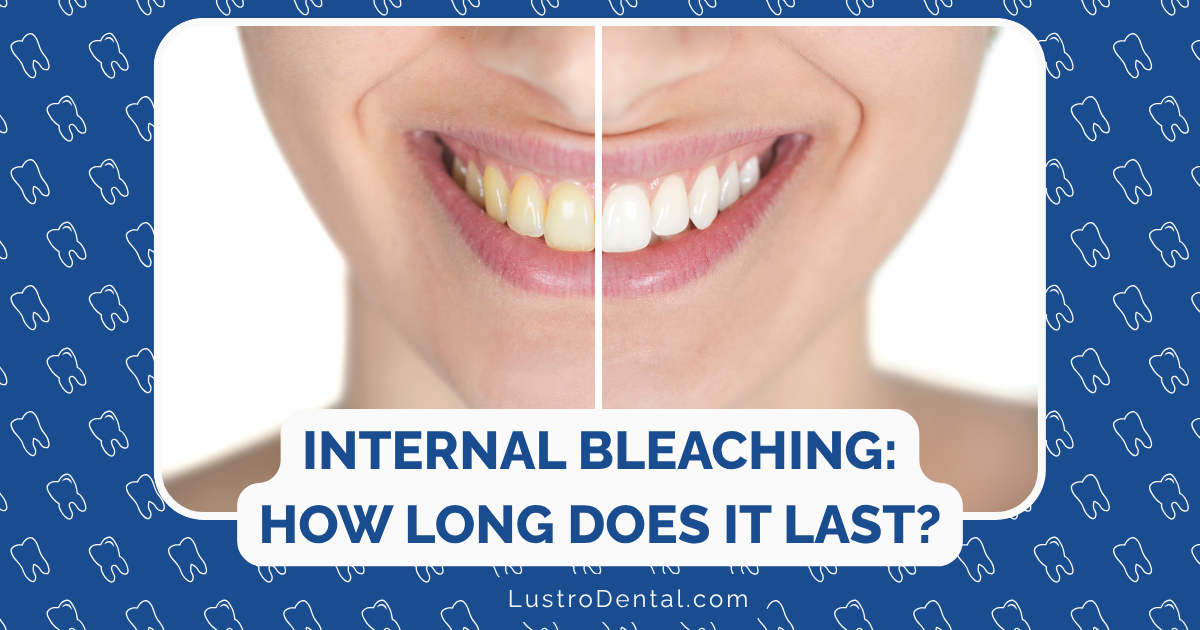
If your tooth has turned grayish, yellowish, or brownish after a root canal, internal bleaching can often restore it to match your surrounding teeth.
Teeth that have experienced trauma or injury often develop internal discoloration, even if they haven’t had root canal treatment initially. This happens when blood vessels in the pulp rupture and release blood components into the dentin tubules.
“When a tooth experiences significant trauma, it may respond by bleeding internally,” notes Dr. Michael Chen of Advanced Dental Specialists. “Over time, these blood components break down and stain the dentin from within, creating a grayish or bluish appearance that won’t respond to external whitening.”
If your tooth discoloration resulted from a sports injury, fall, or other trauma, internal bleaching might be appropriate—usually after root canal treatment has been completed.
Some teeth develop internal staining from medications (like tetracycline) or developmental conditions. While severe cases might require veneers or crowns, milder intrinsic staining in a root canal-treated tooth can often be improved with internal bleaching.
The best candidates for internal bleaching have teeth that are structurally intact aside from the discoloration. This means:
If you value preserving your natural tooth structure and avoiding more invasive procedures like crowns or veneers, internal bleaching offers a conservative approach. It requires minimal removal of tooth structure and preserves the external enamel intact.
While internal bleaching is effective for many patients, it’s not the right solution for everyone. You might not be an ideal candidate if:
Internal bleaching can only be performed on teeth that have undergone root canal therapy. If your discolored tooth still has vital pulp (living nerve tissue), external whitening or other cosmetic options would be more appropriate.
Dr. Lisa Wong, cosmetic dentist at City Dental Center, clarifies: “Internal bleaching requires access to the pulp chamber, which is only possible in root canal-treated teeth. For vital teeth with discoloration, we would consider external whitening, microabrasion, or restorative options like veneers.”
Teeth with extensive decay, large fillings, or significant structural compromise may not be good candidates for internal bleaching. In these cases, a full-coverage restoration like a crown might provide better structural support and aesthetic improvement.
Internal bleaching is contraindicated if you have:
These conditions should be addressed before considering any cosmetic procedures.
Not all discoloration responds well to internal bleaching:
If your tooth has been restored with a fiber post cemented in the root canal, internal bleaching may be contraindicated as it could interfere with the post and compromise the restoration.
Due to limited research on the safety of bleaching agents during pregnancy and nursing, most dental professionals recommend postponing elective cosmetic procedures like internal bleaching.
If you are a candidate for internal bleaching, several factors can influence your results:
Research shows that success rates vary based on the original cause and color of discoloration:
Newer discoloration (less than 1-2 years) typically responds better to internal bleaching than long-standing stains.
A well-sealed root canal filling is essential for successful internal bleaching and prevents complications like cervical resorption.
Modern techniques using sodium perborate mixed with water show fewer complications and good aesthetic results compared to high-concentration hydrogen peroxide methods.
Maintaining good oral hygiene and avoiding staining substances (coffee, tea, tobacco) can extend the longevity of your results.
It’s important to have realistic expectations about internal bleaching results:
Some patients may experience color regression over time, particularly if the original discoloration was severe. The good news is that the procedure can often be repeated safely if discoloration returns.
If you’re not an ideal candidate for internal bleaching, several alternatives exist:
The best way to determine if you’re a good candidate for internal bleaching is to consult with an endodontist or a dentist experienced in the procedure. They can evaluate:
Based on this comprehensive assessment, they can recommend whether internal bleaching is right for you or if another treatment would better meet your needs.
Internal bleaching offers a conservative, effective solution for specific types of tooth discoloration. For the right candidates—those with root canal-treated teeth that have darkened due to trauma or treatment—it can provide dramatic aesthetic improvement without sacrificing tooth structure.
Understanding whether you’re an ideal candidate is the first step toward achieving the bright, confident smile you desire. If internal bleaching isn’t right for you, take heart—modern dentistry offers many alternative approaches to address discolored teeth.
Have you experienced internal bleaching or are you considering it? Share your questions or experiences in the comments below.