🦷 General Care
✨ Treatments
👶 Family Care
💚 Wellness
💡 Resources

🦷 General Care
✨ Treatments
👶 Family Care
💚 Wellness
💡 Resources

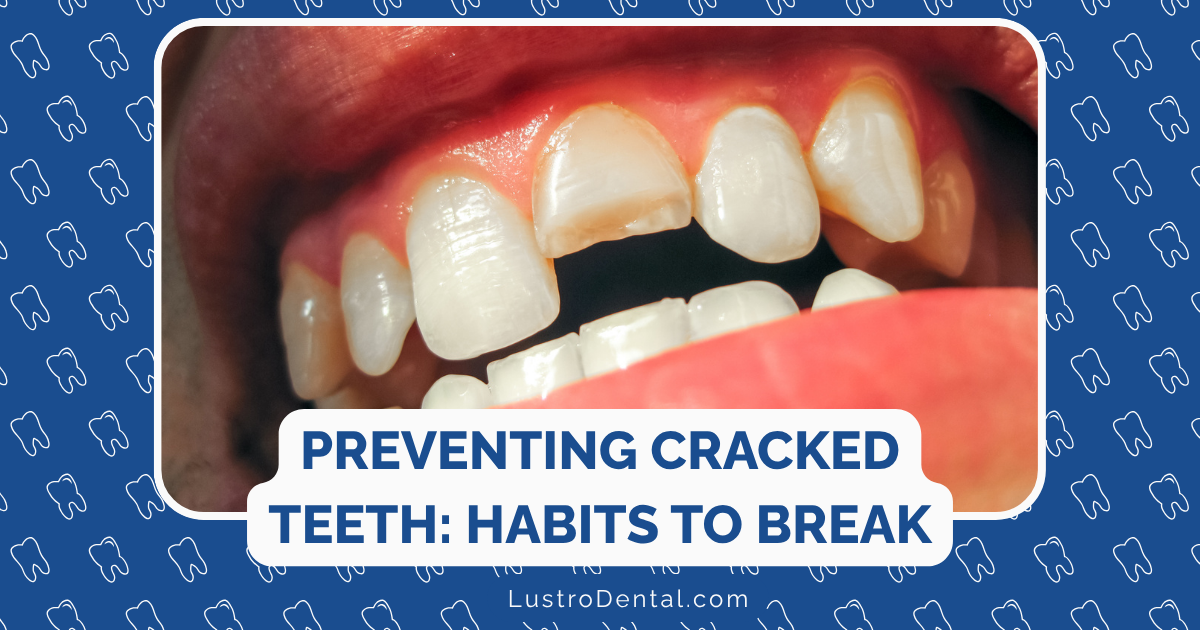
As someone who’s guided countless patients through the distress of cracked teeth, I can tell you that prevention is infinitely better than treatment. A cracked tooth not only causes pain and discomfort but often requires expensive and time-consuming procedures to repair—and in some cases, the tooth simply can’t be saved.
The good news? Most cracked teeth are preventable. By understanding the habits that put your teeth at risk and implementing protective measures, you can significantly reduce your chances of experiencing this common dental problem.
In this comprehensive guide, I’ll walk you through the habits you should break, the protective measures you should adopt, and the nutritional choices that can strengthen your teeth from the inside out.
Before diving into prevention, it’s helpful to understand what causes teeth to crack in the first place. The most common causes include:
With these causes in mind, let’s explore the habits you should break to protect your teeth.
One of the most damaging habits is using your teeth for anything other than eating. Dr. Sarah Johnson, endodontist at University Dental Institute, notes: “I’ve seen patients crack their teeth trying to open bottles, tear packaging, cut thread, or hold items. Your teeth are designed for chewing food—not as replacement tools.”
Break the habit: Keep proper tools handy (scissors, bottle openers, pliers) and make a conscious effort to reach for them instead of using your teeth.
Many people unconsciously chew on non-food items like:
These items can exert tremendous pressure on your teeth, leading to microfractures that develop into larger cracks over time.
Break the habit: Become aware of your chewing habits and find alternative stress-relief methods like fidget toys or sugar-free gum.
Teeth grinding, particularly during sleep, is a major contributor to cracked teeth. The constant pressure weakens tooth structure over time.
Dr. Michael Chen of Advanced Dental Specialists explains, “Many patients are unaware they grind their teeth at night until they start experiencing symptoms like jaw pain, headaches, or tooth sensitivity—often signs that damage has already begun.”
Break the habit: Since bruxism is often unconscious or sleep-related, breaking this habit typically requires professional intervention:
Rapid temperature changes cause your teeth to expand and contract quickly, which can lead to cracks—similar to how a hot glass might crack when filled with ice water.
Break the habit: Allow hot foods and beverages to cool slightly before consuming, and avoid immediately following hot foods with cold ones.
A diet high in sugar and acid contributes to tooth decay, which weakens enamel and makes teeth more susceptible to cracking.
Break the habit:
Breaking harmful habits is only half the battle. Here are proactive steps you can take to protect your teeth from cracks:
Mouthguards serve two important protective functions:
For Sports and Physical Activities:
For Nighttime Grinding:
According to the American Dental Association, athletes are 60 times more likely to suffer dental injuries when not wearing a mouthguard. For those who grind their teeth, a custom night guard can reduce the risk of cracked teeth by up to 80%.
Strong, healthy teeth are less prone to cracking. A consistent oral hygiene routine includes:
Dr. Lisa Wong, Director of Preventive Dental Research, emphasizes, “Consistent oral hygiene doesn’t just prevent cavities—it maintains the structural integrity of your teeth, making them more resistant to cracks and fractures.”
Don’t delay treatment for:
These conditions weaken teeth and make them more susceptible to cracking. Regular dental check-ups (every 6 months) allow for early detection and treatment of these issues before they lead to more serious problems.
How you eat matters as much as what you eat:
Your diet plays a crucial role in maintaining strong teeth that resist cracking. Focus on these nutrients:
Calcium: The building block of teeth
Vitamin D: Essential for calcium absorption
Phosphorus: Works with calcium to build tooth structure
Vitamin K2: Helps direct calcium to teeth and bones
Magnesium: Supports enamel strength
Vitamin C: Essential for gum health (which supports teeth)
A 2023 study in the Journal of Dental Research found that individuals with adequate intake of these key nutrients had a 43% lower risk of developing cracked teeth compared to those with nutritional deficiencies.
Water plays multiple roles in preventing cracked teeth:
Aim for at least 8 glasses of water daily, and consider drinking water after meals to rinse your mouth.
Some people have a higher risk of developing cracked teeth and may need additional preventive measures:
The most effective approach to preventing cracked teeth combines breaking harmful habits, implementing protective measures, and strengthening teeth through nutrition. Here’s a simple three-step plan:
Step 1: Identify Your Risk Factors
Step 2: Break Harmful Habits
Step 3: Implement Protective Measures
Even with the best prevention, some individuals may still experience early signs of tooth damage. Contact your dentist immediately if you notice:
Early intervention can often prevent a small crack from becoming a major problem.
Preventing cracked teeth requires awareness, consistent habits, and proactive care. By breaking harmful habits, implementing protective measures, and nourishing your teeth from within, you can significantly reduce your risk of experiencing this painful and costly dental problem.
Remember that prevention is always easier, less expensive, and more comfortable than treatment. Your future self will thank you for the small daily habits that keep your smile whole and healthy for years to come.
Have you successfully broken a habit that was putting your teeth at risk? Share your experience or questions in the comments below!