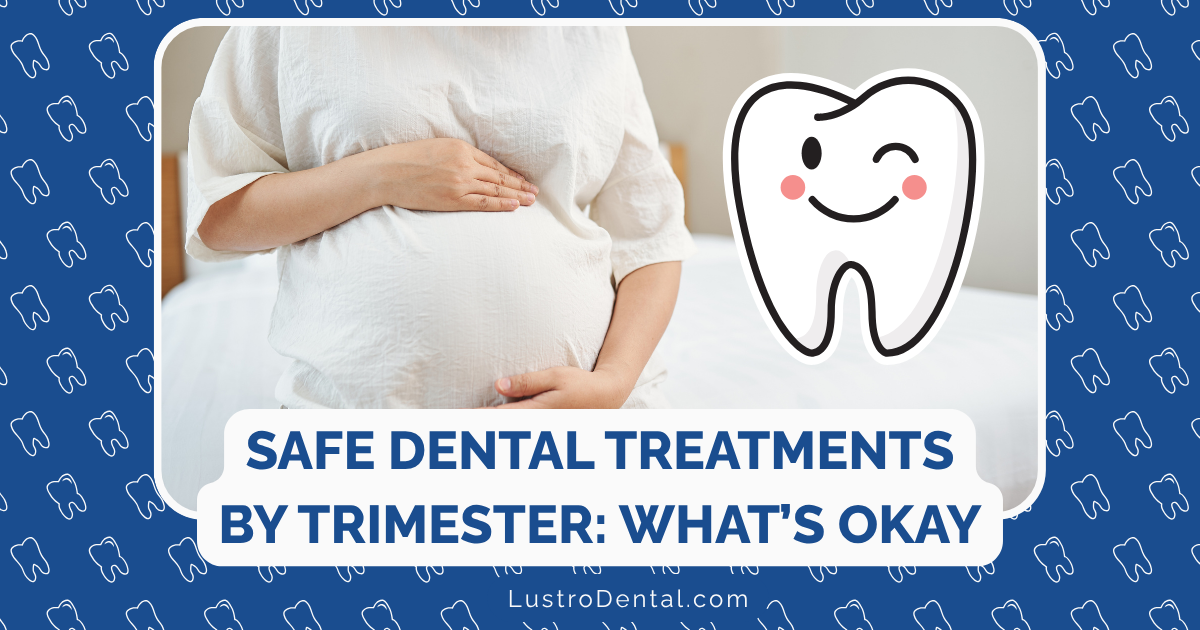
Pregnancy brings countless considerations for expectant mothers, from nutrition to exercise to healthcare decisions. Among these considerations, dental care often raises questions and concerns. Is it safe to visit the dentist while pregnant? Should certain procedures be avoided? What about x-rays and medications?
As a dental health advocate who’s worked with many pregnant patients, I can assure you that maintaining oral health during pregnancy is not only safe but crucially important. Research consistently shows that good oral health during pregnancy benefits both mother and baby, while poor oral health has been linked to pregnancy complications including preterm birth and low birth weight.
This comprehensive guide will walk you through safe dental treatments for each trimester, helping you navigate this important aspect of prenatal care with confidence.
General Safety Guidelines for Dental Care During Pregnancy
Across all trimesters, these principles apply:
Inform your dental team about your pregnancy, including how far along you are and any complications
Coordinate care between your dentist and obstetrician when necessary
Maintain excellent oral hygiene at home with thorough brushing and flossing
Position yourself comfortably in the dental chair to avoid pressure on major blood vessels
Attend regular preventive appointments to catch issues early
Now, let’s explore specific guidelines for each trimester.
First Trimester (Weeks 1-13): Laying the Foundation
The first trimester is a critical period of development for your baby, with major organ systems forming. It’s also when many women experience morning sickness and heightened fatigue.
Safe Treatments During the First Trimester
Routine dental examinations to assess your oral health status
Professional cleanings to remove plaque and prevent gum disease
Elective or cosmetic procedures (teeth whitening, veneers, etc.)
Non-urgent fillings or crowns (if possible, schedule for second trimester)
Extensive reconstruction or lengthy procedures
Special Considerations
Morning sickness management: If you experience vomiting, rinse with a solution of baking soda and water (1 teaspoon baking soda in 1 cup water) rather than brushing immediately, which can damage acid-softened enamel
Heightened gag reflex: Inform your dental team if you’re experiencing this common first-trimester symptom
Fatigue: Schedule appointments when you typically have the most energy
Dr. Sarah Johnson, an obstetrician specializing in high-risk pregnancies, notes: “While the first trimester is when we’re most cautious about interventions, untreated dental infections pose a greater risk to pregnancy than the treatment itself. Never postpone emergency dental care due to pregnancy concerns.”
Second Trimester (Weeks 14-27): The Optimal Window
The second trimester is widely considered the ideal time for dental treatments during pregnancy. Morning sickness typically subsides, energy levels improve, and the baby’s major organ systems have formed.
Safe Treatments During the Second Trimester
All preventive care including examinations and cleanings
Extensive reconstruction that requires multiple long appointments
Special Considerations
Positioning: As your pregnancy progresses, you may be more comfortable with a pillow under one hip when reclined in the dental chair to avoid pressure on the vena cava (a major blood vessel)
Shorter appointments: Consider scheduling several shorter visits rather than one long appointment if you experience discomfort sitting in the dental chair
“The second trimester is the sweet spot for dental care during pregnancy,” explains Dr. Robert Chen, a dentist who specializes in treating pregnant patients. “Most women feel better physically, and we can safely address a wide range of dental needs during this period.”
Third Trimester (Weeks 28-40): Focused Care
As you enter the final stretch of pregnancy, comfort becomes a primary consideration, and some women may find it increasingly difficult to lie back in a dental chair for extended periods.
Safe Treatments During the Third Trimester
Routine dental examinations and cleanings
Necessary emergency treatments at any point
Simple restorative procedures (early in the third trimester)
Treatments Best Postponed
Elective procedures of any kind
Extensive dental work that requires long appointments
Non-urgent treatments after 36 weeks
Special Considerations
Positioning challenges: The dental chair may be adjusted to accommodate your growing belly, and additional pillows can help with comfort
Supine hypotension syndrome: Some women experience low blood pressure and dizziness when lying flat on their back in the third trimester
Frequent bathroom breaks: Your dental team should accommodate these needs
Scheduling: Early third trimester appointments are generally more comfortable than those in the final weeks
“During the late third trimester, we focus on maintaining oral health through good home care and addressing only urgent dental needs,” says Dr. Lisa Zhang, a periodontist. “Most elective procedures can wait until after delivery, but we never want patients to endure pain or infection.”
Special Topics in Prenatal Dental Care
Dental X-Rays During Pregnancy
Many pregnant women worry about radiation exposure from dental x-rays. Here are the facts:
Dental x-rays use extremely low radiation doses
According to the American College of Radiology, no single diagnostic x-ray has a radiation dose significant enough to cause adverse effects in a developing embryo or fetus
The ADA and ACOG affirm that dental x-rays are safe during pregnancy when appropriate shielding is used
Your dentist will use a leaded apron and thyroid collar to protect you
Digital x-rays, now common in many practices, use even less radiation than traditional films
While routine x-rays can often be postponed until after pregnancy, diagnostic x-rays needed for treatment of dental problems are considered safe at any stage of pregnancy.
Anesthesia and Pain Management
Local anesthetics used in dentistry are generally considered safe during pregnancy:
Lidocaine and prilocaine, the most commonly used dental anesthetics, are classified as FDA Category B for pregnancy (no evidence of risk in humans)
The use of epinephrine (often combined with anesthetics to make them last longer) is also considered safe
Your dentist will use the minimum effective dose
For pain management after procedures, acetaminophen (Tylenol) is typically recommended
Medications to avoid include:
Non-steroidal anti-inflammatory drugs (NSAIDs) like ibuprofen, particularly in the third trimester
Tetracycline antibiotics, which can affect fetal tooth development
Nitrous Oxide (“Laughing Gas”)
The use of nitrous oxide during pregnancy remains somewhat controversial:
Most dental organizations recommend avoiding it during the first trimester
Some practitioners avoid it throughout pregnancy as a precaution
If used, it should be supplemented with oxygen and used for the shortest time possible
Always discuss with both your dentist and obstetrician before agreeing to nitrous oxide sedation
Emergency Dental Care
Dental emergencies can occur at any point during pregnancy and should never be ignored. Untreated infections or severe pain can pose greater risks than the treatment itself.
Emergency situations that require prompt attention include:
“In a true dental emergency, the benefits of treatment almost always outweigh any theoretical risks,” emphasizes Dr. Michael Wong, an oral surgeon. “Infection and severe pain create stress and potential complications that are far more concerning during pregnancy than the controlled environment of dental treatment.”
Common Dental Issues During Pregnancy
Pregnancy Gingivitis
Due to hormonal changes, many pregnant women experience gum inflammation that causes tenderness, swelling, and bleeding. Management includes:
Meticulous oral hygiene
Professional cleanings
Saltwater rinses
Attention to nutrition
Pregnancy Tumors
About 1-5% of pregnant women develop “pregnancy tumors” (pyogenic granulomas)—non-cancerous growths on the gums that usually disappear after childbirth. If they interfere with eating or oral hygiene, they can be removed safely.
Tooth Erosion from Morning Sickness
To protect your teeth from stomach acid:
Rinse with baking soda solution after vomiting
Wait 30-60 minutes before brushing
Use a fluoride mouthwash
Stay hydrated
Myths and Misconceptions About Dental Care During Pregnancy
Myth #1: “You lose a tooth for every baby”
Reality: Pregnancy itself doesn’t cause tooth loss. This old wives’ tale likely originated because pregnancy can worsen existing dental problems if not addressed.
Myth #2: “Dental x-rays are always unsafe during pregnancy”
Reality: With proper shielding, dental x-rays are considered safe at any stage of pregnancy when needed for diagnosis and treatment.
Myth #3: “All dental work should wait until after pregnancy”
Reality: Preventive care and necessary treatments are safe and important during pregnancy. Untreated dental problems can pose greater risks.
Myth #4: “The baby takes calcium from your teeth during pregnancy”
Reality: While the baby does need calcium for development, it comes from your diet and potentially your bones—not your teeth. Prenatal vitamins and calcium-rich foods are important.
Tips for Maintaining Oral Health During Pregnancy
Brush thoroughly twice daily with fluoride toothpaste
Floss daily to remove plaque between teeth
Eat a balanced diet rich in calcium, protein, phosphorus, and vitamins A, C, and D
After Pregnancy: Resuming Comprehensive Dental Care
Once your baby arrives, you can schedule any postponed elective dental work. If you’re breastfeeding, inform your dentist, as this may influence medication choices. Remember that your oral health continues to affect your baby—cavity-causing bacteria can be transmitted from mother to infant, so maintaining your dental health helps protect your child’s future smile.
Conclusion: Prioritizing Dental Health for Two
Maintaining good oral health during pregnancy is a vital component of prenatal care that benefits both mother and child. By understanding which dental treatments are safe during each trimester and following recommended guidelines, you can ensure that your smile stays healthy throughout your pregnancy journey.
Remember that dental professionals are accustomed to treating pregnant patients and will take all necessary precautions to ensure your safety and comfort. Open communication between you, your dentist, and your obstetrician creates the best environment for making informed decisions about your dental care during this special time.