🦷 General Care
✨ Treatments
👶 Family Care
💚 Wellness
💡 Resources

🦷 General Care
✨ Treatments
👶 Family Care
💚 Wellness
💡 Resources

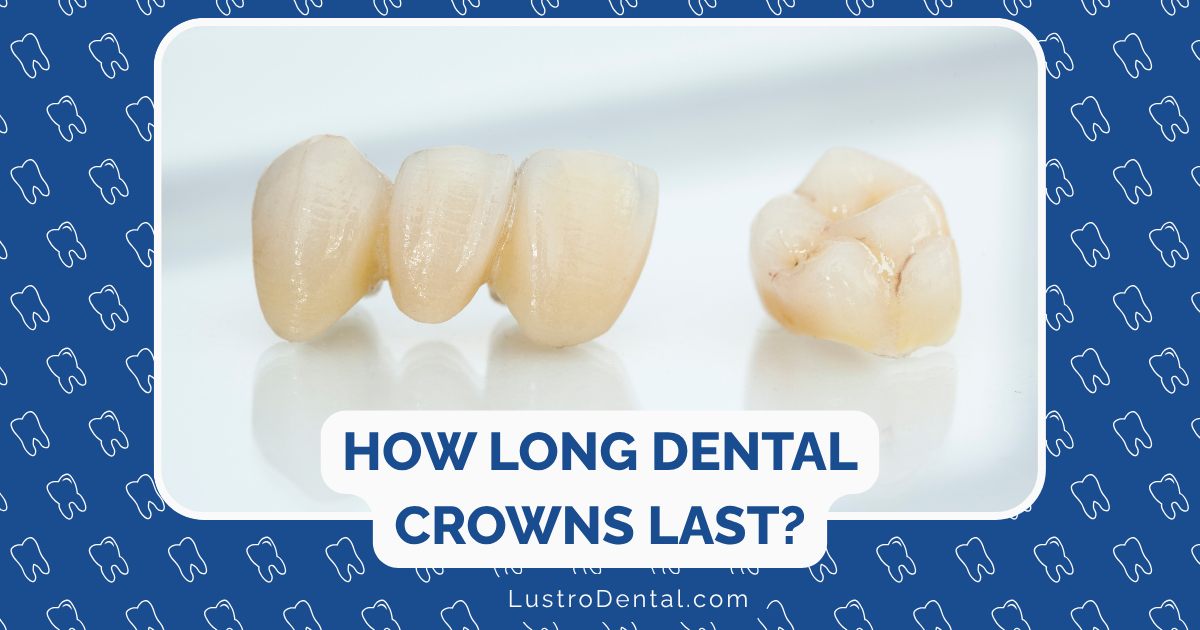
“How long will my crown last?” It’s one of the most common questions I hear from patients considering this restoration. The answer isn’t as straightforward as you might hope—dental crowns don’t come with a simple expiration date. Instead, their longevity depends on a complex interplay of factors ranging from the materials used to your daily habits.
Understanding these factors isn’t just about getting your money’s worth (though that matters too). It’s about making informed decisions about your oral health and knowing when a crown might need attention before it fails completely.
As someone who’s helped countless patients navigate dental restorations, I’ve seen firsthand how dramatically crown lifespans can vary. Let’s explore what really determines how long your dental crown will last and what you can do to maximize its lifespan.
Before diving into specific factors, let’s establish some baseline expectations based on current research:
According to a comprehensive study published in the Journal of Prosthetic Dentistry that tracked over 2,300 crowns, 97% remained functional at the 10-year mark, while approximately 85% were still performing well after 15 years.
However, these numbers tell only part of the story. The survival rate begins to decline more rapidly after the 15-year mark, with about 70.5% of crowns still functional at 20 years.
Dr. Sarah Johnson, a prosthodontist at the American College of Prosthodontists, explains: “While we often quote 10-15 years as the average lifespan for dental crowns, I’ve seen patients maintain the same crowns for 30+ years with excellent care. Conversely, I’ve had to replace crowns after just a few years due to certain risk factors.”
Perhaps the most significant determinant of a crown’s potential lifespan is the material from which it’s made. Each material offers different advantages and limitations:
Average lifespan: 20-30+ years Survival rates: 96% at 10 years, 87% at 20 years, 74% at 30 years
Gold remains the gold standard for longevity. Its exceptional durability stems from its resistance to fracture and minimal wear on opposing teeth. However, its metallic appearance limits its use primarily to posterior teeth.
Average lifespan: 15-20+ years Survival rates: 95% at 10 years, 84% at 15 years
Zirconia has revolutionized dental restorations with its exceptional strength (comparable to metal) combined with tooth-colored aesthetics. Modern multilayered zirconia offers improved translucency while maintaining impressive durability.
Average lifespan: 10-15 years Survival rates: 96% at 5 years, 90% at 10 years
This glass-ceramic material offers excellent aesthetics with good strength, making it popular for front teeth. While not as strong as zirconia, its optical properties create highly natural-looking restorations.
Average lifespan: 10-15 years Survival rates: 94% at 5 years, 85% at 10 years
These traditional crowns combine a metal substructure with a porcelain exterior. While they offer good strength, they can develop visible dark lines at the gumline over time as gums recede.
Average lifespan: 5-15 years Survival rates: 90% at 5 years, 84% at 10 years
Traditional all-porcelain crowns offer excellent aesthetics but are more prone to fracture than stronger materials, particularly when used on molars.
Average lifespan: 5-10 years Survival rates: 87% at 5 years, 66% at 10 years
Generally used for temporary restorations, resin crowns are more affordable but wear down faster and are more prone to fracture.
The placement of your crown significantly impacts its lifespan:
Crowns on molars experience the greatest chewing forces—up to 170 pounds per square inch during normal chewing and significantly more if you grind your teeth. This mechanical stress accelerates wear and increases fracture risk.
Research from the Journal of Dental Research indicates that crowns on molars have approximately 1.5 times higher failure rates than those on anterior teeth.
These teeth experience moderate chewing forces and generally show better crown longevity than molars but more wear than anterior crowns.
Front teeth experience less mechanical stress, allowing for longer-lasting restorations. However, they face different challenges:
Dr. Michael Chen of the University of Michigan School of Dentistry notes: “When recommending crown materials, we consider not just aesthetics but the biomechanical forces each tooth experiences. For instance, a zirconia crown might be ideal for a molar, while lithium disilicate might be perfect for a front tooth.”
Your personal habits and oral care routine can dramatically extend—or significantly shorten—your crown’s lifespan:
Poor oral hygiene doesn’t damage the crown material itself but can lead to decay at the crown margins (where the crown meets the tooth). This “secondary decay” is actually one of the most common reasons for crown failure.
A study published in the International Journal of Prosthodontics found that patients with excellent oral hygiene experienced 60% fewer crown failures than those with poor hygiene.
Chronic teeth grinding can generate forces exceeding 500 pounds per square inch—far beyond what even the strongest crown materials are designed to withstand long-term.
According to research from the Journal of the American Dental Association, patients with untreated bruxism experience crown failures at 2-3 times the rate of non-bruxers.
Certain foods and habits pose particular risks to crowns:
Using teeth as tools (opening packages, biting fingernails, holding items) places abnormal forces on crowns and dramatically increases failure risk.
The condition of the tooth beneath your crown plays a crucial role in long-term success:
Teeth that have undergone root canal therapy are more brittle and have a higher crown failure rate. Research indicates that endodontically treated teeth have 1.3-1.9 times higher crown failure rates than vital teeth.
Dr. Lisa Rodriguez, an endodontist at the American Association of Endodontists, explains: “After root canal treatment, teeth lack the blood supply that keeps natural teeth resilient. While crowns protect these teeth, the underlying structure is inherently more fragile.”
The amount of natural tooth structure remaining significantly impacts crown longevity. Teeth with minimal structure may require posts for retention, which can increase the risk of root fracture over time.
A 2023 study in the Journal of Prosthetic Dentistry found that teeth with less than 30% remaining coronal structure had nearly twice the failure rate of those with more substantial structure.
Healthy gums provide crucial support for crowned teeth. Gum recession can expose crown margins, increasing the risk of decay and compromising aesthetics.
The skill of your dental team significantly impacts crown longevity:
Proper tooth preparation creates the ideal foundation for a crown. This includes:
A 2017 study indicated that over half of traditional dental impressions contained at least one critical error that could affect fit. Modern digital scanning technology has significantly improved accuracy.
According to research from the Journal of Digital Dentistry, crowns fabricated from digital impressions show 35% better marginal fit than those made from traditional impressions.
Well-made temporary crowns protect the prepared tooth and maintain proper spacing while the permanent crown is being fabricated. Poor temporaries can lead to sensitivity, movement of adjacent teeth, and gum irritation that may compromise the final result.
The skill of the dental laboratory technician crafting your crown is crucial, particularly for aesthetic cases. A well-designed crown considers not just appearance but functional factors like:
Being proactive about crown maintenance can prevent catastrophic failures. Watch for these warning signs:
Discomfort when biting or sensitivity to temperature may indicate:
Inspect your crown periodically for:
Pay attention to how the crown feels during normal function:
While not always indicative of functional problems, aesthetic changes may warrant evaluation:
Based on current research and clinical experience, these strategies can help maximize your crown’s durability:
A 2024 study in the Journal of Clinical Periodontology found that patients using water flossers in addition to regular brushing had 37% less gingival inflammation around crowned teeth compared to those who only brushed.
Advancements in dental technology continue to improve crown longevity:
CAD/CAM (Computer-Aided Design/Computer-Aided Manufacturing) technology has revolutionized crown fabrication:
Research published in the Journal of Prosthodontics indicates that crowns fabricated through complete digital workflows show 28% better marginal fit than those made through traditional methods.
Newer dental materials continue to push the boundaries of what’s possible:
Modern dental cements provide stronger bonds between crowns and teeth:
Even with excellent care, crowns don’t last forever. Knowing when replacement is appropriate helps you make informed decisions:
Sometimes replacing a crown before it fails completely makes sense:
While the initial cost of crowns is significant ($800-$2,500 per tooth depending on material and location), replacement costs can be even higher if the underlying tooth sustains damage from a failed crown.
Dr. James Wilson, a dental economist at the American Dental Association, notes: “Proactive crown replacement is often more cost-effective than waiting for catastrophic failure, which may necessitate additional procedures like root canals, posts, or even extraction and implant placement.”
The lifespan of your dental crown isn’t predetermined—it’s influenced by a constellation of factors, many of which are within your control. By understanding these factors and working proactively with your dental team, you can significantly extend the durability of your restorations.
Remember that averages are just that—averages. Your individual experience may vary based on your unique circumstances. The key is regular monitoring, excellent home care, and maintaining an open dialogue with your dentist about any changes you notice.
With proper care and attention, your investment in dental crowns can provide decades of functional and aesthetic benefits, supporting not just your oral health but your overall wellbeing and confidence.
Have you had experience with dental crowns? How long have yours lasted? We’d love to hear about your experience in the comments below!