🦷 General Care
✨ Treatments
👶 Family Care
💚 Wellness
💡 Resources

🦷 General Care
✨ Treatments
👶 Family Care
💚 Wellness
💡 Resources

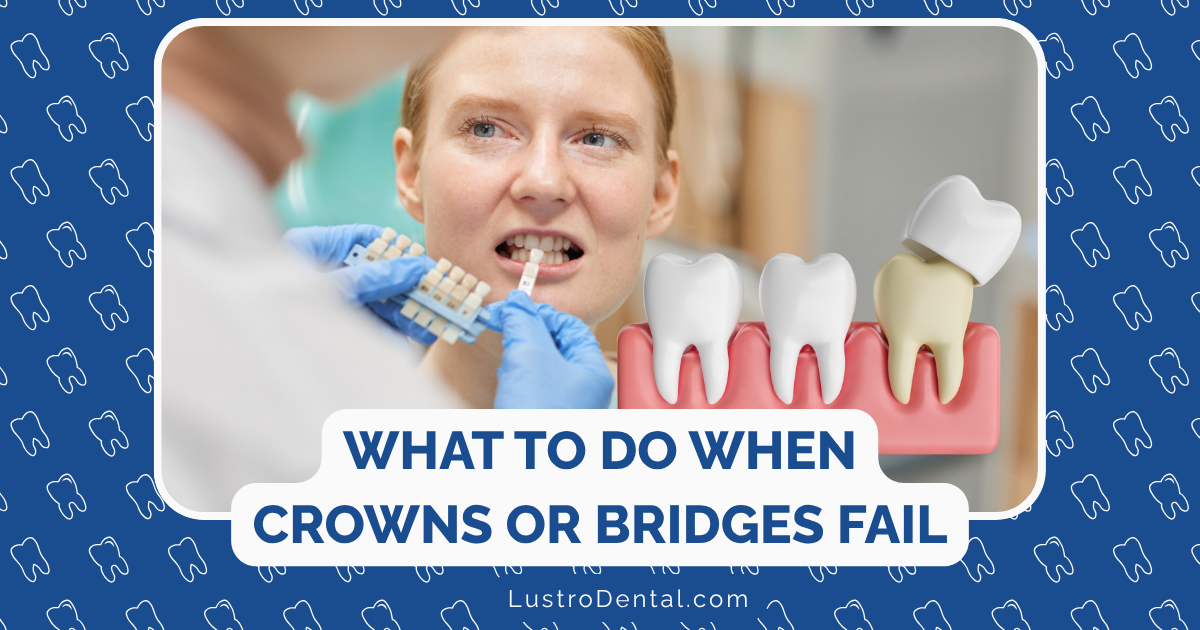
It always seems to happen at the most inconvenient time. You’re enjoying dinner on vacation, bite down on something, and suddenly feel that unmistakable shift in your mouth—your dental crown or bridge has come loose or broken. Or perhaps you wake up on a Sunday morning to find your restoration sitting on your nightstand instead of securely in your mouth.
I’ve guided countless patients through these dental emergencies, and I understand the immediate panic that sets in. Not only is there potential discomfort, but there’s also concern about appearance, function, and what happens next.
The good news? With the right knowledge and quick action, you can effectively manage this situation until you can see your dentist. Let’s walk through exactly what to do when your crown or bridge fails, how to protect your tooth in the meantime, and what to expect for permanent solutions.
Before diving into emergency management, it’s helpful to understand why these dental restorations sometimes fail. This knowledge can help prevent future issues.
According to Ranieu Dental, a fallen crown is indeed considered a dental emergency because the exposed tooth is vulnerable to damage and infection.
The moments right after your dental work fails are crucial. Here’s what to do immediately:
If your crown or bridge has come out completely:
Best Smiles Dentist recommends using lukewarm water to clean both the fallen restoration and your mouth to remove any debris and bacteria.
The tooth under a crown is usually filed down and may be highly sensitive. To protect it:
According to Arcade Dental, you should contact your dentist right away if your crown breaks to assess the damage and determine the best treatment approach.
When calling your dentist:
If you can’t get to your dentist immediately, here are some temporary fixes that can help manage the situation:
If your crown is intact and the tooth underneath appears undamaged, you might be able to temporarily reattach it:
Northampton Dental advises against forcing a bridge back into place if it doesn’t fit easily, as this could cause further damage.
If you can’t access temporary dental cement, these alternatives can work in a pinch:
Important: Never use superglue or household adhesives to reattach dental work. These products are toxic and can cause permanent damage to both your restoration and your natural tooth.
Bridges are more complex than single crowns because they involve multiple teeth. If a bridge breaks or comes loose:
Until your dental work is permanently fixed, modify your diet to prevent further damage:
When you make it to your dentist’s office, here’s what typically happens:
Your dentist will:
Depending on the assessment, your dentist might:
After addressing the immediate emergency, consider these long-term approaches:
My Gentle Touch Dentistry emphasizes that regular dental checkups and good oral hygiene can help prevent bridges from falling out in the first place.
In some cases, replacing your dental work with newer options might be advisable:
Dealing with failed dental work often raises financial concerns:
Most dental insurance plans provide at least partial coverage for crown and bridge repairs or replacements, especially in emergency situations. However, coverage varies widely:
Check with your specific insurance provider about coverage details before treatment if possible.
Michael, a 52-year-old patient of mine, was on a business trip when his 8-year-old bridge covering his front teeth partially detached during dinner. He was scheduled to give a presentation the next morning and was understandably panicked.
He followed the emergency steps we’ve outlined—rinsing the bridge, protecting the exposed teeth, and using temporary dental adhesive from a nearby pharmacy. This solution held through his presentation, and he scheduled an appointment with me for the day he returned.
Upon examination, I discovered that decay had developed under one of the supporting teeth, which had weakened the cement’s bond. After treating the decay, we created a new, more durable bridge with improved materials.
“I was so grateful for knowing what to do in that moment of panic,” Michael told me later. “Having that temporary solution gave me the confidence to get through my presentation, and now my new bridge feels even better than the original.”
A failed crown or bridge can be alarming, but with prompt action and proper care, the situation can be managed effectively until professional treatment is available. Remember that the exposed tooth needs protection, and even temporary solutions should be just that—temporary.
By understanding why these failures occur and knowing exactly what steps to take when they do, you can minimize discomfort, protect your dental health, and potentially save yourself time and money in the long run.
Have you experienced a crown or bridge failure? What worked best for you in managing the situation? Share your experiences in the comments to help others who might be facing similar dental emergencies.
Yes, it should be treated as an urgent dental situation. While it may not require a middle-of-the-night emergency visit, you should see your dentist within 1-2 days to prevent damage to the exposed tooth and ensure proper reattachment.
It’s not recommended. The exposed tooth is vulnerable to damage, decay, and shifting. Additionally, teeth on either side of a gap (in the case of a bridge) can begin to shift, making it difficult to place the restoration later.
Not necessarily. If the crown is intact and the underlying tooth doesn’t have new decay, your dentist may be able to simply recement it. However, if either is damaged, a new crown might be necessary.
With proper care, crowns and bridges typically last 5-15 years, though some can last 20+ years. Factors affecting longevity include materials used, oral hygiene, bite forces, and regular dental care.
While no dental work lasts forever, you can maximize longevity through excellent oral hygiene, wearing a nightguard if you grind your teeth, avoiding very hard foods, and attending regular dental check-ups.