🦷 General Care
✨ Treatments
👶 Family Care
💚 Wellness
💡 Resources

🦷 General Care
✨ Treatments
👶 Family Care
💚 Wellness
💡 Resources

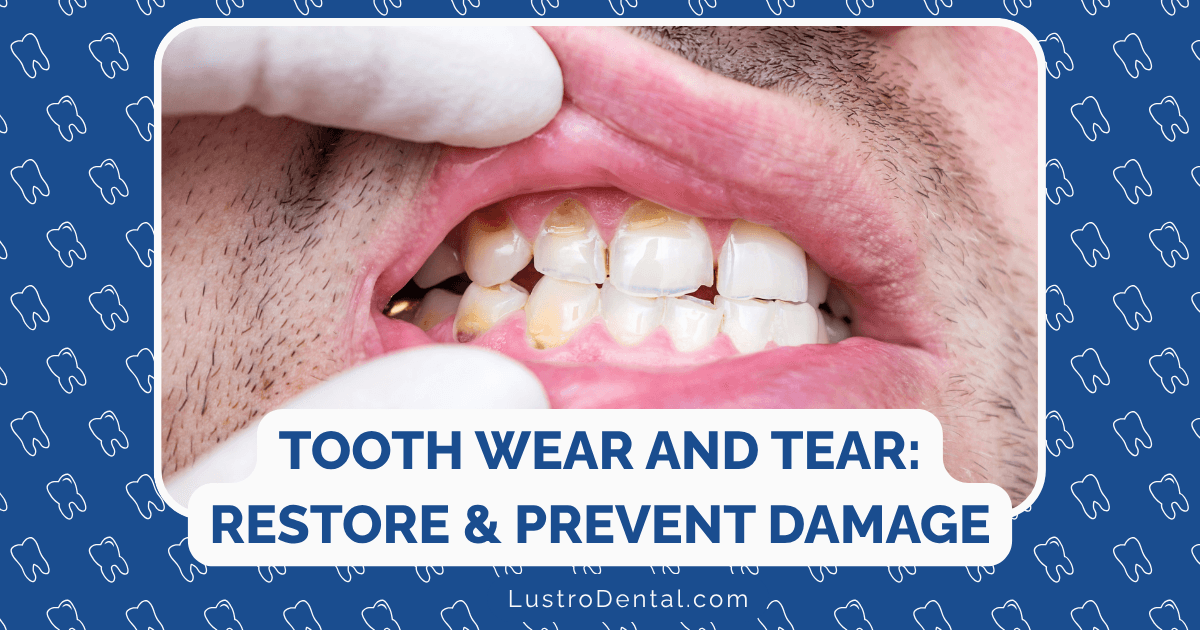
I first noticed the changes in my smile gradually—a slight flattening of my front teeth, increased sensitivity to cold drinks, and a certain translucency at the edges that wasn’t there before. Like many people, I had been accumulating wear and tear on my teeth for years without realizing it. By the time I sought help, my dentist explained that I had lost significant enamel through a combination of nighttime grinding and my fondness for citrus.
If you’re noticing similar changes in your smile, you’re not alone. Tooth wear is incredibly common, affecting up to 97% of adults to some degree according to a 2023 study published in the Journal of Dentistry. The good news? Modern dentistry offers more solutions than ever before to address accumulated wear and restore both function and aesthetics to damaged teeth.
Before we dive into solutions, let’s understand what’s happening when teeth wear down. Unlike other tissues in your body, dental enamel—the hard, protective outer layer of your teeth—cannot regenerate or heal itself. Once it’s gone, it’s gone for good.
“I often explain to patients that enamel is like the paint on your car,” says Dr. Sarah Chen, a restorative dentist specializing in worn dentition. “Once it wears away, the underlying structure becomes vulnerable to damage. And unlike your car, you can’t simply apply a new coat of paint to your teeth.”
Dental professionals classify tooth wear into three main categories:
This is wear caused by tooth-to-tooth contact, most commonly from:
Attrition typically appears as flattened chewing surfaces and shortened front teeth. If you’ve ever noticed someone whose smile seems to show less of their front teeth than they used to, attrition may be the culprit.
This type of wear results from physical forces other than chewing, such as:
Abrasion often creates notches near the gumline or unusual wear patterns that don’t match normal chewing surfaces.
Unlike the mechanical wear of attrition and abrasion, erosion is chemical wear caused by acids dissolving the enamel. Common sources include:
Erosion creates a smooth, shiny, sometimes cupped appearance to the teeth and often leads to increased transparency and yellowing as the underlying dentin becomes more visible.
Most people experience a combination of these wear mechanisms, creating a unique pattern of damage that requires individualized treatment.
How do you know if your teeth are wearing down? Look for these common signs:
“One of the trickiest aspects of tooth wear is that it happens gradually,” explains Dr. Michael Rosenthal, who specializes in complex restorative cases. “Many patients don’t notice the changes until they compare current photos to ones taken years ago. By then, significant damage may have occurred.”
The good news? Modern dentistry offers multiple ways to address tooth wear, from conservative approaches for minor wear to comprehensive solutions for severely damaged teeth.
For very early enamel erosion, professional fluoride treatments can help strengthen remaining enamel and reduce sensitivity. These treatments won’t rebuild lost structure but can help protect what remains.
Products containing bioavailable calcium and phosphate (like those with CPP-ACP technology) can also help remineralize weakened enamel before significant structure is lost.
For mild to moderate wear, composite resin bonding offers an excellent, minimally invasive solution. Using tooth-colored materials, your dentist can:
“Bonding is often my go-to for younger patients with early wear,” shares Dr. Chen. “It preserves remaining tooth structure, can be completed in a single visit, and is relatively affordable compared to other options.”
The downside? Bonding typically lasts 5-7 years before needing replacement, making it less durable than other options.
For more significant front tooth wear, porcelain veneers provide a durable, aesthetic solution. These thin ceramic shells are bonded to the front surfaces of teeth, effectively:
“The technology behind veneers has advanced dramatically,” notes Dr. Rosenthal. “Today’s materials are thinner yet stronger than ever, allowing us to preserve more natural tooth structure while creating beautiful, long-lasting results.”
For worn back teeth, ceramic onlays or overlays (sometimes called partial crowns) can restore proper form and function without removing as much tooth structure as full crowns require.
These restorations are custom-made in a dental laboratory and bonded to the tooth, effectively rebuilding the damaged portions while preserving healthy tooth structure.
For severely worn teeth with significant structure loss, full crowns may be necessary. These cover the entire visible portion of the tooth, providing maximum protection and strength.
Modern materials like lithium disilicate and zirconia offer excellent aesthetics along with impressive durability, making them ideal for restoring heavily worn teeth.
In cases of severe, generalized tooth wear, a comprehensive approach may be needed to restore proper bite function and aesthetics throughout the mouth.
This typically involves restoring multiple teeth with a combination of the treatments mentioned above, often while temporarily increasing the vertical dimension of the bite (the distance between upper and lower jaws) to create space for restorations.
“Full-mouth cases are complex puzzles,” explains Dr. Rosenthal. “We’re not just fixing individual teeth—we’re rebuilding an entire chewing system. When done correctly, the results can be life-changing for patients who’ve suffered with worn teeth for years.”
Restoring worn teeth addresses the damage that’s already occurred, but preventing further wear is equally important. Your treatment plan should include strategies to address the underlying causes of your tooth wear.
Let’s address the elephant in the room: restorative dental work can be a significant investment. Treatment costs vary widely based on:
As a general guideline:
“I always encourage patients to think of dental restoration as an investment rather than an expense,” says Dr. Chen. “Quality work with proper maintenance can last for decades, protecting not just your smile but your overall health and confidence.”
Many dental practices offer payment plans or financing options to make treatment more accessible. Some dental insurance plans may cover a portion of the cost, particularly when wear affects function or causes pain.
Sarah, 42, noticed her front teeth getting shorter over several years but didn’t realize the severity until she saw photos from her wedding ten years earlier.
“I was shocked at how much my smile had changed,” she recalls. “My dentist diagnosed me with sleep bruxism and acid erosion from my daily lemon water habit. We started with a nightguard to prevent further damage, then restored my front teeth with bonding. The difference is amazing—I look like myself again.”
James, 58, had been grinding his teeth for decades, resulting in severely worn down molars and shortened front teeth.
“I was starting to have trouble chewing certain foods, and my jaw would ache by the end of the day,” he shares. “My dentist recommended a full-mouth rehabilitation. It was a significant investment, but the results have been life-changing. I can eat comfortably again, and I no longer wake up with headaches every morning.”
The best time to address tooth wear is before it becomes severe. Consider consulting a dentist if:
“Early intervention is key,” emphasizes Dr. Rosenthal. “Addressing minor wear with conservative treatments is always preferable to waiting until extensive, costly restoration becomes necessary.”
Your teeth are designed to last a lifetime, but modern diets, stress levels, and habits can accelerate wear beyond what’s natural. By understanding the causes of tooth wear, seeking appropriate treatment, and implementing preventive strategies, you can protect your smile for decades to come.
Remember that addressing tooth wear isn’t just about aesthetics—it’s about preserving the function of your teeth, preventing pain and sensitivity, and maintaining your ability to eat and speak comfortably throughout your life.
Have you noticed signs of wear on your teeth? What steps have you taken to address it? Share your experiences in the comments below to help others navigating similar dental challenges.