🦷 General Care
✨ Treatments
👶 Family Care
💚 Wellness
💡 Resources

🦷 General Care
✨ Treatments
👶 Family Care
💚 Wellness
💡 Resources

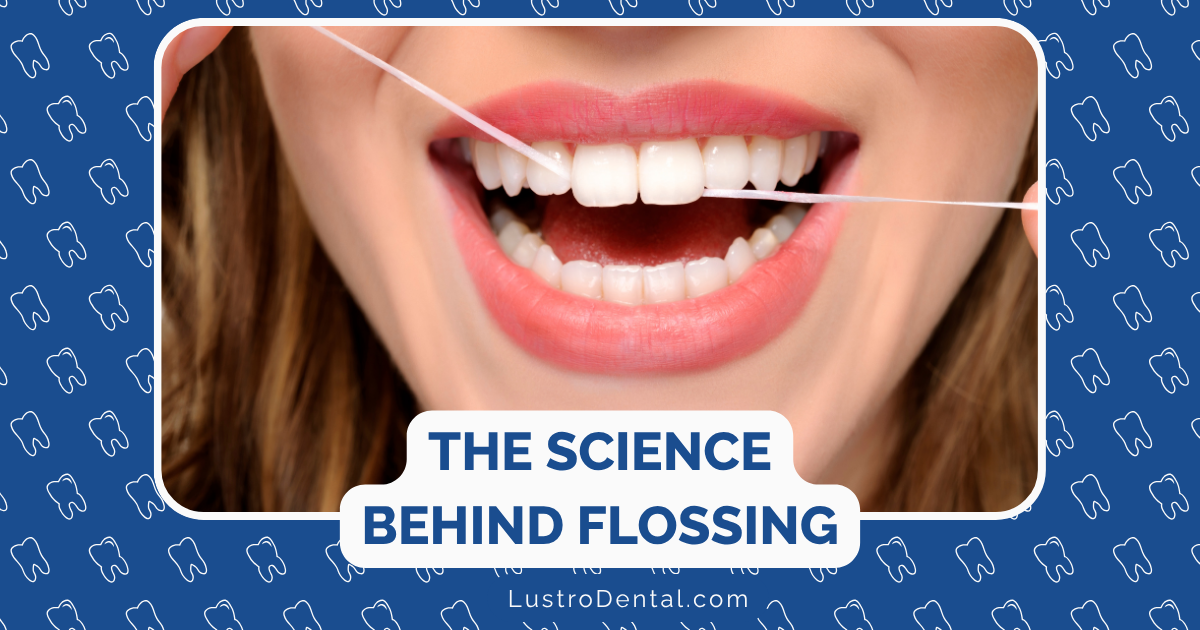
“Have you been flossing regularly?”
It’s the question many of us dread at dental checkups, often followed by a moment of guilt and a half-hearted promise to do better. Despite our reluctance, dental professionals have remained steadfast in their recommendation: flossing is essential for optimal oral health.
But in recent years, headlines questioning the scientific evidence behind flossing have left many wondering: Is this daily dental chore truly necessary, or just another health habit we can safely ignore?
In this comprehensive guide, we’ll dive deep into the science of flossing, examine the research, and explain why dentists continue to insist that flossing remains non-negotiable for maintaining oral health.
To understand why flossing matters, we first need to understand the architecture of our mouths. Your teeth have five surfaces: the top (occlusal), the front (facial/labial), the back (lingual), and two sides (mesial and distal). When you brush your teeth, even with perfect technique, you’re only cleaning three of these five surfaces.
Dr. Sarah Chen, a periodontist at Columbia University, explains: “The proximal surfaces—where teeth meet each other—create contact areas that your toothbrush bristles simply cannot reach. These tight spaces are perfect environments for bacteria to thrive, regardless of how diligently you brush.”
In fact, according to research published in the Journal of Dental Research, approximately 40% of your tooth surfaces are located between your teeth. This means that without flossing or other interdental cleaning, nearly half of your tooth surfaces remain uncleaned.
“Think of it like washing only 60% of your body in the shower,” says Dr. Michael Rodriguez, DDS. “You wouldn’t consider yourself clean, yet many people are effectively doing the equivalent with their teeth.”
Dental plaque is a complex biofilm—a community of bacteria embedded in a sticky matrix that adheres to tooth surfaces. When left undisturbed, this biofilm matures and becomes increasingly difficult to remove.
Research from the American Academy of Periodontology shows that plaque begins forming within hours after cleaning. Within 24-36 hours, this biofilm starts to mature and organize into a more resilient structure. After 72 hours, mature plaque is significantly more difficult to remove and begins to release more harmful byproducts.
“The interproximal spaces between teeth are particularly vulnerable to plaque buildup,” notes dental hygienist Jennifer Marsh. “These areas have less saliva flow and mechanical cleaning from the tongue and cheeks, creating protected environments where bacteria can flourish.”
A 2023 study published in the Journal of Clinical Periodontology used advanced microscopy techniques to visualize plaque formation in interproximal spaces. The researchers found that without interdental cleaning, these spaces developed complex, mature biofilms within just 48 hours—even in participants with excellent brushing habits.
In 2016, the Associated Press published a widely-circulated report suggesting that the evidence supporting flossing was “weak and unreliable.” This report was based on the observation that flossing had been removed from the U.S. Dietary Guidelines for Americans, and cited a lack of high-quality studies demonstrating its effectiveness.
This reporting led to confusion and skepticism about flossing. However, a closer examination of the scientific literature reveals a more nuanced picture.
The most frequently cited evidence against flossing comes from a Cochrane Review that analyzed 12 randomized controlled trials. This review found “weak, very unreliable evidence” that flossing plus toothbrushing may reduce gingivitis compared to toothbrushing alone.
However, as Dr. Lisa Warren, a periodontist, points out: “The Cochrane Review didn’t conclude that flossing doesn’t work—it concluded that the existing studies had methodological problems. This is a crucial distinction that was lost in much of the media coverage.”
These methodological issues included:
Since the 2016 controversy, several well-designed studies have provided stronger evidence supporting flossing:
Dr. Chen emphasizes: “When we look at studies where flossing is performed correctly and consistently, the evidence supporting its benefits becomes much clearer. The issue isn’t that flossing doesn’t work—it’s that most people don’t floss correctly or consistently enough to see the benefits in short-term studies.”
The importance of flossing extends beyond preventing gingivitis and cavities. A growing body of research suggests that oral health is intimately connected to systemic health.
“Periodontal disease isn’t just about your gums,” explains Dr. Rodriguez. “It’s a chronic inflammatory condition that has been linked to numerous systemic health issues.”
Research published in the Journal of the American Heart Association has found associations between periodontal disease and:
“When we recommend flossing, we’re not just thinking about your teeth and gums,” notes Dr. Warren. “We’re considering your overall health and well-being. Preventing periodontal disease through proper interdental cleaning may have far-reaching benefits beyond your mouth.”
The effectiveness of flossing depends largely on proper technique. Understanding the mechanics helps explain why dentists insist it’s non-negotiable.
Dental floss works primarily through mechanical action. When properly wrapped around a tooth in a C-shape and moved up and down along the side of the tooth, floss physically dislodges and removes:
“The physical action of flossing disrupts the bacterial colonies growing between your teeth,” explains dental hygienist Marsh. “This prevents them from organizing into the more harmful, mature biofilms that cause inflammation and disease.”
Proper flossing technique includes gently sliding the floss below the gumline into the sulcus—the small space between the tooth and gum tissue. This area is particularly important for periodontal health.
“The subgingival area is where periodontal disease begins,” notes Dr. Chen. “When floss is correctly inserted below the gumline, it can remove bacteria from this critical zone that brushing simply cannot reach.”
Research using scanning electron microscopy has shown that properly executed flossing can remove up to 80% of plaque from interproximal surfaces, including areas below the gumline.
Gingivitis—the early stage of gum disease—is characterized by inflammation of the gum tissue. This inflammation is triggered by bacterial byproducts and the body’s immune response to the bacterial challenge.
“By removing the bacterial biofilm through flossing, you’re addressing the root cause of inflammation,” explains Dr. Rodriguez. “This allows the gum tissue to heal and return to a healthy state.”
A study in the Journal of Clinical Periodontology found that consistent, proper flossing reduced inflammatory markers in gingival crevicular fluid—the fluid that seeps from the gum crevice—by up to 48% after just two weeks.
While much of the discussion around flossing focuses on gum health, one of the most concrete benefits is the prevention of interproximal cavities—decay that forms between the teeth.
“Interproximal cavities are particularly problematic,” says Dr. Warren. “They’re difficult to detect in early stages, often require more extensive treatment when discovered, and can quickly spread to adjacent teeth.”
Research published in the Journal of Dental Research found that individuals who reported regular flossing had 40% fewer interproximal cavities compared to non-flossers. This finding is particularly significant because:
“When patients ask me if they can skip flossing, I often show them X-rays of interproximal cavities,” notes Dr. Chen. “Once they understand that these spaces between teeth are prime real estate for cavity formation, they usually reconsider their stance on flossing.”
Despite the evidence supporting flossing, many people still resist incorporating it into their daily routine. Understanding and addressing these objections is crucial for improving compliance.
This is perhaps the most common objection, but proper flossing takes only 60-90 seconds once you’ve developed the skill.
“I tell my patients to floss while doing something else they already do daily—watching TV, scrolling through social media, or even in the shower,” suggests dental hygienist Marsh. “Pairing flossing with an existing habit makes it much easier to incorporate into your routine.”
Bleeding gums are actually a sign that flossing is needed, not a reason to avoid it. Healthy gums don’t bleed when flossed.
“Bleeding indicates inflammation, which is your body’s response to bacterial buildup,” explains Dr. Rodriguez. “With consistent flossing, the bleeding typically stops within 1-2 weeks as the inflammation subsides.”
A study in the Journal of Clinical Periodontology found that 94% of participants who experienced bleeding when they began flossing saw it resolve within 10 days of daily flossing.
Discomfort usually stems from improper technique or inflamed gum tissue.
“Start with waxed floss, which slides more easily between teeth,” recommends Dr. Warren. “Be gentle, and avoid snapping the floss down onto the gums. With practice and as your gum health improves, the discomfort will diminish significantly.”
This is a legitimate challenge for many people, but solutions exist.
“Floss holders, floss picks, or interdental brushes can make reaching back teeth much easier,” suggests Dr. Chen. “The key is finding the tool that works best for your specific mouth anatomy and dexterity.”
As we’ve discussed, this objection is based on a misunderstanding of the research.
“The evidence supporting flossing is stronger than many realize, especially when we look at long-term studies and those with supervised flossing,” notes Dr. Rodriguez. “The biological plausibility is also compelling—we know that cleaning between teeth removes plaque and bacteria that cause disease.”
For those who struggle with traditional floss, several alternatives exist. But how do they compare in effectiveness?
Water flossers (like Waterpik) use a pressurized stream of water to clean between teeth and below the gumline.
The Science: A 2013 study in the Journal of Clinical Dentistry found that water flossers removed 29% more plaque than string floss. They’re particularly effective for people with braces, implants, or bridges.
“Water flossers are an excellent alternative for patients who struggle with manual dexterity or have dental work that makes traditional flossing difficult,” says Dr. Warren. “They’re also gentler on inflamed gums, which can make them a good starting point for patients with gingivitis.”
These small, cone-shaped brushes are designed to fit between teeth.
The Science: A systematic review in the Journal of Clinical Periodontology found that interdental brushes remove more plaque than floss, particularly in wider spaces between teeth.
“For patients with larger interdental spaces or periodontal disease, interdental brushes are often more effective than floss,” notes Dr. Chen. “They’re particularly useful for cleaning around implants, bridges, and areas with gum recession.”
These Y-shaped plastic tools hold a short segment of floss between two prongs.
The Science: Research suggests they’re somewhat less effective than traditional floss because they don’t allow for the proper C-shape around the tooth, but they’re significantly better than not flossing at all.
“Floss picks are a good option for improving compliance,” suggests dental hygienist Marsh. “While the technique isn’t ideal, using them consistently is better than using traditional floss occasionally or not at all.”
Many people who do floss aren’t getting the full benefit because of improper technique. Here’s the method recommended by dental professionals:
“The C-shape technique is crucial,” emphasizes Dr. Rodriguez. “Many people simply move the floss up and down between the teeth without curving it around each tooth surface, which misses much of the plaque.”
A study in the International Journal of Dental Hygiene found that patients who received proper flossing instruction removed 55% more plaque than those who flossed using their usual technique.
Timing and frequency matter when it comes to flossing effectiveness.
Research suggests that flossing once per day is sufficient for most people. More frequent flossing doesn’t appear to provide additional benefits for those with healthy gums.
“The key is thoroughness, not frequency,” explains Dr. Warren. “One complete, proper flossing session daily is more effective than multiple hasty attempts.”
A study published in the Journal of Periodontology found that flossing before brushing is more effective at removing plaque and retaining fluoride between teeth than brushing before flossing.
“Flossing first dislodges interdental plaque and food particles, allowing your toothbrush and toothpaste to reach these areas more effectively,” notes Dr. Chen. “It also helps fluoride from your toothpaste penetrate between teeth, providing greater protection against cavities.”
While any time is better than not flossing at all, evening flossing offers some advantages.
“Flossing before bed removes the day’s accumulation of food particles and bacteria,” suggests dental hygienist Marsh. “This prevents them from sitting between your teeth overnight when saliva flow is reduced, creating an ideal environment for bacterial growth.”
While flossing is important for everyone, certain conditions make it even more crucial:
Braces and other orthodontic appliances create additional surfaces for plaque to accumulate and make brushing less effective.
“For patients with braces, interdental cleaning is absolutely essential,” emphasizes Dr. Rodriguez. “Without it, the risk of white spot lesions, cavities, and gum inflammation increases dramatically.”
Water flossers and orthodontic floss threaders can help navigate around brackets and wires.
Dental implants and bridges require special attention to prevent peri-implantitis and ensure longevity.
“The junction where an implant meets the gum tissue is particularly vulnerable to bacterial infection,” notes Dr. Warren. “Proper interdental cleaning around implants can significantly extend their lifespan.”
People with diabetes or compromised immune systems are more susceptible to periodontal disease and its complications.
“For patients with diabetes, flossing isn’t just about oral health—it’s about overall health,” explains Dr. Chen. “Controlling gum inflammation through proper interdental cleaning can help improve glycemic control.”
Despite occasional controversy in the media, dental professionals remain unwavering in their recommendation of daily flossing. This isn’t stubbornness or tradition—it’s based on:
“As dental professionals, we see the consequences of inadequate interdental cleaning every day,” concludes Dr. Rodriguez. “We recommend flossing not because it’s tradition, but because we’ve seen firsthand the difference it makes in our patients’ oral health over the long term.”
Dr. Warren adds: “Even if the evidence for flossing were merely suggestive rather than definitive, the minimal cost, effort, and risk involved make it a worthwhile practice. It’s one of those rare health interventions with virtually no downside and potentially significant upside.”
So the next time you’re tempted to skip flossing, remember: those few minutes spent cleaning between your teeth are a small investment with potentially significant returns for your oral and overall health. And that’s something to smile about.