🦷 General Care
✨ Treatments
👶 Family Care
💚 Wellness
💡 Resources

🦷 General Care
✨ Treatments
👶 Family Care
💚 Wellness
💡 Resources

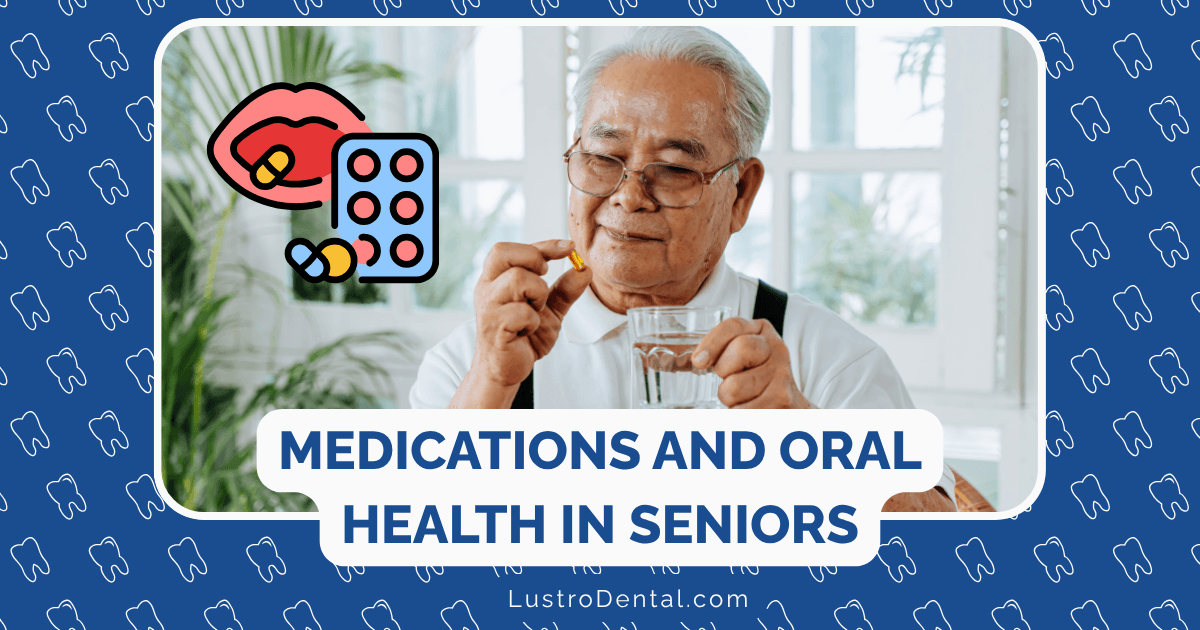
When my father turned 75, he began complaining about a persistent dry feeling in his mouth. Despite drinking more water, the dryness continued, eventually leading to several cavities—something he hadn’t experienced in decades. The culprit? Not poor oral hygiene or age alone, but a combination of the five different medications he was taking for his heart condition, arthritis, and mild depression.
This scenario is remarkably common. According to the American Dental Association, approximately 30% of adults over 65 and up to 40% of those over 80 experience medication-related oral health issues. With the average older adult taking 4-5 prescription medications daily, understanding how these pharmaceuticals affect oral health has never been more important.
Let’s explore the complex relationship between medications and oral health in seniors, and most importantly, what can be done to mitigate these effects.
The relationship between medications and oral health isn’t always straightforward. Medications can affect oral health through several mechanisms:
Saliva is your mouth’s natural defense system. It:
“When medications reduce saliva flow, they’re essentially disabling your body’s built-in oral health protection system,” explains Dr. Sarah Chen, a geriatric dentist specializing in medication-related oral health issues. “It’s like turning off your home’s security system and leaving the doors unlocked.”
Some medications directly affect the gums, tongue, and other soft tissues in the mouth, causing:
Medications that alter bodily systems can indirectly impact oral health:
Let’s examine the most common classes of medications prescribed to seniors and their specific effects on oral health:
Types: ACE inhibitors, calcium channel blockers, beta-blockers, diuretics
Oral health effects:
“I see gingival overgrowth frequently in patients taking calcium channel blockers,” notes Dr. James Wilson, a periodontist. “The excess gum tissue creates deep pockets where bacteria can hide, making oral hygiene much more challenging and increasing the risk of periodontal disease.”
Types: Selective serotonin reuptake inhibitors (SSRIs), tricyclic antidepressants, serotonin and norepinephrine reuptake inhibitors (SNRIs)
Oral health effects:
According to research published in the Journal of Dental Research, antidepressants are among the medications most strongly associated with xerostomia in older adults.
Types: First-generation (diphenhydramine/Benadryl) and second-generation (cetirizine/Zyrtec, loratadine/Claritin)
Oral health effects:
“Many seniors don’t realize that over-the-counter sleep aids often contain antihistamines, which can significantly worsen dry mouth,” cautions Dr. Chen. “Taking these medications regularly before bed means spending 8 hours with minimal saliva production—a perfect environment for bacteria to thrive.”
Types: Opioids, NSAIDs, acetaminophen
Oral health effects:
Taking multiple medications—known as polypharmacy—is extremely common among seniors and significantly increases oral health risks. A study published in the Journal of the American Geriatrics Society found that individuals taking three or more prescriptions had a significantly higher Root Caries Index, indicating more cavities.
“It’s not just about individual medications,” explains Dr. Wilson. “When multiple medications with similar side effects are combined, the impact is often multiplicative, not just additive. Three medications that each cause mild dry mouth can together create severe xerostomia.”
When medications affect oral health, a cascade of complications can follow:
Reduced saliva means:
“I’ve seen patients who maintained excellent oral health their entire lives suddenly develop multiple cavities in their 70s or 80s after starting new medications,” notes Dr. Chen. “The change can be dramatic and distressing.”
Medications can impact gum health by:
According to the American Dental Association, approximately 68% of adults over 65 with natural teeth have periodontitis, with medication effects being a contributing factor.
Medication-induced oral health changes can affect:
The cumulative effect of these issues can significantly impact quality of life:
The good news? With awareness and proactive management, many medication-related oral health issues can be effectively addressed:
Work with healthcare providers to:
“A comprehensive medication review should be part of every senior’s healthcare routine,” advises Dr. Wilson. “Sometimes a simple switch to a different medication in the same class can dramatically reduce oral side effects.”
Adapt oral care routines to counter medication effects:
“For patients with medication-induced dry mouth, I often recommend brushing after every meal rather than just morning and night,” says Dr. Chen. “The more frequently you can disrupt bacterial biofilm, the better.”
Combat xerostomia with:
“One of my most effective recommendations is to keep a water bottle with you at all times,” suggests Dr. Chen. “Small, frequent sips throughout the day are more effective than drinking large amounts occasionally.”
Adjust eating habits to protect oral health:
Work closely with dental professionals:
“I recommend that my patients on multiple medications come in for more frequent cleanings and assessments,” says Dr. Wilson. “Catching problems early is especially important when medications accelerate dental issues.”
For severe medication-induced dry mouth, dentists or physicians may prescribe:
Let’s return to my father’s experience as an example of effective management:
The result? No new cavities in the three years since implementing these changes, and significantly improved comfort.
Perhaps the most crucial aspect of managing medication effects on oral health is communication between healthcare providers:
“The disconnect between medical and dental care can be a significant barrier to addressing medication-related oral health issues,” notes Dr. Chen. “Patients often need to be their own advocates, ensuring all their healthcare providers have the complete picture.”
Research continues to advance our understanding and management of medication effects on oral health:
While medications can significantly impact oral health in seniors, awareness and proactive management can prevent or minimize most complications. The key is recognizing the connection between medications and oral health, rather than attributing problems simply to aging.
By working closely with healthcare providers, maintaining meticulous oral hygiene, and implementing targeted strategies to address specific medication effects, seniors can maintain good oral health despite medication challenges.
Have you or a loved one experienced medication-related oral health issues? What strategies have worked best for you? Share your experiences in the comments below to help others navigating this common but often overlooked aspect of senior health.