🦷 General Care
✨ Treatments
👶 Family Care
💚 Wellness
💡 Resources

🦷 General Care
✨ Treatments
👶 Family Care
💚 Wellness
💡 Resources

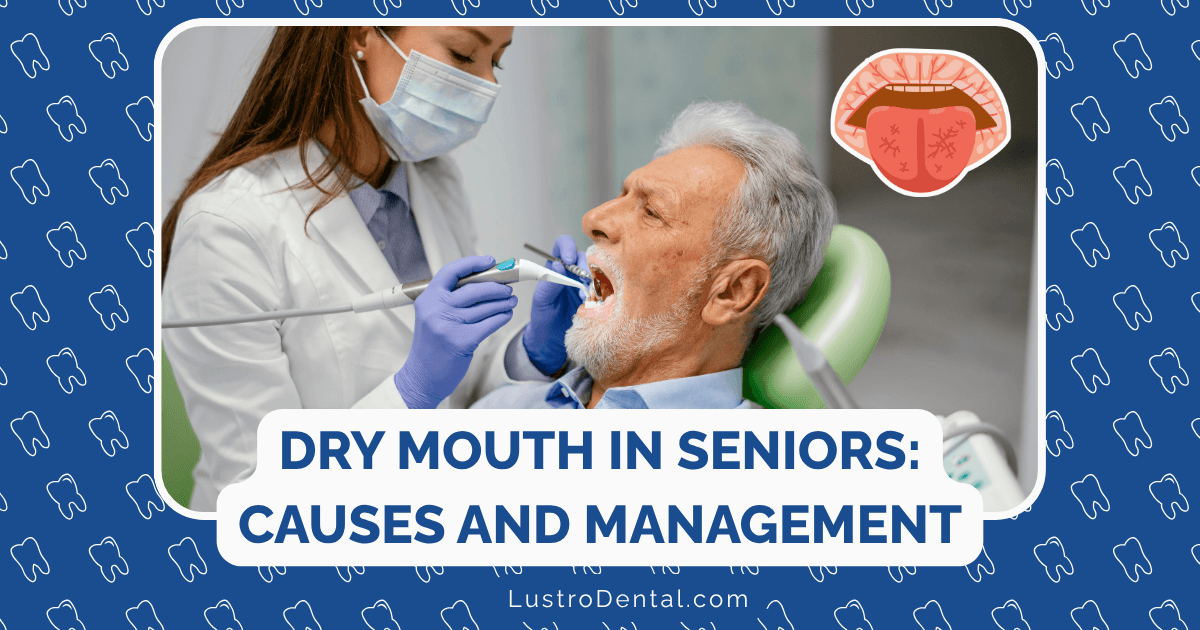
When my father turned 72, he began complaining about something that seemed minor at first—his mouth felt constantly dry. Water didn’t help for long, and soon he was waking up multiple times each night desperately thirsty. As his discomfort grew, so did other problems: difficulty speaking clearly, a persistent sore throat, and trouble enjoying meals. What we initially dismissed as a minor inconvenience turned out to be a condition called xerostomia—more commonly known as dry mouth—that was significantly impacting his quality of life.
If you or a loved one is experiencing similar symptoms, you’re not alone. According to the American Dental Association, dry mouth affects approximately 30% of adults over 65 and up to 40% of those over 80. While often overlooked, this condition can have serious implications for both oral and overall health.
Let’s explore why dry mouth and seniors are common, its potential consequences, and most importantly, effective strategies to manage it.
Dry mouth occurs when the salivary glands don’t produce enough saliva to keep the mouth moist. This might sound like a mere inconvenience, but saliva plays crucial roles in oral health:
“Many patients don’t realize how important saliva is until it’s in short supply,” explains Dr. Sarah Chen, a geriatric dentist specializing in senior oral health. “It’s not just about comfort—saliva is your mouth’s first line of defense.”
Several factors make older adults especially susceptible to dry mouth:
By far, the most common cause of dry mouth in seniors is medication use. According to research published in the Journal of the American Geriatrics Society, over 500 commonly prescribed medications list dry mouth as a potential side effect.
The primary culprits include:
“The challenge with medication-induced dry mouth is that seniors often take multiple medications simultaneously,” notes Dr. James Wilson, a pharmacist specializing in geriatric medication management. “This polypharmacy effect can compound the problem, with each additional medication increasing the risk and severity of dry mouth.”
While aging itself doesn’t necessarily cause dry mouth, some age-related changes can contribute:
Several conditions common in older adults can cause or worsen dry mouth:
Radiation therapy for head and neck cancers often damages salivary glands, sometimes permanently. Chemotherapy can also temporarily affect saliva production.
Seniors are more prone to dehydration for several reasons:
Left unaddressed, chronic dry mouth can lead to a host of complications:
“What starts as dry mouth can quickly cascade into serious health issues,” warns Dr. Chen. “I’ve seen patients develop extensive tooth decay within months of developing severe xerostomia.”
The good news? While dry mouth can be challenging, numerous strategies can help manage symptoms and prevent complications:
Medication Review
If medications are causing dry mouth, don’t stop taking them without consulting your healthcare provider. Instead:
“A comprehensive medication review can often identify opportunities to reduce dry mouth without compromising treatment of underlying conditions,” explains Dr. Wilson. “Sometimes simply switching from one blood pressure medication to another can make a tremendous difference.”
Managing Underlying Conditions
For dry mouth related to chronic conditions:
When natural saliva production can’t be adequately restored, artificial substitutes can help:
Over-the-Counter Options
According to the Mayo Clinic, effective products include:
“Look for products containing xylitol, carboxymethylcellulose, or hydroxyethyl cellulose,” advises Dr. Chen. “These ingredients help mimic the lubricating properties of natural saliva.”
DIY Solutions
Simple home remedies can provide temporary relief:
When some salivary function remains, these approaches can help increase natural saliva flow:
Non-Prescription Methods
Prescription Medications
For severe cases, doctors may prescribe medications to stimulate saliva production:
“These medications can be quite effective, but they’re not appropriate for everyone,” cautions Dr. Wilson. “They work best for people whose salivary glands still have some functional capacity, and they do have potential side effects like sweating and increased urination.”
Simple daily habits can significantly impact dry mouth symptoms:
Hydration Strategies
Environmental Adjustments
Dietary Considerations
With reduced saliva protection, meticulous oral care becomes even more crucial:
“For my patients with severe dry mouth, I often recommend prescription-strength fluoride products and more frequent professional cleanings,” says Dr. Chen. “These preventive measures can make a tremendous difference in avoiding the cascade of dental problems that often accompany xerostomia.”
Returning to my father’s experience, his dry mouth journey illustrates how a comprehensive approach can make a difference:
While his dry mouth isn’t completely resolved, these strategies have significantly improved his comfort and prevented complications like tooth decay and oral infections.
While self-management strategies are valuable, certain situations warrant professional attention:
“Don’t hesitate to discuss dry mouth with both your dentist and physician,” advises Dr. Wilson. “This symptom often falls in the gap between medical and dental care, but a collaborative approach typically works best.”
Dry mouth may be common among seniors, but it shouldn’t be dismissed as an inevitable part of aging. With proper identification of underlying causes and implementation of targeted management strategies, most seniors can find significant relief from symptoms and avoid serious complications.
Remember that addressing dry mouth is not merely about comfort—it’s about preserving oral health, maintaining proper nutrition, and supporting overall quality of life. By taking a proactive approach, you can keep your mouth healthy and comfortable for years to come.
Have you or a loved one dealt with dry mouth? What strategies have worked best for you? Share your experiences in the comments below to help others navigating this common but challenging condition.