🦷 General Care
✨ Treatments
👶 Family Care
💚 Wellness
💡 Resources

🦷 General Care
✨ Treatments
👶 Family Care
💚 Wellness
💡 Resources

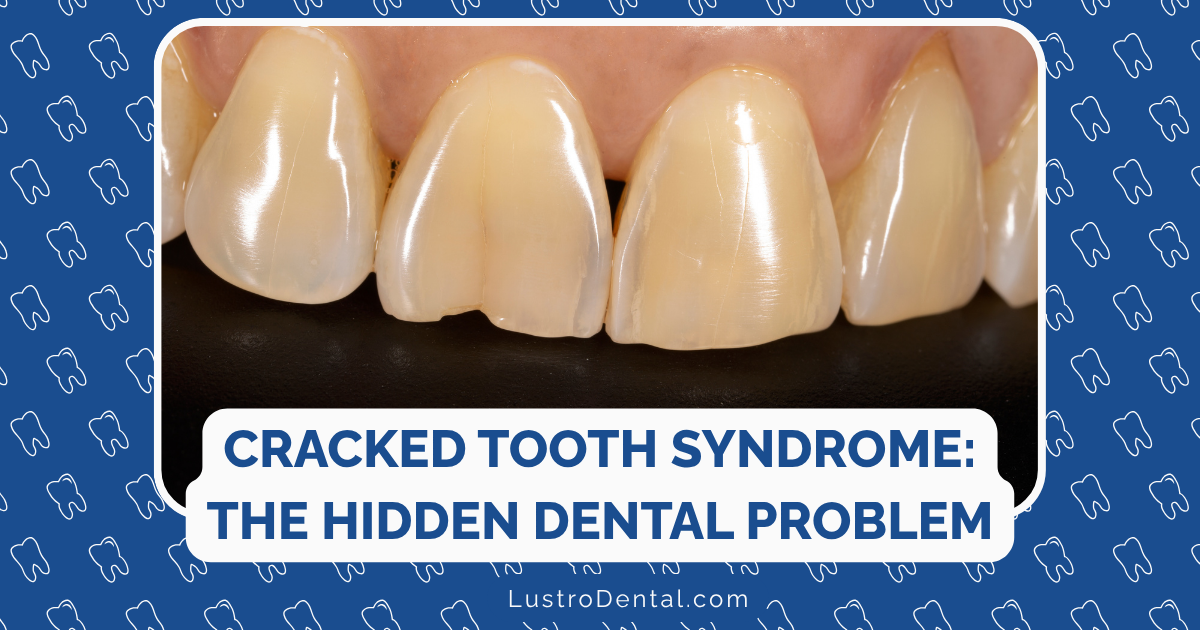
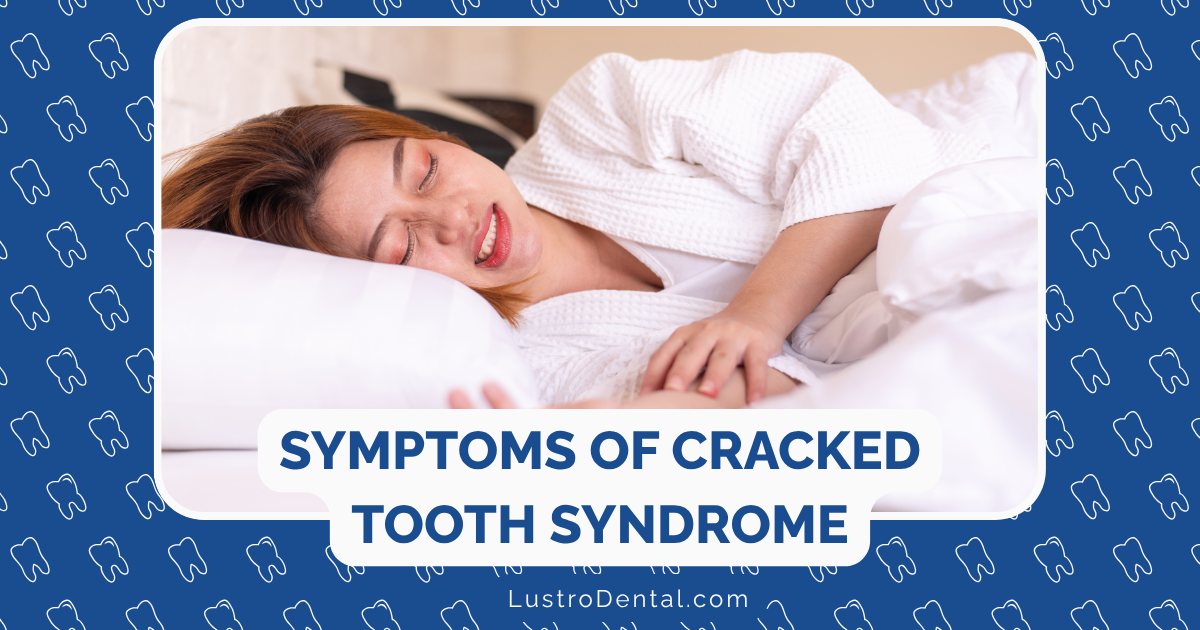
Have you ever experienced a sharp, shooting pain when biting down on food, only to have it disappear moments later? Or perhaps you’ve noticed an odd sensitivity to hot or cold that comes and goes without any obvious pattern? If so, you might be experiencing what dentists call “cracked tooth syndrome” (CTS)—one of the most perplexing and challenging conditions to diagnose in modern dentistry.
As someone who’s guided many patients through this frustrating journey, I’ve seen firsthand how cracked tooth syndrome can turn into a dental detective story, sometimes spanning months before a definitive diagnosis is reached. Let’s unravel this mystery together and understand why this condition is so notoriously difficult to pin down.
First introduced by Cameron in 1964, cracked tooth syndrome refers to an incomplete fracture of a vital tooth that often extends into the dentin and occasionally into the pulp. These aren’t the obvious, visible cracks that you might spot in a mirror—instead, they’re often microscopic fractures that hide beneath the surface, evading detection through conventional methods.
According to the American Association of Endodontists, cracked teeth are now the third leading cause of tooth loss, behind only cavities and gum disease. Yet despite their prevalence, they remain among the most challenging dental conditions to diagnose accurately.
One of the primary reasons cracked tooth syndrome is so difficult to diagnose is the inconsistent and often confusing nature of its symptoms.
Dr. Sarah Johnson, endodontist at University Dental Institute, explains: “The hallmark of cracked tooth syndrome is inconsistent pain. Patients often report that it hurts only when they bite in a certain way or on particular foods. This intermittent nature makes it incredibly difficult for both patients and dentists to locate the exact source.”
Typical symptoms include:
This inconsistency often leads patients on a merry-go-round of dental visits, with the pain mysteriously vanishing just as they sit in the dental chair, only to return later when they’re at home or work.
Many patients express frustration that their tooth “performs” differently in the dental office than it does in real life. This isn’t your imagination—it’s actually a defining characteristic of the condition.
“I had one patient who visited three different dentists over eight months before we finally identified her cracked tooth,” shares Dr. Michael Chen of Advanced Dental Care. “Each time she had an appointment, her symptoms would mysteriously subside, making diagnosis nearly impossible.”
The physical nature of tooth cracks presents another significant challenge in diagnosis.
Tooth cracks are often:
One might assume that modern dental X-rays would easily reveal these cracks, but that’s rarely the case. Standard dental radiographs are excellent for detecting cavities, bone loss, and other conditions, but they have a significant limitation when it comes to cracks.
For a crack to be visible on an X-ray, it must be perfectly aligned with the X-ray beam—something that rarely happens with dental fractures. In fact, research indicates that even with digital radiography, most cracks remain completely invisible unless they’ve already separated enough to create distinct fragments.
As the Journal of Endodontics notes, “Radiographs are rarely effective in detecting cracks due to their tendency to propagate in a mesiodistal direction.” This means that even with perfect X-rays, most cracks will remain hidden from view.
Given these difficulties, dentists must rely on a combination of approaches to diagnose cracked tooth syndrome.
Modern diagnosis typically involves:
Even with all these tools, diagnosis often remains challenging. Dr. Lisa Wong, Director of Endodontic Research Institute, observes: “Even with our most advanced technology, we sometimes can’t confirm a crack until we’ve actually begun treatment. It’s one of the most humbling aspects of modern dentistry.”
While dental technology continues to advance, each diagnostic method has limitations:
A 2022 study in the Journal of Dental Sciences found that even with the most advanced CBCT technology, cracks narrower than 100 microns (about the width of a human hair) often remain undetectable.
Beyond the physical challenges, cracked tooth syndrome takes a psychological toll on many patients.
“One of the most distressing aspects for patients is the fear that they won’t be taken seriously,” notes Dr. Johnson. “When multiple dental visits yield no clear diagnosis, patients sometimes begin to doubt themselves or worry that their provider thinks they’re exaggerating.”
This experience can be particularly frustrating when:
If you’re experiencing these feelings, know that you’re not alone—and you’re not imagining your symptoms. Cracked tooth syndrome is a well-documented condition that sometimes requires extraordinary persistence to diagnose properly.
If you believe you might be experiencing symptoms of cracked tooth syndrome, here are some practical steps to take:
Despite the diagnostic challenges, there’s good news for patients with cracked tooth syndrome. Once identified, modern treatment options have excellent success rates, especially when cracks are caught early.
Treatment approaches include:
Dr. Chen emphasizes, “While diagnosis remains challenging, our treatment success rates continue to improve. The key is persistence in getting to an accurate diagnosis and intervening before the crack propagates further.”
Cracked tooth syndrome truly represents one of dentistry’s most intriguing mysteries—a condition that challenges even the most experienced practitioners and sophisticated technology. If you’re currently navigating this diagnostic journey, take heart in knowing that with persistence and the right dental team, most cases can eventually be identified and successfully treated.
Have you experienced the frustration of an elusive dental diagnosis? Share your story in the comments below—your experience might help others feeling the same uncertainty.