🦷 General Care
✨ Treatments
👶 Family Care
💚 Wellness
💡 Resources

🦷 General Care
✨ Treatments
👶 Family Care
💚 Wellness
💡 Resources

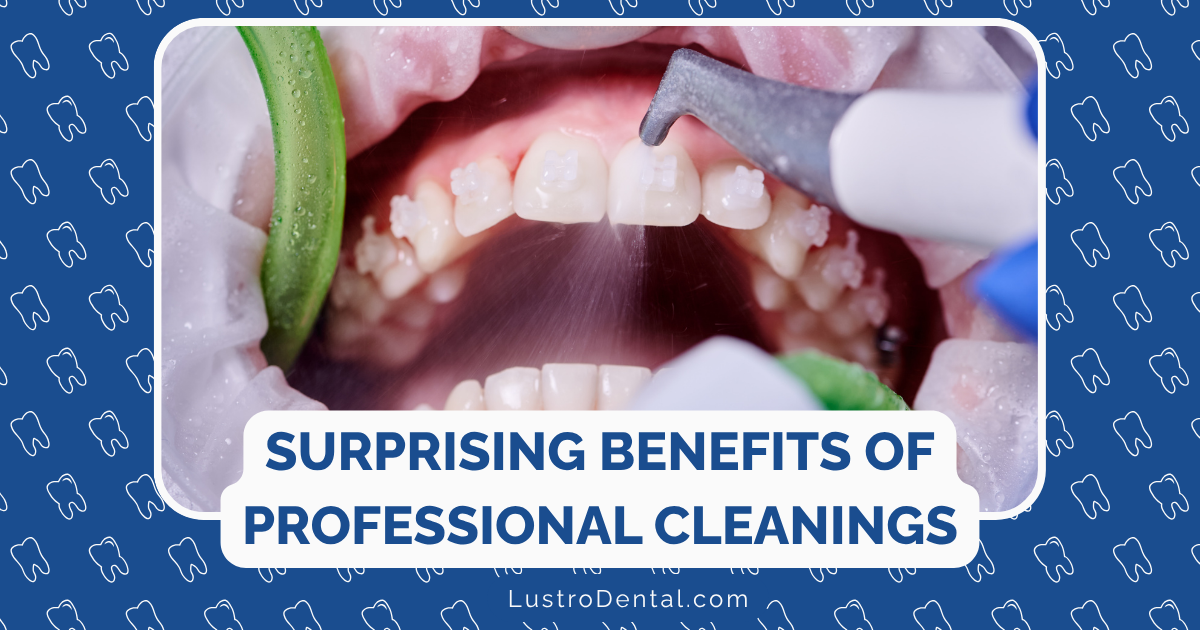
When you schedule your bi-annual dental cleaning, you might think you’re simply checking off a box for basic oral hygiene. After all, most of us associate these appointments with the obvious benefits: removing plaque, polishing away surface stains, and walking out with that smooth, just-cleaned feeling.
But what if those routine cleanings are doing far more for your health than you realize?
Recent research has uncovered surprising connections between professional dental cleanings and numerous aspects of your overall health and wellbeing. These hidden benefits extend far beyond aesthetics, potentially impacting everything from your heart to your brain.
Let’s explore the lesser-known advantages of those dental cleaning appointments you might be tempted to postpone.
Before diving into specific benefits, it’s important to understand why your mouth plays such a crucial role in your overall health.
“The mouth is essentially a gateway to the rest of the body,” explains Dr. Sarah Chen, a periodontist at Columbia University. “What happens in your oral cavity doesn’t stay there—it can affect virtually every system in your body.”
This connection works in several ways:
“Professional cleanings address these connections at the source,” notes Dr. Michael Rodriguez, DDS. “By removing plaque and calculus that harbor harmful bacteria, we’re not just preventing cavities—we’re potentially reducing risks throughout the body.”
One of the most well-established connections between oral health and systemic health involves your cardiovascular system.
Multiple studies have found compelling links between gum disease and heart disease. According to research published in the Journal of the American Heart Association, individuals with periodontal disease are two to three times more likely to experience a heart attack, stroke, or other serious cardiovascular event.
“The connection appears to be inflammation,” explains dental hygienist Jennifer Marsh. “Periodontal disease creates chronic inflammation in the gums, and those inflammatory compounds can enter the bloodstream, potentially contributing to arterial inflammation and plaque buildup.”
Regular professional cleanings help by:
A 2023 longitudinal study found that patients who received professional dental cleanings at least once a year had a 7% decreased risk of heart failure compared to those who didn’t maintain regular cleanings.
Surprising to many patients is the connection between oral health and blood pressure. Research from the University of North Carolina School of Dentistry found that people with gum disease were 40% more likely to have high blood pressure.
“We often see improvements in blood pressure readings after patients commit to regular dental care,” notes Dr. Lisa Warren, a prosthodontist. “While it’s not a replacement for blood pressure medication, addressing oral inflammation appears to have positive effects on cardiovascular health markers.”
The relationship between diabetes and oral health represents one of the strongest oral-systemic connections, with benefits flowing in both directions.
“Diabetes and periodontal disease have a bidirectional relationship,” explains Dr. Rodriguez. “High blood sugar makes gum disease worse, and gum disease makes blood sugar control more difficult.”
Professional cleanings break this cycle by:
A study in the Journal of Clinical Periodontology found that intensive periodontal treatment led to improved glycemic control in patients with type 2 diabetes, with effects lasting at least six months.
Interestingly, your dental professional might be the first to spot signs of undiagnosed diabetes.
“We sometimes refer patients for diabetes testing based on what we see in their mouths,” notes dental hygienist Marsh. “Frequent abscesses, severe gum inflammation despite good home care, and slow healing after procedures can all be oral signs of undiagnosed diabetes.”
By maintaining regular cleaning appointments, you’re creating opportunities for early detection of this serious condition.
Your oral health and respiratory health are more connected than you might think, with professional cleanings potentially benefiting your lungs and airways.
For elderly or immunocompromised individuals especially, regular dental cleanings may reduce the risk of pneumonia.
“Bacteria from the mouth can be aspirated into the lungs, potentially causing respiratory infections,” explains Dr. Chen. “By reducing the bacterial load in the mouth through professional cleanings, we may help prevent this pathway of infection.”
Research published in the Journal of the American Geriatrics Society found that regular professional oral care reduced the incidence of pneumonia in nursing home residents by approximately 40%.
For patients with existing respiratory conditions like chronic obstructive pulmonary disease (COPD), maintaining oral health through regular cleanings may help manage their condition.
“Patients with COPD often report breathing more comfortably after establishing regular dental care,” notes Dr. Warren. “Reducing oral bacteria appears to have positive effects on respiratory symptoms.”
Perhaps the most surprising connection is between oral health and brain health, with emerging research suggesting links to cognitive decline and dementia.
Multiple studies have found associations between poor oral health and increased risk of cognitive decline and Alzheimer’s disease.
A longitudinal study published in Neurology followed participants for 20 years and found that those with severe gum disease had a 70% higher risk of developing dementia than those with healthy gums.
“The exact mechanism isn’t fully understood,” explains Dr. Rodriguez, “but it likely involves inflammatory pathways and possibly direct bacterial effects. P. gingivalis, a bacterium associated with gum disease, has been found in the brains of Alzheimer’s patients.”
Regular professional cleanings help by:
For expectant mothers, professional dental cleanings take on additional importance, potentially affecting pregnancy outcomes.
“Pregnancy creates hormonal changes that make women more susceptible to gum inflammation,” notes dental hygienist Marsh. “Without proper care, this can progress to periodontal disease, which has been associated with pregnancy complications.”
Research has linked periodontal disease to:
A systematic review in the Journal of Maternal-Fetal & Neonatal Medicine found that women who received periodontal treatment during pregnancy had a significantly reduced risk of preterm birth compared to those who didn’t receive treatment.
“Many obstetricians now recommend a dental cleaning as part of prenatal care,” adds Dr. Chen. “It’s a simple preventive measure that may have significant benefits for both mother and baby.”
One of the most valuable hidden benefits of regular professional cleanings is the opportunity for early detection of various health conditions.
Most dental professionals perform oral cancer screening as part of routine cleaning appointments. This examination can detect suspicious changes that might otherwise go unnoticed.
“Oral cancer is highly treatable when caught early, but symptoms are often subtle or painless in early stages,” explains Dr. Warren. “Regular dental visits create opportunities for professional screening that can literally save lives.”
According to the Oral Cancer Foundation, the 5-year survival rate for oral cancers discovered in early stages is approximately 85%, compared to only 39% for those discovered in late stages.
Beyond oral cancer, dental professionals are trained to recognize oral manifestations of numerous systemic conditions:
“We’re often the healthcare providers that patients see most regularly,” notes Dr. Rodriguez. “This puts us in a unique position to notice changes that might indicate developing health issues.”
The benefits of professional cleanings extend beyond physical health to include significant impacts on mental wellbeing and quality of life.
“Never underestimate the psychological impact of feeling good about your smile,” says dental hygienist Marsh. “When patients maintain regular cleanings, they often report feeling more confident in social and professional situations.”
This confidence boost comes from:
The preventive nature of regular cleanings helps avoid the stress and anxiety associated with dental emergencies and extensive treatments.
“Patients who maintain regular cleanings typically need less invasive, less expensive, and less stressful treatments over their lifetime,” explains Dr. Chen. “There’s significant peace of mind in knowing you’re taking proactive steps to prevent problems.”
While the health benefits are compelling on their own, the financial case for regular professional cleanings is equally strong.
“Professional cleanings are one of the best values in healthcare,” notes Dr. Warren. “The cost of preventive care is minimal compared to the expense of treating conditions that develop when prevention is neglected.”
Consider these comparative costs:
A study in the American Journal of Preventive Medicine found that for every dollar spent on preventive dental care, patients saved between $8 and $50 in restorative and emergency treatments.
Most dental insurance plans cover preventive cleanings at 100%, with no out-of-pocket cost to patients.
“Many patients don’t realize they’re leaving money on the table when they skip covered preventive care,” explains Dr. Rodriguez. “Insurance companies cover preventive care at higher rates precisely because they know it reduces their costs for more expensive procedures down the road.”
To maximize the hidden benefits of professional cleanings, consider these strategies:
While twice-yearly cleanings are standard for many patients, some may benefit from more frequent visits:
“The appropriate cleaning frequency should be determined individually based on your risk factors and oral health status,” advises dental hygienist Marsh. “For some patients, three or four cleanings per year provides optimal benefits.”
“Be sure to update your dental professional about changes in your health, medications, or symptoms,” recommends Dr. Chen. “This information helps us customize your care and recognize potential connections between your oral health and overall wellbeing.”
Important updates to share include:
“As we better understand the oral-systemic connection, collaboration between dental professionals and medical providers becomes increasingly important,” notes Dr. Warren. “Don’t hesitate to ask your dentist to communicate with your physician when relevant.”
This integration might include:
The next time you’re tempted to postpone your dental cleaning, remember that you’re not just maintaining clean teeth—you’re potentially benefiting your heart, brain, respiratory system, and overall health.
“Professional dental cleanings represent one of the most accessible and effective preventive health measures available,” concludes Dr. Rodriguez. “Few other healthcare interventions offer such wide-ranging benefits with so little downside.”
By maintaining regular professional cleanings, you’re making a significant investment in your overall health and wellbeing—one that pays dividends far beyond a brighter smile.