🦷 General Care
✨ Treatments
👶 Family Care
💚 Wellness
💡 Resources

🦷 General Care
✨ Treatments
👶 Family Care
💚 Wellness
💡 Resources

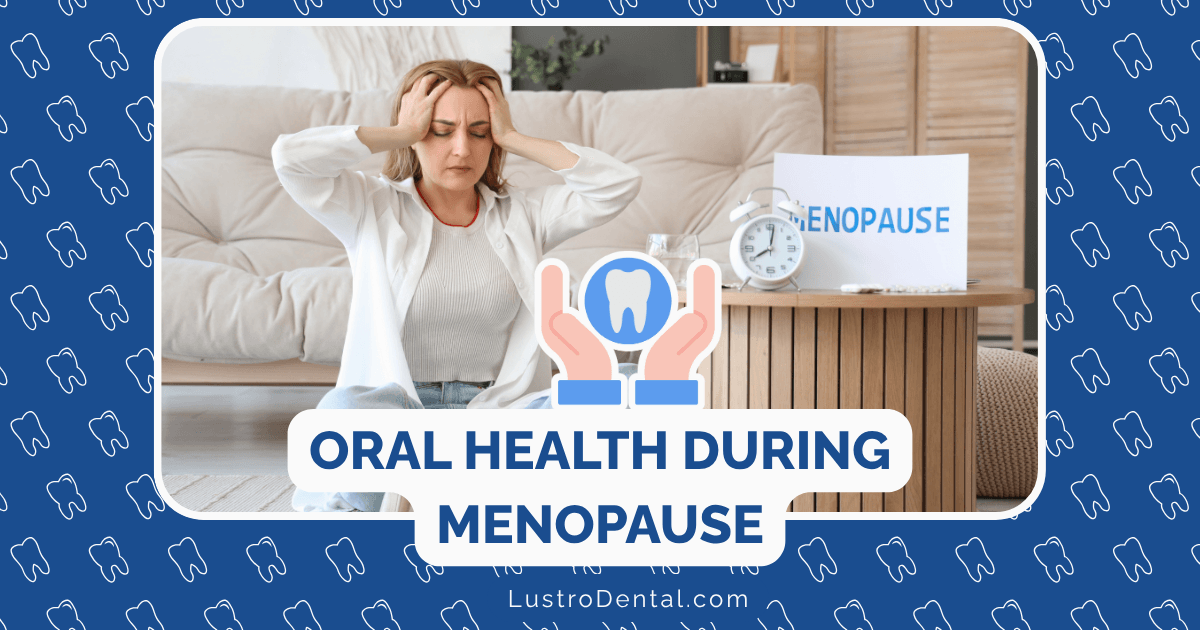
When I first started experiencing hot flashes and irregular periods in my late 40s, I expected the mood swings and night sweats that friends had warned me about. What caught me completely off guard? The changes in my mouth. Suddenly, my gums were more sensitive, my mouth felt perpetually dry, and foods I’d enjoyed for decades tasted different. Was I imagining things, or was menopause affecting my oral health too?
If you’re experiencing similar changes, you’re not alone—and you’re certainly not imagining things. According to a 2024 survey by Delta Dental, a staggering 84% of women are unaware that menopause can affect their oral health, despite the fact that 70% of menopausal women report at least one new oral symptom.
Let’s pull back the curtain on this often-overlooked aspect of menopause and explore how hormonal changes can impact your dental health—and what you can do about it.
To understand why menopause triggers oral health changes, we need to look at the role estrogen plays in your mouth. Estrogen receptors are present throughout oral tissues—in your gums, salivary glands, jawbone, and even the temporomandibular joint (TMJ) that connects your jaw to your skull.
“Many women are surprised to learn that estrogen does much more than regulate reproductive functions,” explains Dr. Sarah Chen, a dentist specializing in women’s oral health. “It helps maintain bone density, including in your jaw, regulates saliva production, and supports healthy gum tissue. When estrogen levels decline during menopause, these functions can be compromised.”
The average woman enters menopause around age 52, though perimenopause—the transitional phase leading up to menopause—can begin up to a decade earlier. During this time, estrogen levels gradually decrease, triggering a cascade of changes throughout the body, including in your mouth.
Perhaps the most common oral symptom during menopause, dry mouth affects approximately 25% of menopausal women, according to research published by Penn Dental Medicine.
“My mouth felt like the Sahara Desert,” shares Jennifer, 54, who entered menopause two years ago. “Water became my constant companion, and I found myself waking up multiple times at night with my tongue stuck to the roof of my mouth.”
Dry mouth occurs because estrogen influences saliva production. As estrogen levels drop, so does saliva flow. This creates more than just discomfort—saliva plays crucial protective roles in your mouth:
Without adequate saliva, your risk of tooth decay, gum disease, and oral infections increases significantly.
Have your gums become more sensitive, swollen, or prone to bleeding? You’re experiencing another common menopausal oral health change.
Estrogen helps regulate inflammation in gum tissue. As levels decline, your gums become more vulnerable to the bacteria in plaque, leading to:
A condition called menopausal gingivostomatitis can also develop, characterized by abnormally pale, dry, shiny gums that bleed easily. Some women also experience unusual sensations like itching or burning in the gums.
According to a comprehensive 2024 review published in the Journal of Oral Health, postmenopausal women have a significantly higher risk of developing periodontitis—advanced gum disease that can lead to tooth loss—compared to premenopausal women.
Imagine the sensation of scalding your mouth on hot coffee—except it persists for hours or even days. That’s what burning mouth syndrome feels like for many women.
“The burning sensation started on my tongue, then spread to my lips and the roof of my mouth,” recalls Maria, 55. “Doctors ran tests for everything from vitamin deficiencies to fungal infections, but eventually diagnosed it as burning mouth syndrome related to menopause.”
This condition affects up to 40% of menopausal women to some degree and is characterized by:
While the exact cause isn’t fully understood, hormonal changes, reduced nerve function, and immune system alterations during menopause are believed to contribute to BMS.
Estrogen plays a crucial role in maintaining bone density throughout your body—including your jawbone. During the first five years after menopause, women can lose up to 10% of their bone mass due to decreased estrogen.
This bone loss can affect your oral health in several ways:
“I noticed my front teeth seemed to be shifting, and there were new gaps I hadn’t had before,” says Patricia, 58. “My dentist explained that bone loss in my jaw from menopause was causing these changes.”
Have your favorite foods lost their appeal? Does everything taste slightly metallic? Estrogen affects taste perception, and its decline during menopause can alter how you experience flavors.
Changes in taste can lead to:
The good news? With awareness and proactive care, you can manage these changes effectively. Here’s your comprehensive action plan:
During menopause, your basic oral care routine needs an upgrade:
“I recommend patients invest in a high-quality electric toothbrush during menopause,” advises Dr. Chen. “The consistent pressure and motion can help compensate for reduced saliva and provide a more thorough cleaning.”
Dry mouth isn’t just uncomfortable—it significantly increases your risk of dental problems. Try these strategies:
“Adding a humidifier to my bedroom made a huge difference for my nighttime dry mouth,” shares Jennifer. “I also keep sugar-free mints by my bed for when I wake up with a particularly dry mouth.”
What you eat can significantly impact your oral health during menopause:
“I’ve found that snacking on crisp vegetables like celery and bell peppers helps stimulate my saliva flow,” says Maria. “And I’ve made it a habit to rinse with water after anything acidic or sweet.”
During menopause, the standard six-month dental visit schedule may not be sufficient:
“I now see my patients going through menopause every three to four months,” explains Dr. Wilson, a periodontist. “This allows us to catch and address issues before they become serious problems.”
For more severe symptoms, medical interventions may be appropriate:
“After struggling with severe burning mouth syndrome for months, I discussed HRT with my doctor,” recalls Patricia. “Within weeks of starting treatment, the burning sensation diminished significantly, and my dry mouth improved too.”
Always discuss the potential benefits and risks of HRT with your healthcare provider, as it’s not appropriate for everyone.
Many women report increased teeth grinding (bruxism) during menopause, possibly due to sleep disturbances, increased stress, or hormonal changes:
While some degree of oral change during menopause is normal, certain symptoms warrant prompt professional attention:
Perhaps the most important takeaway is this: be your own advocate. According to recent research, only 2% of menopausal women discuss oral health changes with their dentist, and 53% of dentists won’t bring up menopause unless the patient mentions it first.
“I encourage all my female patients in their 40s and beyond to proactively discuss hormonal changes with their dental team,” urges Dr. Chen. “Don’t assume that bleeding gums or dry mouth are just part of getting older—they’re often treatable symptoms related to hormonal changes.”
By 2025, an estimated 1.1 billion women worldwide will be experiencing menopause. With greater awareness and open communication, we can ensure that oral health doesn’t become the forgotten aspect of menopausal care.
Have you noticed changes in your oral health during perimenopause or menopause? What strategies have worked for you? Share your experiences in the comments below to help other women navigate this important but often overlooked aspect of the menopausal journey.