🦷 General Care
✨ Treatments
👶 Family Care
💚 Wellness
💡 Resources

🦷 General Care
✨ Treatments
👶 Family Care
💚 Wellness
💡 Resources

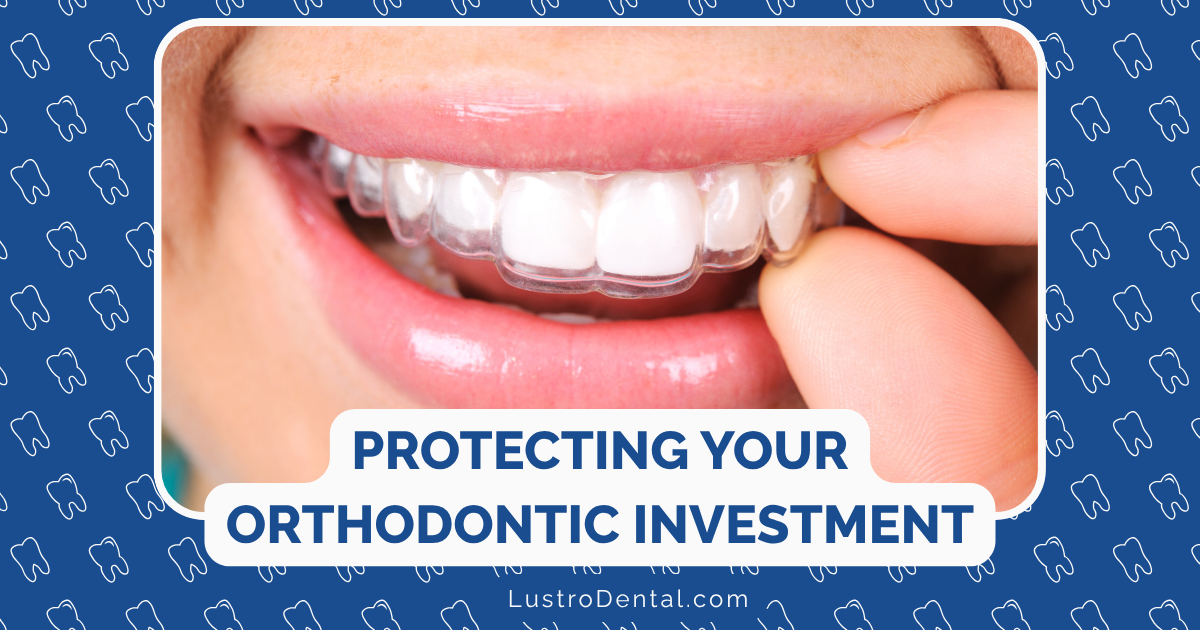
You’ve just completed months—perhaps years—of orthodontic treatment. Your braces are off or your last aligner is retired, and you’re thrilled with your beautifully aligned smile. But as your orthodontist hands you a retainer, they deliver news that might surprise you: “You’ll need to wear this for the rest of your life.”
Wait, what? Forever?
If this recommendation catches you off guard, you’re not alone. Many patients assume that once their active orthodontic treatment ends, their teeth will simply stay put. Unfortunately, the biology of tooth movement tells a different story—one that makes retainers not just important but essential for maintaining your results for a lifetime.
In this article, we’ll explore why retainer wear is a lifelong commitment, what happens when you don’t wear your retainer, the different types available, and strategies to help you maintain this crucial habit for years to come.
To understand why retainers are necessary, we first need to understand how teeth move and what happens after orthodontic treatment.
Teeth aren’t directly connected to your jawbone. Instead, they’re held in place by the periodontal ligament, a network of connective tissue fibers that surrounds the root of each tooth. When pressure is applied to a tooth (through braces or aligners), these fibers stretch on one side and compress on the other. This triggers a process called bone remodeling:
This coordinated process allows teeth to move gradually through the bone during orthodontic treatment.
When your braces are removed or you finish your aligner treatment, your teeth are in new positions, but the process isn’t complete. According to a 2025 study in the Journal of Orthodontics, several biological processes are still underway:
These processes take time—typically 6-12 months for initial stabilization, but the potential for movement continues indefinitely.
Even after these initial stabilization processes, several forces continue to work against the stability of your newly aligned teeth:
The fibers that hold your teeth in place have a “memory” and tend to pull teeth back toward their original positions. This elastic recoil is strongest in the first few months after treatment but can persist for years.
Your face and jaws continue to grow and change throughout your life. According to Dr. Shahira Saad, a leading dentist quoted in a 2025 Newsweek article, “As people age, their teeth tend to shift forward, often causing crowding in the lower front teeth.” This natural shift occurs regardless of whether you’ve had orthodontic treatment.
Daily activities like chewing, speaking, and even resting tongue pressure create forces that can gradually move teeth over time.
Habits like tongue thrusting, mouth breathing, or teeth grinding can exert significant pressure on teeth, contributing to movement.
The research on what happens when patients don’t wear retainers is clear and compelling:
The bottom line: Without retainers, the question isn’t if your teeth will move, but when and how much.
What happens if you decide not to wear your retainer as prescribed? The consequences can be significant:
The most immediate consequence is orthodontic relapse—teeth returning to their pre-treatment positions. This can occur gradually or surprisingly quickly, potentially undoing months or years of orthodontic work.
Even if your teeth don’t completely return to their original positions, partial shifts can affect your bite, appearance, and dental health. Common areas for relapse include:
As teeth shift, your bite can change, potentially leading to:
If significant relapse occurs, you might need additional orthodontic treatment—essentially paying twice for the same result. According to AM Braces, “Failing to wear a retainer can lead to the need for costly and time-consuming re-treatment.”
Not all retainers are created equal. Understanding the different types can help you work with your orthodontist to find the best option for your long-term retention needs.
Description: Custom-made from clear plastic that fits over your teeth like a thin, invisible tray.
Pros:
Cons:
Best for: Patients who prioritize aesthetics and comfort.
Description: A premium version of clear retainers made by Invisalign using proprietary material and manufacturing process.
Pros:
Cons:
Best for: Patients who have completed Invisalign treatment and want maximum durability in a clear retainer.
Description: The classic retainer with an acrylic base and visible wire that wraps around your teeth.
Pros:
Cons:
Best for: Patients who prioritize durability and don’t mind the visible wire.
Description: A thin wire permanently bonded to the back of your teeth (typically the lower front teeth).
Pros:
Cons:
Best for: Patients with high risk of relapse, those who struggle with compliance, or as a complement to removable retainers.
While specific recommendations may vary based on individual cases, here’s a general guideline for retainer wear based on current orthodontic research:
During this critical period when teeth are most likely to shift, wear your removable retainer 22+ hours per day, removing only for eating and cleaning.
Transition to wearing your retainer at night plus a few hours during the day (often in the evening).
Wear your retainer only while sleeping, but every night without exception.
Most orthodontists now recommend wearing retainers at least 3-5 nights per week indefinitely. According to Straight Smiles Solutions, “Teeth naturally move over time, necessitating lifelong retainer wear.”
Knowing you need to wear your retainer is one thing; actually doing it consistently for years is another challenge entirely. Here are strategies to help make retainer wear a sustainable lifetime habit:
Education is powerful. Understanding the science behind why retainers are necessary can significantly improve compliance. Remember that your teeth will naturally try to shift throughout your life—with or without previous orthodontic treatment.
Make retainer wear part of your daily routine:
Several apps can help you track your retainer wear and send reminders:
Develop a system for traveling with your retainer:
Many orthodontists offer retainer check programs. These appointments:
If you struggle with compliance or have areas particularly prone to relapse (like lower front teeth), a fixed retainer can provide peace of mind.
Retainers don’t last forever. Budget for regular replacements:
Some practices now offer subscription plans for retainer replacements, making the long-term cost more predictable.
As orthodontic technology advances, we’re seeing innovations in retention as well:
While these innovations may make retention more convenient, they don’t change the fundamental biological reality: retention is a lifetime commitment.
Orthodontic treatment represents a significant investment of time, money, and effort. Wearing your retainer as prescribed is the best way to protect that investment and enjoy your beautiful smile for a lifetime.
Remember:
As the saying goes in orthodontics: “Retainers are forever.” But with the right mindset and habits, that doesn’t have to feel like a burden—just a small effort to maintain the smile you’ve worked so hard to achieve.
This tightness indicates your teeth have already started to shift. If you can still insert the retainer completely, wear it consistently for a few days and it should become more comfortable as your teeth move back to their proper positions. If you cannot insert it fully, contact your orthodontist—you may need a new retainer or additional treatment.
Replace it as soon as possible. Teeth can shift within days, especially if you’re still in the early phases of retention. Many orthodontists keep digital scans or models and can make a replacement quickly.
No. The forces that cause teeth to shift continue throughout life. In fact, as you age, other factors like gum recession and bone density changes can make teeth even more prone to movement.
Discomfort usually indicates either a problem with the retainer fit or that your teeth have shifted. Consult your orthodontist rather than discontinuing wear, which will only allow further shifting.
Yes. Fixed retainers only hold the teeth they’re attached to (usually just the front teeth). A removable retainer is still needed to maintain the position of all teeth.