🦷 General Care
✨ Treatments
👶 Family Care
💚 Wellness
💡 Resources

🦷 General Care
✨ Treatments
👶 Family Care
💚 Wellness
💡 Resources

After months or years of orthodontic treatment, the day your braces come off or you finish your last aligner is cause for celebration. But as any orthodontist will tell you, your journey isn’t quite complete. The next critical phase—retention—is what ensures your beautiful new smile stays that way for years to come.
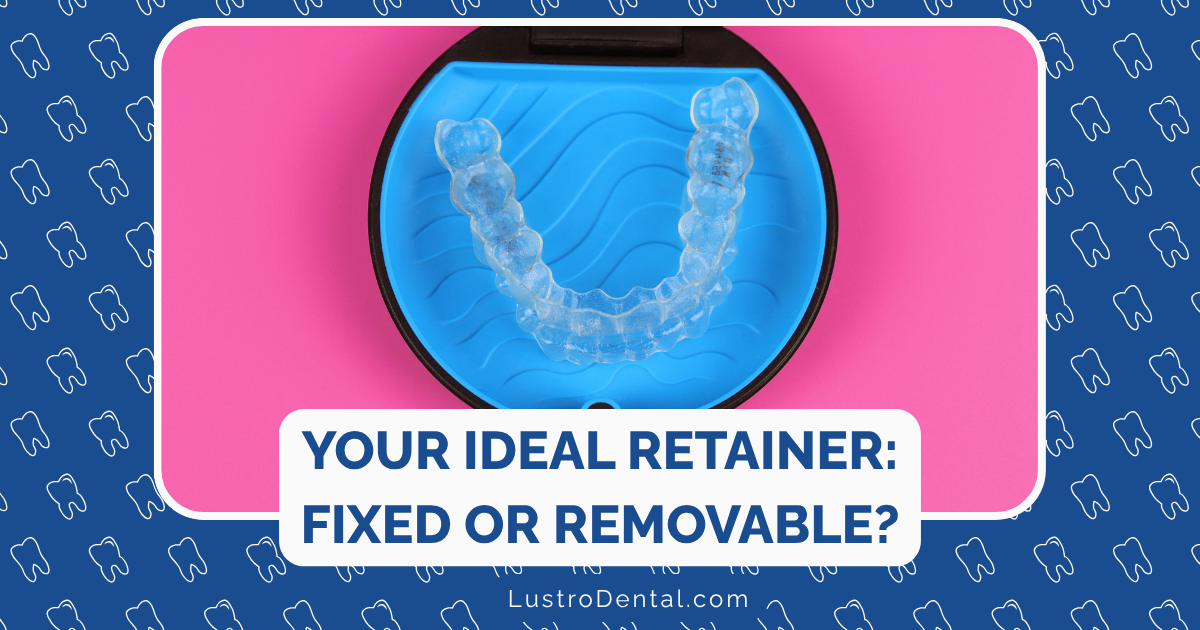
When it comes to retainers, you’ll typically face a choice between fixed (permanent) retainers, removable retainers, or a combination of both. Each option has distinct advantages and disadvantages that can significantly impact your long-term results and daily life.
In this comprehensive guide, we’ll explore the differences between fixed and removable retainers, weigh their pros and cons, and help you understand why many orthodontists now recommend combination approaches for optimal results.
Before diving into the types of retainers, it’s important to understand why they’re necessary in the first place. After orthodontic treatment, teeth have a natural tendency to shift back toward their original positions—a phenomenon known as orthodontic relapse. This occurs because:
According to a 2025 study published in Nature Scientific Reports, retainers play a crucial role in preventing these shifts and maintaining the results of your orthodontic treatment. Without proper retention, your investment of time, money, and effort could be compromised.
Fixed retainers (also called permanent or bonded retainers) consist of a thin metal wire that’s custom-fitted and bonded to the back (lingual) surface of your teeth. They’re typically placed on the lower front teeth (canine to canine), though they can also be used on upper teeth.
According to a 2025 research study, fixed retainers are increasingly popular, with approximately 40% of orthodontists recommending them as a primary retention method.
Perhaps the biggest advantage of fixed retainers is that they eliminate compliance issues. Since they’re permanently bonded to your teeth, you can’t forget to wear them, lose them, or remove them when they feel uncomfortable.
A 2025 clinical study found that compliance with removable retainers dropped from 100% to just 33% over a four-year period, making fixed retainers particularly valuable for long-term stability.
Fixed retainers are bonded to the back of your teeth, making them completely invisible when you smile. For those concerned about aesthetics, this can be a significant advantage over removable options that may be visible to others.
Research consistently shows that fixed retainers provide better long-term stability for the front teeth. According to a 2025 study in Scientific Reports, fixed retainers demonstrated superior effectiveness in maintaining tooth alignment stability compared to removable options.
Fixed retainers work around the clock, providing continuous retention without any effort on your part. This constant protection is particularly valuable for the lower front teeth, which are most prone to shifting.
With proper care, fixed retainers can last for many years—sometimes a decade or longer—without needing replacement. This can make them more cost-effective in the long run compared to removable retainers, which typically need replacement every few years.
The most significant drawback of fixed retainers is the additional effort required for proper oral hygiene. Flossing becomes more complicated, requiring special tools like floss threaders or interdental brushes to clean between teeth and under the wire.
According to a 2025 systematic review, fixed retainers are associated with higher plaque and calculus accumulation compared to removable options, potentially increasing the risk of gum problems if oral hygiene is neglected.
If a fixed retainer breaks or becomes detached from one or more teeth, you’ll need to see your orthodontist or dentist promptly for repair. Unlike removable retainers, you can’t fix these issues yourself.
Fixed retainers can break if you bite into very hard foods or if excessive force is applied. According to Orthodontic Exprts, this is one of the most common issues with fixed retainers and may require emergency appointments to address.
Some patients experience temporary tongue irritation when first adjusting to a fixed retainer. Your tongue may feel the wire and become irritated until it adapts to the new sensation, typically within a few days to a week.
Fixed retainers only protect the teeth they’re attached to—typically just the front 4-6 teeth. They don’t prevent potential shifts in back teeth or changes in your bite, which can still occur over time.
Removable retainers come in several varieties, but the two most common types are:
Clear plastic retainers are custom-made from thin, transparent plastic that fits precisely over your teeth. They look similar to clear aligners and are nearly invisible when worn.
Hawley retainers consist of an acrylic base that fits against your palate or behind your lower teeth, with a wire that wraps around the front of your teeth to hold them in position. They’re more visible but highly durable and adjustable.
Removable retainers allow for normal brushing and flossing without any special techniques or tools. You simply take them out, clean your teeth as usual, clean the retainer separately, and put it back in.
Unlike fixed retainers that only protect the front teeth, removable retainers cover all teeth, helping maintain the alignment of your entire arch and preserving your bite relationship.
Removable retainers can be thoroughly cleaned outside of your mouth using appropriate cleaning methods. This helps prevent bacteria buildup and promotes better oral health.
You can remove your retainer when eating, allowing you to enjoy all foods without worrying about damaging the retainer or getting food stuck in it.
Removable retainers can serve multiple purposes. For example, clear retainers can double as teeth-whitening trays or nightguards for teeth grinding, providing additional benefits beyond retention.
The effectiveness of removable retainers depends entirely on patient compliance. According to research from 2025, compliance rates drop significantly over time, with many patients wearing their retainers inconsistently or stopping altogether.
Removable retainers can be lost, damaged, or even accidentally thrown away (a common occurrence when they’re wrapped in napkins during meals). Replacement costs can add up over time.
Clear plastic retainers typically last 1-5 years before needing replacement due to wear, cracking, or clouding. Hawley retainers are more durable, lasting 5-10 years on average, but still require periodic replacement.
Some patients experience a temporary lisp or speech changes when wearing removable retainers, particularly when they first start wearing them or switch to a new set.
Hawley retainers are more visible due to the front wire, while clear retainers, though nearly invisible, are less durable and more prone to cracking or warping, especially if exposed to heat.
To help you visualize the key differences, here’s a side-by-side comparison:
| Feature | Fixed Retainers | Removable Retainers |
| Visibility | Completely hidden behind teeth | Clear retainers nearly invisible; Hawley retainers show metal wire |
| Compliance Required | None (always in place) | High (must be worn as prescribed) |
| Oral Hygiene | More challenging; requires special tools | Normal brushing and flossing possible |
| Durability | 5-10+ years with good care | Clear: 1-5 years; Hawley: 5-10 years |
| Coverage Area | Front teeth only | All teeth |
| Maintenance | Professional repair if broken | Self-care; replacements as needed |
| Cost Over 10 Years | $500-1,000 initial + potential repairs | $150-600 initial + replacements every few years |
| Comfort | May cause initial tongue irritation | May feel bulky; can be removed if uncomfortable |
| Effectiveness | Very high for front teeth | High if worn consistently as prescribed |
Given the pros and cons of each type, many orthodontists now recommend a combination approach to retention. According to Life Orthodontics, this strategy provides “optimal retention and stability” by leveraging the strengths of both options.
The most common combination is a fixed retainer on the lower front teeth (which are most prone to shifting) and a removable retainer for the upper teeth. This approach:
Another effective approach is to use fixed retainers on both upper and lower front teeth, supplemented by removable retainers worn at night. This strategy:
A newer approach studied in 2025 research involves an eight-unit maxillary fixed retainer that extends further back than traditional fixed retainers. This provides more comprehensive coverage while maintaining the compliance-free benefits of fixed retention.
When deciding between fixed, removable, or combination retention, consider these factors:
Be honest about your ability to consistently wear and care for a removable retainer. If you’re forgetful or know you might not comply with the wearing schedule, a fixed retainer might be better for you.
If you already struggle with thorough brushing and flossing, adding a fixed retainer might complicate your oral hygiene routine. In this case, removable retainers might be more appropriate.
Consider your daily activities, profession, and social life. Musicians who play wind instruments, for example, might prefer removable retainers they can take out during performances.
If you had severely misaligned teeth before treatment, you might be at higher risk for relapse and could benefit from the security of a fixed retainer or combination approach.
If maintaining perfect alignment of your front teeth is your top priority, a fixed retainer offers the most reliable long-term solution. If you’re concerned about your bite and back teeth as well, a combination approach might be best.
Regardless of which type you choose, proper care is essential for effectiveness and longevity.
“After two years in braces, I received a fixed retainer on my lower front teeth. The first week was an adjustment—my tongue kept finding the wire, and flossing was a learning curve. But five years later, I’m so grateful for it. My teeth haven’t moved at all, and I never have to remember to wear anything. The extra minute for flossing is worth the peace of mind.”
“I chose clear removable retainers for both my upper and lower teeth. I love being able to take them out for special occasions and meals. The downside is that I’ve had to replace my upper retainer twice in three years due to cracking, and I did notice some slight shifting when I went through a period of wearing them inconsistently. They’re convenient but definitely require discipline.”
“My orthodontist recommended a fixed retainer for my lower teeth and a clear removable for my upper. It’s been the perfect solution for me. I never worry about my lower teeth shifting, and I’ve been good about wearing my upper retainer at night. Four years post-treatment, my smile looks exactly the same as the day my braces came off.”
As orthodontic technology advances, we’re seeing innovations in retention as well:
According to Straight Smile Solutions, personalized retention plans are becoming the standard of care, with orthodontists tailoring recommendations based on individual patient needs rather than following a one-size-fits-all approach.
The decision between fixed and removable retainers—or a combination of both—should be made in consultation with your orthodontist, who can assess your specific needs, risk factors, and lifestyle considerations.
Remember that retention is not optional but essential for maintaining your orthodontic results. Whether you choose fixed, removable, or a combination approach, the most important factor is your commitment to following through with the recommended retention protocol.
Your beautiful smile represents a significant investment of time, money, and effort. Choosing the right retention strategy is the final step in ensuring that investment pays dividends for life.
Have you had experience with different types of retainers? Share your experience in the comments below to help others making this important decision.