🦷 General Care
✨ Treatments
👶 Family Care
💚 Wellness
💡 Resources

🦷 General Care
✨ Treatments
👶 Family Care
💚 Wellness
💡 Resources

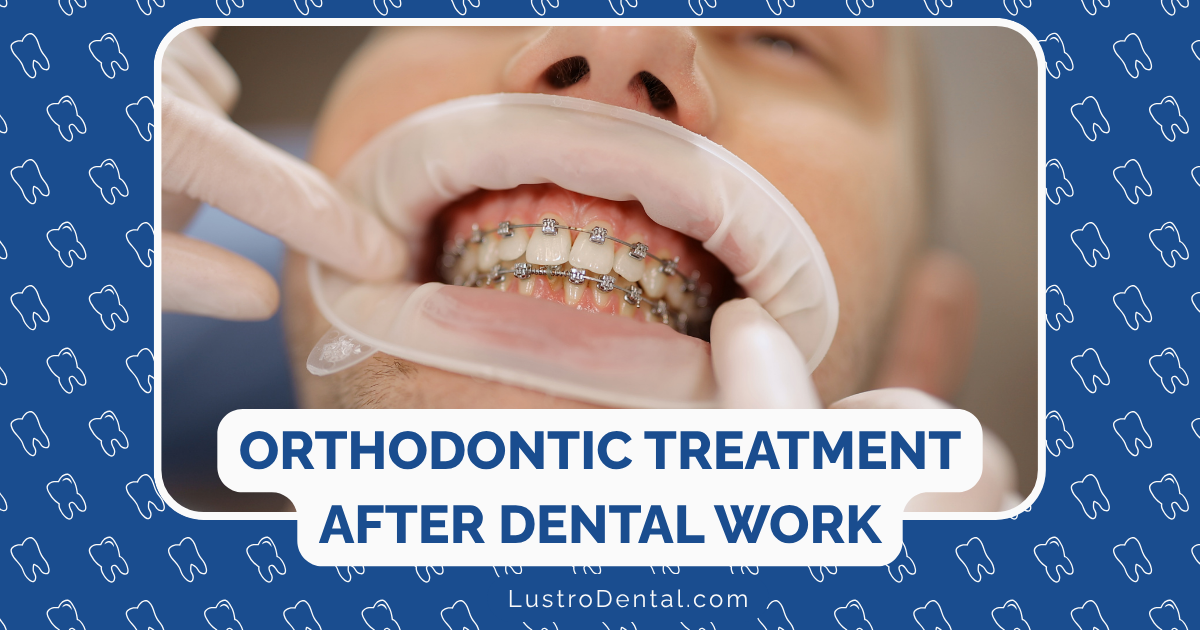
As we age, our dental histories become more complex. Many adults considering orthodontic treatment have existing dental work—crowns, bridges, implants, veneers, or root canals—that can complicate the straightening process. If you’re among the growing number of adults seeking a straighter smile later in life, you might wonder: “Is orthodontic treatment even possible with my existing dental work?”
The good news is that in 2025, orthodontic treatment is more adaptable and innovative than ever before. While existing dental restorations do present unique challenges, they rarely make orthodontic treatment impossible. Instead, they require thoughtful planning, specialized techniques, and sometimes creative approaches to achieve the desired results.
In this comprehensive guide, we’ll explore how different types of dental work interact with orthodontic treatment and provide practical insights for navigating this complex terrain.
Before diving into specifics, it’s important to understand a fundamental principle: orthodontic treatment moves teeth through bone, while restorative dentistry replaces or repairs parts of teeth. These two disciplines intersect when we attempt to move teeth that have been restored or work around dental restorations that cannot be moved.
According to the American Association of Orthodontists, about 25% of orthodontic patients are adults, many of whom have existing dental work. This growing trend has pushed the field to develop better techniques for managing these complex cases.
What You Need to Know: Crowns are caps that cover damaged or decayed teeth. They’re typically made of porcelain, ceramic, or metal, and are cemented onto prepared natural teeth.
Challenges:
Solutions and Approaches:
Expert Insight: According to Dr. James Chen of Tisseront Orthodontics, “There is no stipulated wait time between crown insertion and starting orthodontic treatment. However, patients should ensure there is no sensitivity after crown placement before getting braces.”
What You Need to Know: Dental implants are titanium posts surgically embedded in the jawbone that support artificial teeth. Unlike natural teeth, implants are completely fused to bone (osseointegrated) and cannot be moved orthodontically.
Challenges:
Solutions and Approaches:
Case Example: Sarah, 52, had a dental implant replacing her lower right first molar for ten years before deciding to address crowding in her front teeth. Her orthodontist used clear aligners to straighten her natural teeth while working around the fixed implant. The treatment took 18 months and successfully aligned her natural teeth while maintaining proper contact with the implant crown.
What You Need to Know: Bridges are prosthetic devices that “bridge” the gap created by one or more missing teeth. They’re typically anchored to natural teeth or implants on either side of the gap.
Challenges:
Solutions and Approaches:
Expert Insight: According to Primary Dental, “Tooth movement is limited when braces are used over dental implants and bridges, as these restorations are not designed to move. Bridges allow for only minimal movement to avoid damage.”
What You Need to Know: Veneers are thin shells of porcelain or composite resin that cover the front surface of teeth to improve their appearance.
Challenges:
Solutions and Approaches:
Practical Tip: If you’re planning both orthodontic treatment and veneers, always complete the orthodontic treatment first. This allows for optimal veneer placement and design based on the final tooth positions.
What You Need to Know: Root canal therapy removes infected pulp from inside a tooth and seals the space. These teeth are more brittle than vital teeth and may or may not have crowns.
Challenges:
Solutions and Approaches:
Research Insight: A 2025 study published in the Journal of Endodontics found that root canal treated teeth move at a similar rate to vital teeth but require careful monitoring for signs of resorption, which occurs in approximately 5-7% of cases compared to 2-3% in vital teeth.
The ideal sequence of dental procedures often follows this pattern:
However, many adults already have existing restorations before considering orthodontics. In these cases, careful planning between your orthodontist and restorative dentist is crucial.
Complex cases involving multiple types of dental work benefit greatly from an interdisciplinary approach:
In 2025, several technological advances are making orthodontic treatment with existing dental work more predictable:
If you have existing dental work, consider asking these questions during your consultation:
Maintaining both your orthodontic appliances and existing dental work requires extra diligence:
Treatment involving existing dental work often comes with additional considerations:
Michael, 45, had five crowns on his upper teeth when he decided to address his crowded lower teeth and deep overbite. His orthodontist used self-ligating ceramic brackets on his natural teeth and special metal-bonding adhesive for his crowns. The treatment took 22 months, and while one crown needed to be replaced afterward due to margin exposure, Michael was thrilled with his results and improved bite function.
Jennifer, 52, had an implant replacing her upper left lateral incisor. She wanted to close spaces between her remaining front teeth without disturbing the implant. Her orthodontist used clear aligners with special “cutouts” to accommodate the implant crown while moving her natural teeth. After 14 months, her spaces were closed, and her bite was improved, all while maintaining the integrity of her implant.
David, 58, had a three-unit bridge replacing his lower right first molar. He wanted to correct crowding in his lower front teeth. His orthodontist used a combination of lingual braces on his anterior teeth and clear aligners for his upper arch. The treatment carefully avoided putting pressure on his bridge while successfully aligning his front teeth over 16 months.
As orthodontic technology continues to advance, we can expect even better solutions for patients with existing dental work:
Having existing dental work doesn’t mean you can’t benefit from orthodontic treatment. While it does add complexity to the process, modern techniques and technologies make it possible to achieve excellent results even with multiple restorations.
The key is finding an experienced orthodontist who regularly treats adults with complex dental histories, and ensuring good communication between all dental professionals involved in your care. With proper planning and execution, you can achieve a healthier, more beautiful smile that works in harmony with your existing dental restorations.
Have you undergone orthodontic treatment with existing dental work? What was your experience like? Share your story in the comments below to help others navigating similar journeys.