🦷 General Care
✨ Treatments
👶 Family Care
💚 Wellness
💡 Resources

🦷 General Care
✨ Treatments
👶 Family Care
💚 Wellness
💡 Resources

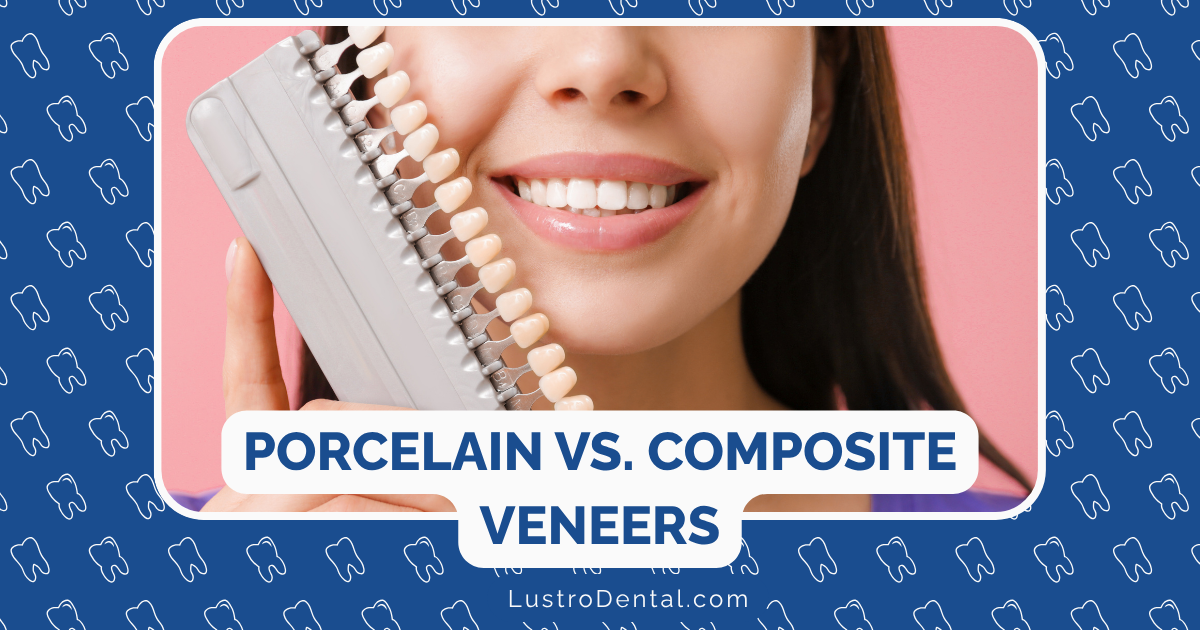
When patients sit in my chair and express interest in veneers, they’re often surprised to learn that they have options. “I thought a veneer was just a veneer,” they’ll say. But the material choice for your veneers—primarily between porcelain and composite veneers—can significantly impact everything from aesthetics to longevity to cost.
Making this decision isn’t just about picking the “best” option, because there isn’t a universal answer. Rather, it’s about finding the right match for your specific needs, priorities, and budget. Let’s explore both options in depth so you can make an informed choice for your smile transformation.
Before diving into the comparison, let’s clarify what veneers actually are. Dental veneers are thin shells designed to cover the front surface of teeth, masking imperfections and creating a more aesthetically pleasing smile. They can address a variety of concerns:
Now, let’s examine the two primary materials used for veneers:
Porcelain veneers are custom-crafted in a dental laboratory from high-grade ceramic material. They’ve long been considered the gold standard in cosmetic dentistry, and for good reason.
Porcelain possesses light-reflecting properties remarkably similar to natural tooth enamel. This translucency creates the most lifelike appearance, with depth and dimension that’s difficult to distinguish from natural teeth.
Dr. Amanda Johnson, a cosmetic dentistry specialist at the American Academy of Cosmetic Dentistry, notes: “The way porcelain interacts with light creates that coveted ‘from within’ luminosity that patients often describe as their natural teeth, just better.”
With proper care, porcelain veneers typically last 10-15 years, and many patients enjoy them for 20+ years. Their strength makes them resistant to the normal forces of chewing and biting.
A 2023 longitudinal study published in the Journal of Prosthetic Dentistry found that porcelain veneers had a 94.4% survival rate after 10 years, demonstrating their impressive longevity.
Porcelain is non-porous and highly resistant to staining. Coffee, tea, red wine, and other common staining agents that would discolor natural teeth or composite veneers have minimal effect on porcelain.
Porcelain is exceptionally compatible with gum tissue, rarely causing irritation or inflammation. This makes it an excellent choice for patients with sensitive gums or those prone to gingival issues.
Porcelain veneers typically range from $925 to $2,500 per tooth, making them a significant financial investment. However, when calculated over their lifespan, many patients find them cost-effective in the long run.
The application of porcelain veneers usually requires removing a thin layer of enamel (about 0.5mm) to accommodate the veneer without making the tooth appear bulky. This makes the procedure irreversible.
The process typically requires at least two appointments: one for preparation and impressions, and another for placement after the lab creates your custom veneers (usually 1-2 weeks later).
If a porcelain veneer chips or cracks, it generally requires complete replacement rather than repair.
Composite veneers are created using a tooth-colored resin material that’s applied directly to the teeth and sculpted by your dentist in a single visit.
Composite veneers typically cost between $400 and $1,500 per tooth—roughly half the price of porcelain. This makes smile transformation more accessible for patients with budget constraints.
Most composite veneers can be completed in just one dental visit, as they don’t require laboratory fabrication. Your dentist applies the resin directly to your teeth, shapes it, and hardens it with a special light.
Composite veneers often require little to no removal of natural tooth structure, making them a more conservative option. In some cases, they can be applied with no preparation at all.
If a composite veneer chips or breaks, it can often be repaired rather than completely replaced, saving both time and money.
Because they typically require minimal to no enamel removal, composite veneers are sometimes reversible, offering a trial option for patients uncertain about permanent cosmetic changes.
Composite veneers typically last 5-7 years before needing replacement, about half the lifespan of porcelain veneers.
The resin material is more porous than porcelain, making composite veneers more prone to staining from coffee, tea, red wine, and tobacco.
While modern composites can look quite natural, they lack the translucency and light-reflecting properties of porcelain, potentially appearing slightly more opaque or flat.
Composite is softer than porcelain and more susceptible to chipping, wearing down, or developing rough edges over time.
To help you visualize the differences, here’s a direct comparison of key factors:
| Factor | Porcelain Veneers | Composite Veneers |
| Cost | $925-$2,500 per tooth | $400-$1,500 per tooth |
| Longevity | 10-15+ years | 5-7 years |
| Appointments | Typically 2-3 visits | Usually single visit |
| Invasiveness | Requires enamel removal | Minimal to no enamel removal |
| Appearance | Highly natural, translucent | Good but less translucent |
| Stain Resistance | Excellent | Moderate to poor |
| Repairability | Must be replaced if damaged | Can often be repaired |
| Reversibility | Not reversible | Sometimes reversible |
Beyond the technical aspects, many patients want to know about the actual experience of getting and living with each type of veneer.
Most patients report minimal discomfort during the procedure, which is typically performed under local anesthesia. Dr. Michael Roberts of the American Dental Association notes that “most patients are surprised by how comfortable the process is, with many requiring only over-the-counter pain relievers, if anything, after the procedure.”
Patients with porcelain veneers generally report high satisfaction with both appearance and function. A 2024 patient satisfaction survey found that 93% of porcelain veneer recipients rated their satisfaction as “excellent” or “very good” after five years.
Some patients experience minor sensitivity for the first few days, but this typically resolves quickly. Maintenance is straightforward—regular brushing, flossing, and dental check-ups are sufficient, with no special products required.
The composite procedure is generally very comfortable, with many patients not requiring any anesthesia. The immediate results can be particularly satisfying for patients eager to see their transformation.
While initially very satisfied, some composite veneer patients report decreasing satisfaction over time as staining or wear becomes noticeable. Regular polishing during dental check-ups can help maintain their appearance.
Maintenance requires a bit more diligence—limiting staining substances, using non-abrasive toothpaste, and potentially more frequent professional cleanings to maintain appearance.
Regardless of which type you choose, proper maintenance is essential for maximizing the lifespan of your veneers.
The field of cosmetic dentistry continues to evolve, with several exciting developments in veneer technology:
Newer porcelain formulations allow for thinner veneers (as thin as 0.3mm) that require less tooth preparation while maintaining durability. These “minimal-prep” porcelain veneers offer a middle ground between traditional porcelain and composite options.
Advanced composite formulations are addressing traditional weaknesses, with enhanced stain resistance and durability. Some newer composites incorporate nanoparticle technology to improve strength and aesthetics.
Computer-aided design and manufacturing (CAD/CAM) technologies are improving the precision and customization of veneers, particularly porcelain ones, allowing for more natural results and better fit.
To help determine which option is truly best for your specific situation, consider asking your dentist these questions:
While the material choice is important, equally crucial is the skill and artistic eye of the dentist creating your veneers. Dr. Lisa Martinez, a renowned cosmetic dentist, emphasizes: “The most beautiful veneer material in the world won’t create a natural result without proper design, preparation, and placement. Always prioritize finding an experienced cosmetic dentist with extensive veneer training and an impressive portfolio.”
The American Academy of Cosmetic Dentistry recommends reviewing before-and-after photos of a dentist’s actual patients before proceeding with treatment.
The “right” choice between porcelain and composite veneers isn’t universal—it depends entirely on your unique combination of:
Many patients find that the higher upfront investment in porcelain veneers pays off in longevity, durability, and aesthetic superiority. Others appreciate the accessibility, minimal invasiveness, and flexibility of composite veneers.
Some even opt for a hybrid approach—perhaps using porcelain for the most visible front teeth and composite for less noticeable areas.
What matters most is making an informed decision that aligns with your priorities and expectations, guided by an experienced cosmetic dentist who can help you weigh all factors relevant to your specific situation.
Your perfect smile is deeply personal—and so is the path to achieving it.
Have you had experience with either porcelain or composite veneers? What factors influenced your decision? Share your experience in the comments below!