🦷 General Care
✨ Treatments
👶 Family Care
💚 Wellness
💡 Resources

🦷 General Care
✨ Treatments
👶 Family Care
💚 Wellness
💡 Resources

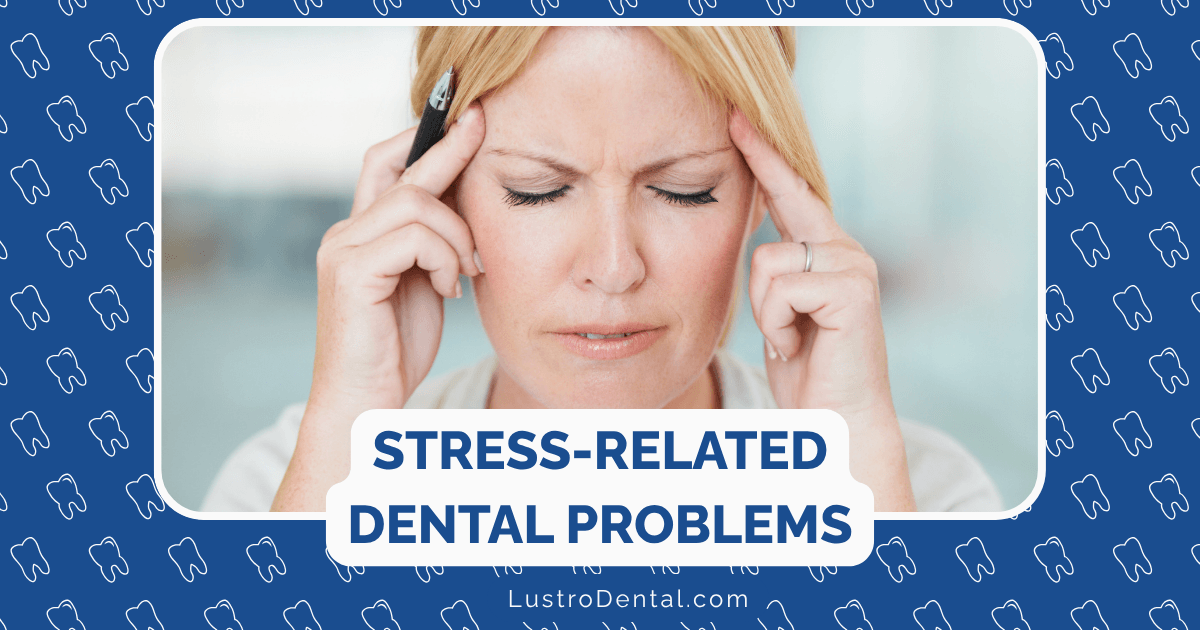
In our high-pressure world, stress has become an unwelcome companion for many adults. While most people recognize the impact of stress on mental health and internal organs, fewer understand how significantly it affects oral health. From teeth grinding to gum disease, stress can manifest in your mouth in surprising and damaging ways.
This comprehensive guide will help you recognize stress-related dental problems and provide practical management strategies to protect your oral health even during life’s most challenging periods.
Before diving into specific conditions, it’s important to understand why stress affects your mouth in the first place.
Dr. Sarah Chen, periodontist at the American Academy of Periodontology, explains: “Stress triggers a cascade of physiological responses, including elevated cortisol levels, which can suppress immune function and increase inflammation throughout the body—including the oral cavity. Additionally, stress often leads to behavioral changes that impact oral health, such as neglecting hygiene routines or adopting harmful coping mechanisms.”
Recent research published in the Journal of Periodontology found that adults experiencing high stress levels were 57% more likely to develop gum disease compared to those with low stress levels, even when controlling for other factors like oral hygiene practices.
What it is: Unconscious grinding or clenching of teeth, often during sleep but sometimes while awake.
Signs you may have it:
According to a 2024 study in the International Journal of Oral Science, approximately 31% of adults experience bruxism, with stress being the primary trigger in 70% of cases.
What it is: Dysfunction in the jaw joint connecting your jawbone to your skull.
Signs you may have it:
The National Institute of Dental and Craniofacial Research reports that TMJ disorders affect 5-12% of the population, with stress being a significant contributing factor.
What it is: Infection and inflammation of the gums and supporting tooth structures.
Signs stress may be worsening your gum health:
Dr. Michael Rodriguez, periodontist at Dental Health Institute, notes: “Stress weakens the immune system, making it harder for your body to fight the bacteria that cause gum disease. Additionally, stress-induced hormonal changes can increase inflammation, exacerbating existing periodontal conditions.”
What it is: Small, shallow lesions that develop on the soft tissues in your mouth or at the base of your gums.
Signs you may have them:
Research published in the Journal of Oral Pathology and Medicine indicates that psychological stress is a significant trigger for canker sores, with 64% of patients reporting stress preceding outbreaks.
What it is: Insufficient saliva production, leaving your mouth feeling dry and uncomfortable.
Signs you may have it:
Emily Warren, oral medicine specialist at Oral Health Foundation, explains: “Stress activates our sympathetic nervous system—our ‘fight or flight’ response—which can reduce saliva flow. Since saliva helps neutralize acids and wash away food particles, reduced flow increases risk for decay and other oral problems.”
What it is: Neglect of regular dental care routines due to stress, depression, or being overwhelmed.
Signs this may be affecting you:
Addressing stress-related dental problems requires both dental interventions and stress management techniques. Here’s a comprehensive approach:
Dr. Lisa Chen, orofacial pain specialist at TMJ Treatment Center, advises: “Night guards are the first-line defense against bruxism, but they don’t address the underlying cause. They’re most effective when combined with stress management techniques.”
Self-Care Approaches:
Professional Treatments:
Professional Treatments:
Self-Care Approaches:
Professional Treatments:
Self-Care Approaches:
Beyond treating the specific dental manifestations of stress, addressing the root cause is essential for long-term oral health:
Research published in the Journal of Dental Research showed that an 8-week mindfulness program reduced bruxism episodes by 52% in participants with stress-related grinding.
Getting started:
This technique involves tensing and then relaxing different muscle groups, helping you recognize and reduce tension.
For jaw relaxation:
Regular exercise reduces stress hormones and releases endorphins, which act as natural painkillers.
Effective options:
Poor sleep exacerbates stress and can worsen bruxism. Improving sleep quality can create a positive cycle.
Key practices:
James Peterson, sleep specialist at Sleep Research Institute, notes: “There’s a bidirectional relationship between sleep and bruxism. Stress disrupts sleep, poor sleep increases bruxism, and bruxism further disrupts sleep. Breaking this cycle through good sleep hygiene can significantly reduce teeth grinding.”
While self-care strategies are important, certain symptoms warrant professional attention:
Dr. Taylor Martinez, psychologist specializing in health behaviors at Behavioral Health Institute, advises: “The mind-body connection is powerful. Working with both dental professionals and mental health providers offers the most comprehensive approach to stress-related oral health issues.”
The most effective approach to stress-related dental problems combines professional care, home management, and stress reduction. Here’s how to create your plan:
Initial situation: Severe teeth grinding, jaw pain, and fractured molars due to work-related stress.
Management approach:
Six-month outcome: “My jaw pain has decreased by about 80%, and my dentist says there’s no new damage to my teeth. The combination of physical protection with the night guard and addressing the root cause through stress management has been life-changing.”
Initial situation: Recurrent canker sores, dry mouth, and early-stage gum disease during high-stress periods.
Management approach:
Six-month outcome: “I haven’t had a canker sore outbreak in over three months, which is the longest I’ve gone in years. My gums no longer bleed when I brush, and I’ve noticed I’m carrying less tension in my jaw throughout the day.”
Stress-related dental problems require a comprehensive approach that addresses both the oral manifestations and the underlying stress. By recognizing the signs early, implementing appropriate dental interventions, practicing consistent self-care, and developing effective stress management strategies, you can protect your oral health even during life’s most challenging periods.
Remember that progress may be gradual, and setbacks during particularly stressful times are normal. The key is consistency and a willingness to adjust your approach as needed.
As Dr. Emily Wilson, integrative dental specialist at Comprehensive Dental Institute, summarizes: “The mouth is often where we first see the physical manifestations of stress, but it can also be where healing begins. Taking control of your oral health can create a sense of empowerment that extends to other areas of stress management.”
Have you experienced stress-related dental problems? What strategies have helped you manage them? Share your experiences in the comments below.