🦷 General Care
✨ Treatments
👶 Family Care
💚 Wellness
💡 Resources

🦷 General Care
✨ Treatments
👶 Family Care
💚 Wellness
💡 Resources

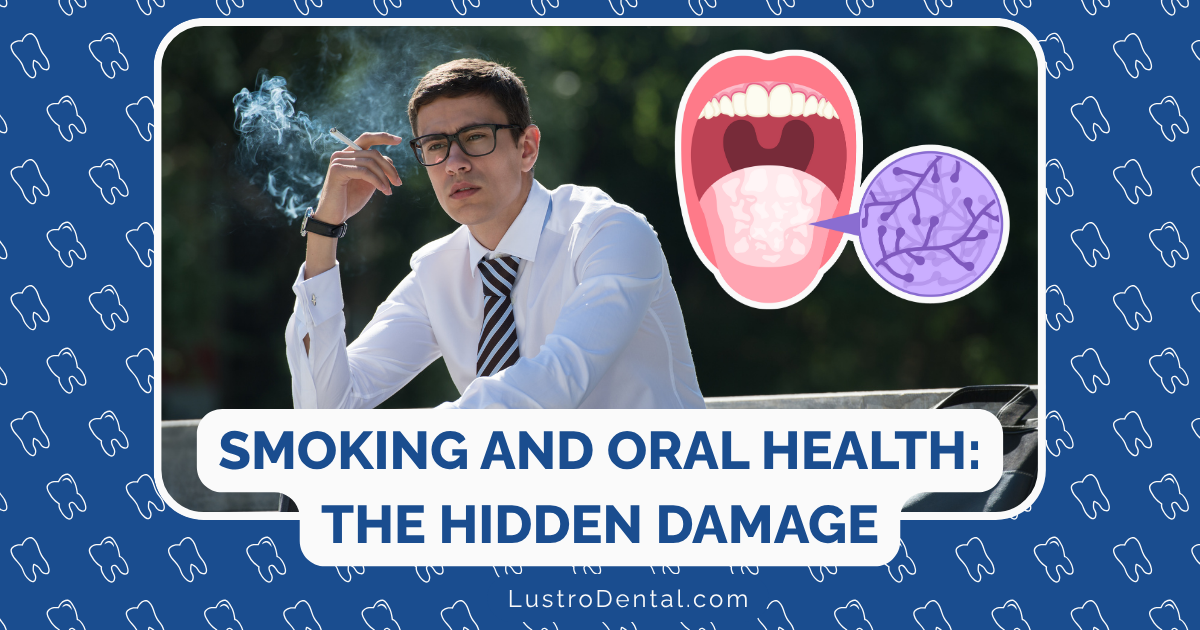
When most people think about smoking and oral health, yellow teeth often come to mind first. But the discoloration you can see is just the tip of the iceberg. Beneath the surface, smoking triggers a cascade of damage that many don’t realize until serious problems develop.
While stained teeth are obvious, the most dangerous effects of smoking happen where you can’t see them:
Smoking constricts blood vessels throughout your body, including those that supply your gums. According to Briars Dental Centre, this reduced circulation starves gum tissues of oxygen and nutrients essential for health. The result? Weakened gums that can’t fight infection effectively.
Perhaps most concerning is how smoking masks the early warning signs of gum disease. Non-smokers typically notice red, swollen, or bleeding gums when problems begin. However, the reduced blood flow in smokers’ gums means less visible inflammation and bleeding—allowing periodontal disease to progress undetected until it’s advanced.
Research from Feno shows that nearly 42% of periodontitis cases in the U.S. can be attributed to smoking, with smokers being twice as likely to develop gum disease compared to non-smokers.
The damage extends far beyond just gums:
Smoking accelerates bone loss in the jaw, the foundation that holds your teeth in place. This deterioration happens silently until teeth begin to loosen—often when it’s too late for simple interventions.
After dental procedures, smokers heal significantly slower—taking up to twice as long as non-smokers. This delayed healing applies to everything from simple extractions to gum treatments and implant surgeries, increasing the risk of complications.
Smoking fundamentally alters the environment inside your mouth:
Your mouth naturally hosts billions of bacteria—many beneficial for oral health. Smoking disrupts this delicate ecosystem, promoting harmful bacteria while suppressing beneficial ones. This imbalance contributes to increased plaque formation, decay, and persistent infections.
Saliva is your mouth’s natural defense system, washing away food particles and neutralizing acids. Smoking reduces saliva production, creating a dry environment where bacteria thrive and decay accelerates. According to Alpine Dental, this dry mouth condition significantly increases cavity risk.
The link between smoking and oral cancer is well-established but often underappreciated:
Before full-blown cancer develops, smoking causes cellular changes in the mouth tissues. These precancerous lesions—white or red patches called leukoplakia and erythroplakia—often go unnoticed without regular dental exams.
Tobacco users are 6-8 times more likely to develop oral cancer than non-users. The Dental Health Foundation reports that it takes approximately 20 years after quitting for oral cancer risk to return to levels seen in non-smokers.
Smoking doesn’t just damage your oral structures—it impairs how your mouth functions:
The chemicals in tobacco smoke damage taste buds and olfactory nerves, dulling your senses of taste and smell. Many smokers don’t realize how much flavor they’re missing until after they quit.
The mouth is a first line of defense against pathogens. Smoking weakens this immune response, making smokers more susceptible to various oral infections beyond just gum disease.
The good news is that quitting smoking can reverse many of these effects:
If you smoke, these steps are especially crucial:
The visible stains on a smoker’s teeth are merely a cosmetic warning of the serious damage happening beneath the surface. By understanding these hidden effects, you can make informed decisions about your oral health and take steps to protect your smile for the long term.