🦷 General Care
✨ Treatments
👶 Family Care
💚 Wellness
💡 Resources

🦷 General Care
✨ Treatments
👶 Family Care
💚 Wellness
💡 Resources

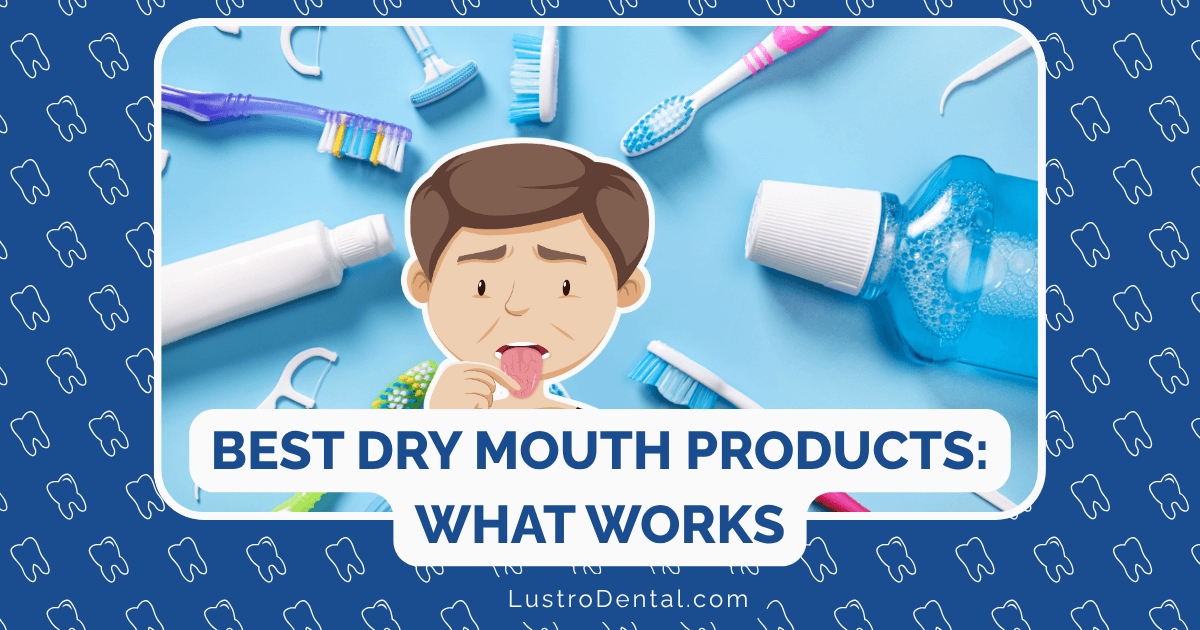
For the millions suffering from chronic dry mouth (xerostomia), finding effective relief can feel like an endless journey through a desert of products that promise much but deliver little. As a dental health advocate who has guided countless patients through this frustrating condition, I’ve seen firsthand how the right product can transform someone’s quality of life—and how the wrong one can waste both money and hope.
With the US dry mouth relief market projected to reach over $1 billion by 2035, manufacturers are flooding shelves with options. But which products actually work? In this comprehensive comparison, I’ll cut through the marketing claims to reveal what science and real-world experience tell us about today’s leading dry mouth remedies.
Before diving into product comparisons, let’s briefly review what we’re treating. Xerostomia occurs when salivary glands don’t produce enough saliva, leading to:
Whether caused by medications, medical conditions, radiation therapy, or aging, the goal of treatment remains consistent: restore moisture, protect oral health, and improve comfort.
For this comparison, I’ve analyzed products based on:
Let’s explore what actually works across the major categories of dry mouth products.
Oral rinses are typically the first product people try for dry mouth relief. They’re easy to use and provide immediate, though often short-lived, moisture.
Active ingredients: Glycerin, xylitol, sorbitol
Effectiveness: ⭐⭐⭐⭐ (4/5)
Duration: Up to 4 hours (manufacturer claim)
Pros:
Cons:
Real-world feedback: “Provides immediate relief but needs frequent reapplication. I keep bottles everywhere—bedside, car, office.”
Active ingredients: PEG-60, aloe vera, xylitol
Effectiveness: ⭐⭐⭐⭐ (4/5)
Duration: 3-5 hours
Pros:
Cons:
Real-world feedback: “Less immediate relief than Biotene but seems to last longer. The mild taste is a plus for me—doesn’t interfere with food flavors.”
Active ingredients: Xylitol, sodium fluoride
Effectiveness: ⭐⭐⭐½ (3.5/5)
Duration: 2-3 hours
Pros:
Cons:
Real-world feedback: “I appreciate the cavity protection, but I need to use it more frequently than Biotene. Good budget option.”
While Biotene remains the industry standard, TheraBreath offers comparable relief with potentially longer duration. ACT provides a solid budget alternative with the added benefit of fluoride protection. For most users, oral rinses serve best as daytime solutions when frequent reapplication is possible.
Sprays offer the advantage of portability and discrete use throughout the day, making them ideal for on-the-go relief.
Active ingredients: Glycerin, xylitol, PEG-60
Effectiveness: ⭐⭐⭐⭐½ (4.5/5)
Duration: 2-3 hours
Pros:
Cons:
Real-world feedback: “My lifesaver during meetings and travel. Discreet enough to use anywhere without drawing attention.”
Active ingredients: Yerba santa, xylitol
Effectiveness: ⭐⭐⭐ (3/5)
Duration: 1-2 hours
Pros:
Cons:
Real-world feedback: “I like the natural ingredients, but I find myself reapplying very frequently. Works in a pinch but not my primary solution.”
Biotene’s spray consistently outperforms competitors in this category, offering the best balance of effectiveness and convenience. While sprays generally don’t provide the longest-lasting relief, they excel as supplementary products for situational use.
Gels offer thicker consistency and longer-lasting moisture, making them ideal for nighttime use when dry mouth often worsens.
Active ingredients: Glycerin, xylitol, sorbitol
Effectiveness: ⭐⭐⭐⭐ (4/5)
Duration: 4-6 hours
Pros:
Cons:
Real-world feedback: “The only product that gets me through most of the night without waking up desperate for water. A bit gloopy but worth it.”
Active ingredients: Hyaluronic acid, xylitol
Effectiveness: ⭐⭐⭐⭐½ (4.5/5)
Duration: 4-8 hours
Pros:
Cons:
Real-world feedback: “Game-changer for nighttime relief. Expensive but lasts longer than anything else I’ve tried. One application usually gets me through the night.”
For overnight relief, Lubricity’s innovative formula edges out Biotene’s gel in terms of duration, though at a higher price point. Both products significantly outperform rinses and sprays for extended moisture, making them essential for nighttime dry mouth sufferers.
Rather than simply providing artificial moisture, these products aim to stimulate your body’s natural saliva production.
Active ingredients: Xylitol, zinc
Effectiveness: ⭐⭐⭐½ (3.5/5)
Duration: 1-2 hours per lozenge
Pros:
Cons:
Real-world feedback: “Good for daytime use when I can pop a new one every hour or so. The zinc definitely helps with the bad breath that comes with dry mouth.”
Active ingredients: Xylitol
Effectiveness: ⭐⭐⭐ (3/5)
Duration: 30-60 minutes per lozenge
Pros:
Cons:
Real-world feedback: “Pleasant enough and helps temporarily. I go through these quickly, but they’re good for meetings when I can’t keep drinking water.”
Active ingredients: Xylitol, cellulose gum
Effectiveness: ⭐⭐⭐⭐ (4/5)
Duration: 4-8 hours
Pros:
Cons:
Real-world feedback: “Revolutionary for nighttime dry mouth. Took a few nights to get used to the feeling of something stuck to my gum, but now I can’t sleep without them.”
XyliMelts stand apart in this category, offering dramatically longer relief than traditional lozenges. For overnight dry mouth, they rival gels in effectiveness while adding the benefit of saliva stimulation. For daytime use, TheraBreath lozenges edge out ACT for longer-lasting relief and added breath protection.
Specialized dry mouth toothpastes aim to clean teeth without irritating sensitive tissues while providing some moisture.
Active ingredients: Sodium fluoride, xylitol
Effectiveness: ⭐⭐⭐½ (3.5/5)
Duration: Minimal residual effect
Pros:
Cons:
Real-world feedback: “Doesn’t solve dry mouth on its own but doesn’t make it worse like regular toothpastes can. Good part of an overall dry mouth routine.”
Active ingredients: Potassium nitrate, sodium fluoride
Effectiveness: ⭐⭐⭐ (3/5)
Duration: Minimal residual effect
Pros:
Cons:
Real-world feedback: “Helps with the sensitivity I developed from chronic dry mouth. I use this in the morning and Biotene at night.”
Specialized toothpastes should be viewed as complementary products rather than primary treatments for dry mouth. Biotene’s formulation offers the best balance of gentle cleaning and mild moisture, while Sensodyne provides added benefits for those experiencing sensitivity due to enamel erosion.
Recent research has yielded promising new approaches to treating xerostomia:
A 2024 breakthrough from the University of Leeds demonstrated a novel aqueous lubricant that was five times more effective than existing products in laboratory tests. This technology uses a microgel that binds to oral surfaces combined with a polysaccharide-based hydrogel that traps water, providing significantly longer-lasting hydration.
Clinical trials have shown remarkable effectiveness from Manuka honey oral rinses for treating xerostomia, particularly in elderly patients. In one study, Manuka honey significantly reduced dry mouth symptoms and increased salivary flow rates compared to control groups. Similarly, thyme honey has shown promise for managing xerostomia in patients with type 2 diabetes.
The new innovation uses citrus oils (limonene) combined with a lipid-based delivery system to enhance absorption and effectiveness. This approach has shown particular promise for cancer patients experiencing radiation-induced xerostomia, with clinical trials currently underway.
After reviewing dozens of products, it’s clear that no single solution works for everyone. Most successful dry mouth sufferers employ a strategic combination of products tailored to different situations:
Best Overall Strategy: Carry a travel-sized Biotene spray for immediate relief, supplemented with TheraBreath lozenges between meals. Use a fluoride-containing rinse like ACT Total Care after meals for added cavity protection.
Budget-Friendly Alternative: ACT lozenges throughout the day, combined with frequent water sipping and sugar-free gum containing xylitol.
Best Overall Strategy: Apply Lubricity spray or Biotene Oralbalance gel before bed, potentially combined with XyliMelts placed on the gum for dual-action relief.
Budget-Friendly Alternative: XyliMelts alone, positioned strategically near the major salivary glands.
Best Overall Strategy: Use Biotene Gentle toothpaste morning and night, supplemented with a prescription-strength fluoride gel weekly to prevent cavities. Schedule dental cleanings every 3-4 months rather than the standard 6 months.
Budget-Friendly Alternative: Any dry mouth-specific toothpaste used with a fluoride rinse, plus meticulous oral hygiene and regular dental visits.
To help you budget for dry mouth management, here’s a monthly cost estimate for various product combinations:
Premium Approach (~$45-60/month):
Mid-Range Approach (~$30-40/month):
Budget Approach (~$15-25/month):
If over-the-counter products provide insufficient relief, don’t despair. Medical interventions may help:
After extensive research and real-world testing, here are my evidence-based recommendations:
While finding effective products is essential, don’t overlook these complementary strategies:
Remember that dry mouth management is highly individual. What works miraculously for one person may fall flat for another. Be patient and methodical in your approach, keeping a simple journal to track which products and combinations provide the best relief for your specific situation.
Have you found a product or combination that works particularly well for your dry mouth? Share your experience in the comments—your insights could help others find relief sooner.