🦷 General Care
✨ Treatments
👶 Family Care
💚 Wellness
💡 Resources

🦷 General Care
✨ Treatments
👶 Family Care
💚 Wellness
💡 Resources

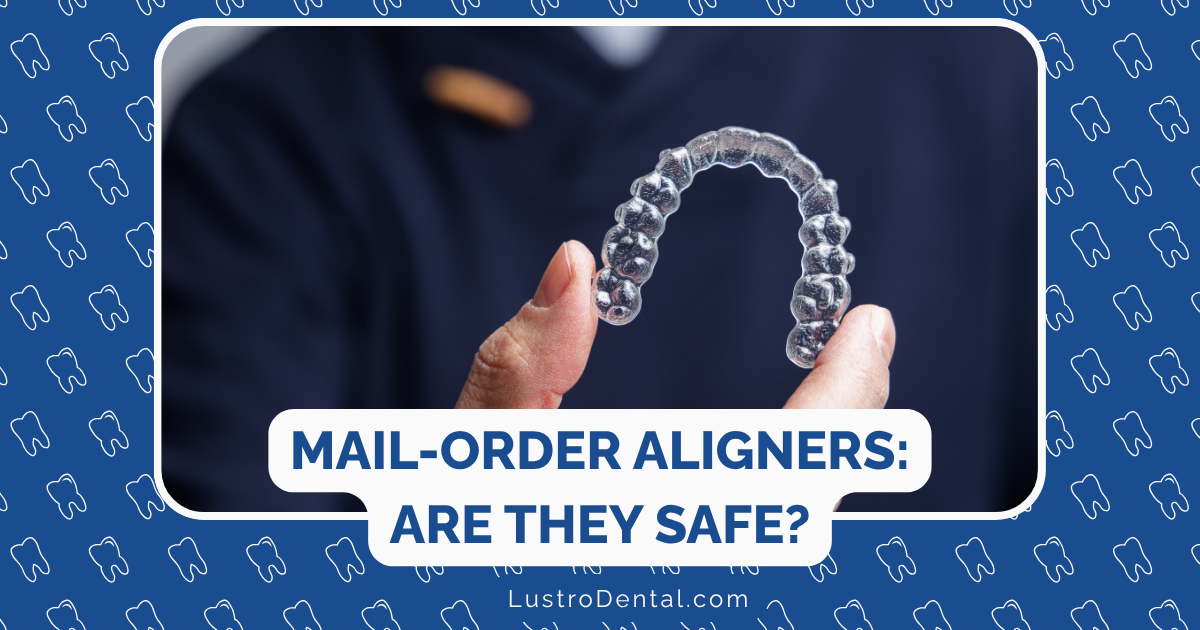
The promise is undeniably appealing: straighten your teeth from the comfort of your home, skip the orthodontist visits, and save thousands of dollars in the process. Mail-order clear aligners have exploded in popularity, with slick marketing campaigns featuring beaming smiles and testimonials about convenience and affordability.
But as a dental professional who’s treated thousands of orthodontic cases—including many patients seeking help after mail-order aligner treatments went wrong—I feel compelled to provide an honest, evidence-based assessment of these direct-to-consumer options.
This isn’t about protecting the orthodontic industry or dismissing innovation. It’s about ensuring you have the complete picture before making a decision that could affect not just your smile’s appearance, but your long-term oral health.
Let’s examine what dental professionals really think about mail-order aligners, the scientific evidence behind their safety concerns, and how to navigate this decision wisely.
Before discussing safety, it’s important to understand how mail-order aligners typically work:
The entire process usually costs between $1,500-$2,500—roughly half the price of traditional orthodontic treatment with Invisalign or similar in-office options.
Major dental organizations have taken clear positions on direct-to-consumer orthodontics:
The ADA has consistently opposed direct-to-consumer dental services, including mail-order aligners. In December 2023, the organization reaffirmed its policy stating that DTC dentistry “strongly increases the potential for irreversible harm to patients.”
The ADA emphasizes that moving teeth without understanding a patient’s comprehensive oral condition may lead to “bone loss, lost teeth, receding gums, bite problems, and jaw pain.”
The AAO has been particularly vocal about mail-order orthodontics concerns. Their survey of orthodontists revealed that 77% had seen patients requiring retreatment after mail-order orthodontic treatment, with 61% seeing such patients at least quarterly.
The organization strongly advocates for in-person evaluations before any orthodontic treatment begins, including radiographic imaging to assess bone structure, root positioning, and overall oral health.
The WFO has issued statements emphasizing that orthodontic treatment is a medical service that requires proper diagnosis, treatment planning, and supervision by a qualified professional.
Beyond organizational positions, what does the scientific literature tell us about mail-order aligner safety?
A 2023 study published in the Journal of Dental Research analyzed reports from the FDA’s MAUDE database (Manufacturer and User Facility Device Experience) related to direct-to-consumer aligners. Among the findings:
It’s important to note that not all experiences are negative. A survey of 470 DTC aligner users found that 87.5% were satisfied with their treatment. However, the same study reported that 6.6% experienced side effects severe enough to require a visit to their dentist.
Satisfaction rates were notably lower among those using aligners to correct bite issues compared to those treating simple crowding or gaps.
One significant challenge in assessing mail-order aligner safety is the limited independent research. Most studies are either funded by the companies themselves or rely on self-reported data from patients who may not recognize subtle but significant dental problems.
Dr. Sarah Johnson, an orthodontist at Metropolitan Orthodontics, explains: “Many patients don’t realize they’ve developed a posterior open bite—where their back teeth no longer touch properly—until months after treatment when they start experiencing jaw pain or difficulty chewing.”
When dental professionals express concerns about mail-order aligners, they’re typically focused on several key issues:
Traditional orthodontic treatment begins with:
Dr. Michael Chen of Advanced Dental Care notes: “Without X-rays, it’s impossible to see root positioning, bone levels, or hidden dental issues like impacted teeth or bone loss. Moving teeth without this information is like driving blindfolded.”
Orthodontic treatment should never begin before addressing:
Mail-order systems typically rely on customer-provided information about dental health, which may be incomplete or inaccurate.
While mail-order aligners may be effective for minor cosmetic adjustments, they have significant limitations:
Traditional orthodontic treatment involves:
With mail-order aligners, monitoring is typically limited to customer-submitted photos reviewed remotely, which may not capture developing problems.
Improper tooth movement can lead to:
Dr. Lisa Patel, periodontist at Healthy Gums Dental, shares: “I’ve treated patients who developed severe gum recession after mail-order aligners moved their teeth outside the supporting bone. Once gum tissue is lost, it often requires surgical intervention to repair.”
It’s important to acknowledge both positive and negative experiences with mail-order aligners:
Case: James, 32 James had minor spacing between his front teeth that bothered him in photos. After completing a 6-month mail-order aligner treatment costing $1,800, he was pleased with the results. “The process was smooth, and my teeth look great. For a simple fix like mine, it was perfect.”
Case: Maria, 28 Maria had slight crowding of her lower teeth after not wearing her retainer from previous orthodontic treatment. “The mail-order option was ideal for my minor relapse. I saved money and time with good results.”
Case: David, 35 David used mail-order aligners to address moderate crowding. “After completing the program, my front teeth looked straighter, but I developed pain when chewing. My dentist discovered I now had a posterior open bite where my back teeth no longer touched properly. I ended up spending $5,500 on traditional braces to fix the problems.”
Case: Jennifer, 41 Jennifer tried mail-order aligners for her overbite. “The company approved me for treatment, but halfway through, my teeth became loose and my gums started receding. My periodontist explained that I had undiagnosed gum disease that worsened with the aligner treatment. I’m now facing expensive gum grafting procedures.”
Despite the concerns, some individuals might reasonably consider mail-order aligners if they meet specific criteria:
If you’re still considering mail-order aligners after weighing the risks, here are steps to reduce potential problems:
Visit your dentist for:
Dr. Robert Williams of City Dental Group advises: “I tell patients interested in mail-order aligners to get a thorough check-up first. If I see no contraindications and their case is very mild, I can at least ensure they’re starting with a healthy foundation.”
Some mail-order companies employ orthodontists rather than general dentists to review cases. While still not equivalent to in-person care, this provides a higher level of expertise.
Disclose:
Continue seeing your regular dentist every 6 months during treatment to monitor for any developing issues.
Be vigilant for warning signs:
If you experience any of these symptoms, stop using the aligners and consult a dental professional immediately.
Some companies are now offering hybrid models that combine elements of direct-to-consumer convenience with professional oversight:
This approach addresses many safety concerns while potentially offering cost savings compared to fully in-office treatment.
The regulatory landscape for mail-order aligners continues to evolve:
While the lower price tag of mail-order aligners is appealing, consider the potential total cost:
Dr. Jennifer Lee of Smile Orthodontics observes: “I’ve had patients who ultimately spent more trying to fix problems from mail-order aligners than if they had chosen traditional orthodontic treatment from the start.”
After reviewing the evidence and professional opinions, here’s a balanced assessment:
The decision to pursue orthodontic treatment is significant—it affects not just your appearance but your oral health for decades to come. While mail-order aligners may be appropriate for a narrow subset of very mild cases, the consensus among dental professionals is that the risks often outweigh the benefits for most patients.
As Dr. Michael Chen summarizes: “Teeth straightening isn’t just a cosmetic procedure—it’s a complex medical treatment that moves biological structures. Would you set your own broken bone to save money? The same principle applies to moving teeth.”
If cost is your primary concern, consider these alternatives:
Your smile is too important for shortcuts. Whatever path you choose, prioritize safety, proper diagnosis, and professional oversight to ensure the best long-term outcome for your oral health.