🦷 General Care
✨ Treatments
👶 Family Care
💚 Wellness
💡 Resources

🦷 General Care
✨ Treatments
👶 Family Care
💚 Wellness
💡 Resources

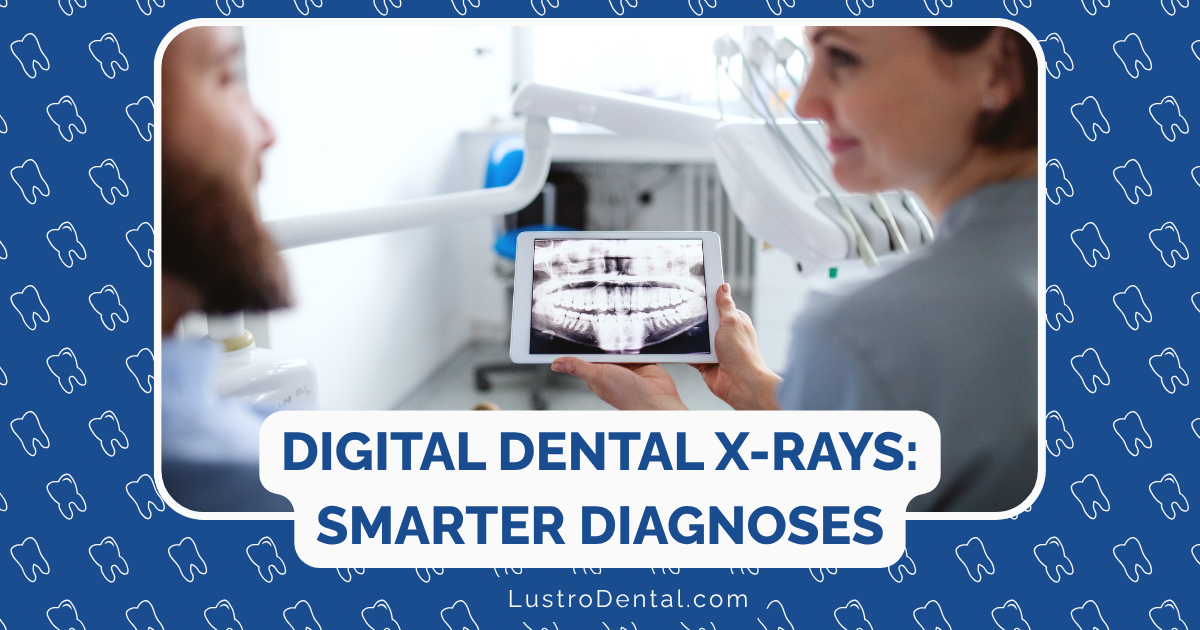
The landscape of dental diagnostics has undergone a remarkable transformation in recent years, and nowhere is this more evident than in the evolution of digital X-ray technology. As we navigate through 2025, digital radiography has not only become the standard of care but has reached new heights in terms of diagnostic capabilities while simultaneously reducing radiation exposure to unprecedented levels.
As a dental health advocate, I’ve witnessed this technological revolution firsthand, and the benefits for both patients and practitioners are truly game-changing. Let’s explore how today’s digital X-ray technology is delivering on the dual promise of lower radiation and higher diagnostic value.
One of the most significant concerns patients have about dental X-rays has always been radiation exposure. This concern has driven much of the innovation in digital radiography over the past decade.
According to research from Altoona Smiles, today’s digital X-ray systems have achieved radiation reductions of 80-90% compared to traditional film-based X-rays. To put this in perspective:
For context, the average American receives about 3.0 mSv annually from background radiation in the environment. This means the radiation from a full set of digital dental X-rays is equivalent to less than half a day of natural background radiation.
Several technological advancements have contributed to this remarkable reduction in radiation exposure:
Modern digital sensors are exponentially more sensitive than both traditional film and earlier digital sensors. According to Chestnut Dental, the latest generation of sensors can produce high-quality diagnostic images with minimal radiation due to:
Artificial intelligence has revolutionized how exposure parameters are determined. Modern systems use AI to:
Research published in PMC indicates that AI-driven systems can significantly reduce radiation doses by optimizing data collection procedures while maintaining or even improving image quality.
Advanced collimation technology restricts the X-ray beam to only the area of interest, eliminating unnecessary exposure to surrounding tissues. Modern systems feature:
Perhaps one of the most overlooked benefits of digital systems is the dramatic reduction in retakes. With immediate image preview, dentists can instantly verify image quality, positioning, and diagnostic value. This alone has contributed significantly to overall radiation reduction in dental practices.
While reducing radiation is critically important, the true measure of any diagnostic technology is its clinical value. Here, too, digital X-rays in 2025 have made remarkable strides.
The integration of artificial intelligence with digital radiography represents perhaps the most significant advancement in diagnostic capability.
According to Overjet, AI-powered dental imaging systems can now:
Research from Hello Pearl indicates that without AI assistance, up to 43% of caries visible in dental X-rays go undiagnosed, highlighting the significant diagnostic advantage these systems provide.
Beyond AI analysis, the raw image quality and manipulation capabilities of modern digital systems offer substantial diagnostic advantages:
Today’s digital sensors capture images with:
Modern software allows for sophisticated image enhancement:
The integration of 2D digital radiography with 3D imaging technologies has revolutionized comprehensive diagnosis:
Digital systems enable immediate sharing and collaborative diagnosis, improving diagnostic accuracy through:
Beyond the technical advantages, digital X-rays have transformed the patient experience in significant ways.
According to Overjet, practices implementing AI-enhanced digital radiography report:
The ability to immediately display, enlarge, and annotate digital images on a screen visible to patients has revolutionized dental education and treatment acceptance.
Modern digital sensors have also improved the physical experience of dental X-rays:
The shift to digital has eliminated several health and environmental concerns:
The economic impact of digital radiography extends beyond the initial investment in equipment.
According to market analysis from BioSpace, digital X-ray technology enhances practice efficiency through:
While the initial investment in digital radiography equipment is significant, the return on investment comes from:
As impressive as the current state of digital radiography is, ongoing research and development promise even more exciting advances in the near future.
Researchers are developing protocols that may further reduce radiation exposure by:
The next generation of AI integration promises:
The trend toward more accessible care is driving development of:
The evolution of digital X-rays through 2025 represents one of the most significant advances in dental diagnostics in recent history. By simultaneously reducing radiation exposure and enhancing diagnostic capabilities, modern digital radiography has transformed the risk-benefit equation of dental imaging.
For patients, this means safer, more comfortable, and more informative diagnostic experiences. For dental professionals, it means greater diagnostic confidence, improved communication, and more efficient practice workflows.
As we look toward the future, the continued integration of AI, advanced sensor technology, and innovative imaging protocols promises to further enhance both safety and diagnostic value, making digital radiography an even more valuable tool in comprehensive dental care.
The days of concern about radiation exposure from dental X-rays are increasingly behind us, replaced by appreciation for the remarkable diagnostic capabilities these advanced systems provide with minimal risk. It’s a revolution in dental diagnostics that benefits everyone involved.
Have you experienced the benefits of modern digital X-rays in your dental care? Share your thoughts in the comments below!