🦷 General Care
✨ Treatments
👶 Family Care
💚 Wellness
💡 Resources

🦷 General Care
✨ Treatments
👶 Family Care
💚 Wellness
💡 Resources

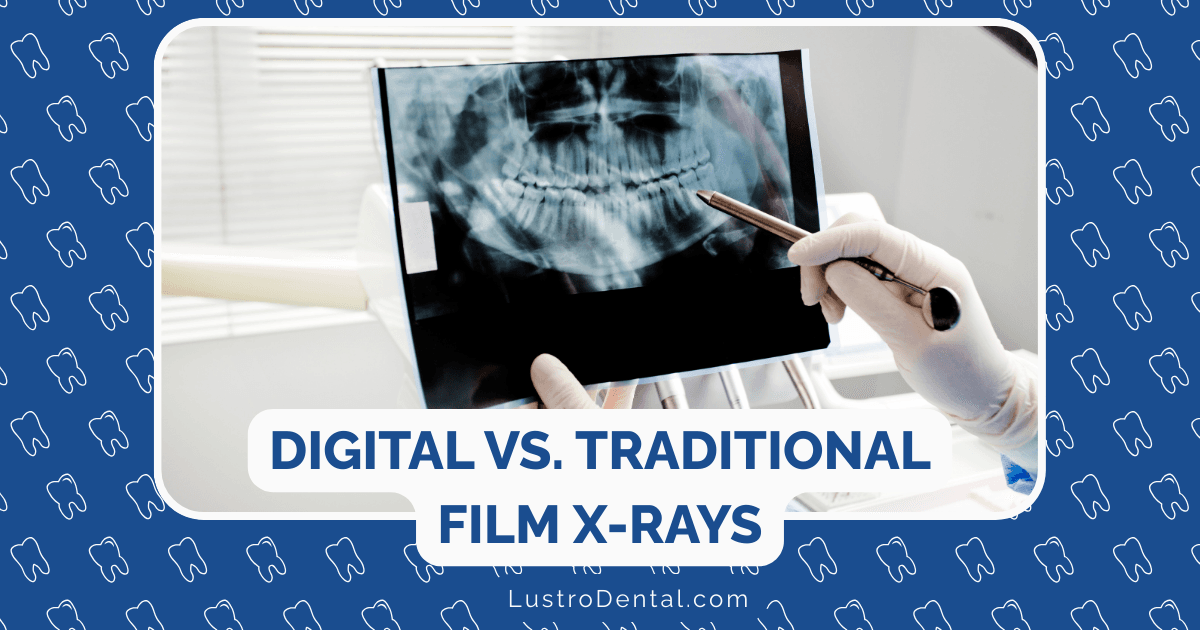
When you sit in the dental chair and that heavy lead apron is draped over you, you might wonder about the radiation exposure from dental X-rays. Or perhaps you’ve never given it much thought. Either way, the technology used to capture those crucial images of your teeth and jaw has evolved significantly over the past few decades—with profound implications for both human health and environmental sustainability.
The shift from traditional film X-rays to digital radiography represents one of the most significant technological advancements in modern dentistry. But what exactly are the differences between these technologies, and why should you care about which one your dentist uses? Let’s explore the environmental and health benefits that make digital X-rays the superior choice for both patients and the planet.
Before diving into the benefits, it’s helpful to understand the fundamental differences between these two imaging technologies.
Film-based dental radiography has been used for nearly a century and involves:
Dr. Sarah Chen, a practicing dentist for over 20 years, explains: “Traditional film X-rays were the gold standard for decades, but the process is cumbersome, time-consuming, and involves multiple chemicals that pose environmental and health concerns.”
Digital radiography, introduced in the 1980s but widely adopted in the 2000s, works by:
“The transition to digital was revolutionary,” notes Dr. James Wilson, an environmental dentistry advocate. “It’s comparable to the shift from film cameras to digital photography—with even more significant benefits given the healthcare context.”
The environmental advantages of digital radiography are substantial and multifaceted:
Traditional film X-rays require a complex chemical development process that produces hazardous waste:
According to the Healthcare Environmental Resource Center, traditional dental X-ray processing typically involves:
These chemicals require special handling and disposal as hazardous waste, with used fixer classified as hazardous under the Resource Conservation and Recovery Act (RCRA) due to its high silver content.
The Eco Dentistry Association reports that:
Digital X-rays completely eliminate the need for these chemical processes, preventing this source of environmental contamination.
Traditional dental X-rays use lead-lined packets to protect the film from light exposure:
Digital sensors don’t require lead packaging, eliminating this source of environmental contamination.
Film-based X-rays generate substantial physical waste:
Dr. Lisa Chen of Capitol Dental notes: “A busy dental practice might generate hundreds of pounds of X-ray-related waste annually with traditional systems. Digital eliminates virtually all of this waste stream.”
Digital systems are generally more energy-efficient:
A study published in the Journal of the American Dental Association found that digital radiography can reduce the overall energy footprint of dental imaging by up to 40% when accounting for the full lifecycle of materials and processes.
Traditional X-ray processing is water-intensive:
Digital systems eliminate these water requirements, supporting conservation efforts in dental practices.
The health advantages of digital radiography are equally compelling:
Perhaps the most important health benefit is the dramatic reduction in radiation exposure:
Multiple sources, including Stony Brook Dental and Prairie Garden Dental, confirm that:
Digital sensors achieve lower radiation doses through:
Dr. Michael Roberts, a radiation safety expert, explains: “The sensors used in digital radiography are far more sensitive than film, requiring just a fraction of the radiation to produce equal or superior diagnostic images.”
Digital X-rays don’t just reduce radiation—they improve diagnostic capabilities:
According to Sterling Dental Center, these improvements in image quality lead to earlier detection of dental problems, more accurate diagnoses, and better treatment outcomes.
The chemicals used in traditional X-ray processing pose health risks to dental staff:
By eliminating these chemicals, digital X-rays create a healthier work environment for dental professionals and reduce occupational health risks.
Digital radiography enhances the overall patient experience in several ways:
“Patients appreciate seeing their X-rays immediately on screen,” notes Dr. Wilson. “It helps them understand their dental conditions and treatment options, improving communication and treatment acceptance.”
Digital X-rays offer superior capabilities for monitoring oral health over time:
These capabilities support early intervention and preventive care, potentially reducing the need for more invasive treatments later.
While the environmental and health benefits are clear, dental practices considering the switch to digital should be aware of several practical factors:
Digital systems require a significant upfront investment:
However, most practices recoup these costs through:
Digital X-rays can integrate with other dental technologies:
This integration improves workflow efficiency and comprehensive patient care.
Transitioning to digital requires training and adaptation:
Most dental teams adapt quickly, finding the digital workflow more efficient once established.
Despite the clear benefits, the transition to digital radiography is still ongoing:
Dr. Chen observes: “We’re in a transitional period where digital is clearly the future, but some practices are still catching up. As older dentists retire and equipment needs replacement, we’ll see nearly universal adoption of digital technology.”
As a patient, you can advocate for your health and environmental values by asking your dentist about their imaging technology:
If your dentist uses traditional film, you might inquire about their plans to transition to digital technology in the future.
The evolution of dental imaging continues beyond basic digital radiography:
These advancements continue to improve diagnostic capabilities while further reducing environmental impact and radiation exposure.
The transition from film to digital X-rays represents a significant advancement in dental care—one that benefits patients, dental professionals, and the environment. Digital radiography reduces radiation exposure by up to 90%, eliminates hazardous chemical waste, improves diagnostic capabilities, and enhances the overall patient experience.
As we become increasingly aware of both health risks and environmental impacts, technologies like digital X-rays demonstrate that better care and sustainability can go hand in hand. Whether you’re a dental professional considering an upgrade or a patient seeking the safest, most environmentally responsible care, understanding these benefits helps inform better decisions.
The next time you’re at the dentist and that sensor is placed in your mouth instead of a film packet, you can appreciate not only the clearer image it will produce but also the reduced radiation exposure and environmental impact it represents—truly a win-win for health and sustainability.
Have you experienced both traditional and digital dental X-rays? What differences did you notice? Share your experience in the comments below.