🦷 General Care
✨ Treatments
👶 Family Care
💚 Wellness
💡 Resources

🦷 General Care
✨ Treatments
👶 Family Care
💚 Wellness
💡 Resources

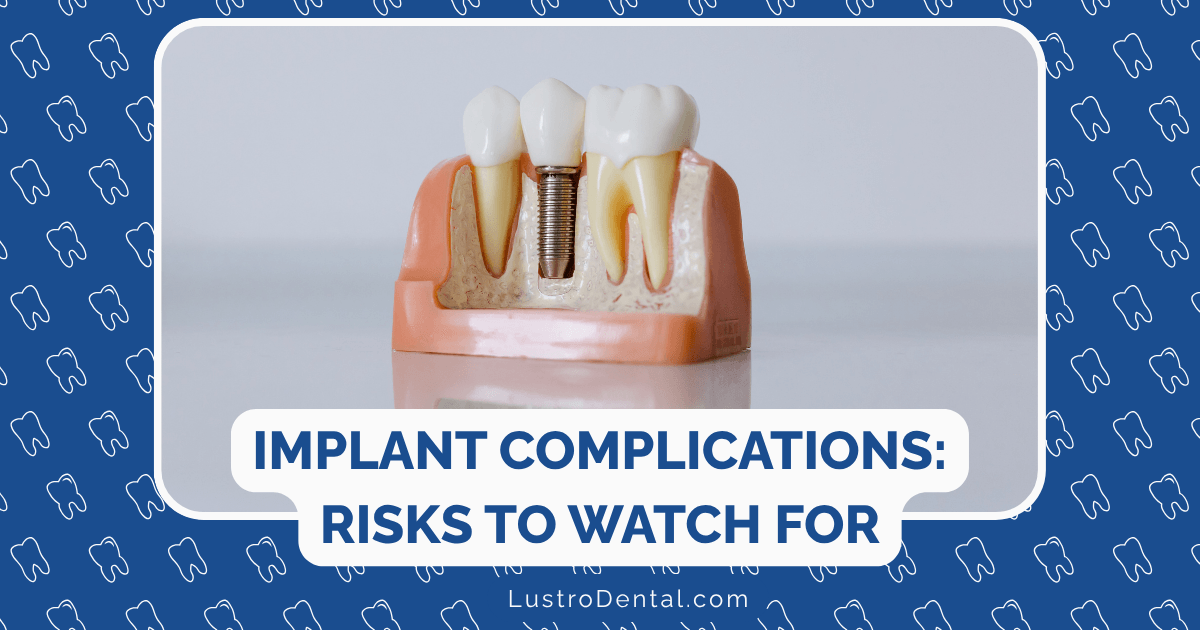
Dental implants have revolutionized tooth replacement, offering a solution that closely mimics natural teeth in both function and appearance. With success rates typically above 95%, they’re one of the most predictable procedures in modern dentistry. However, like any surgical procedure, implant placement isn’t without risks.
As someone who’s guided many patients through their implant journeys, I believe that understanding potential complications—and how to prevent them—is essential for making informed decisions about your dental care. Knowledge isn’t meant to frighten but to empower, allowing you to take proactive steps toward a successful outcome.
In this comprehensive guide, we’ll explore the most common implant complications, identify key risk factors, and outline evidence-based strategies to minimize these risks at every stage of your implant journey.
Before diving into complications, let’s clarify what constitutes implant success versus failure:
Implant Success is typically defined as:
Implant Failure can be categorized as:
According to a 2022 study published in the Journal of Oral and Maxillofacial Surgery, the overall implant failure rate is approximately 3.11%, with late failures (75%) being more common than early failures (25%).
Complications can be divided into early (occurring during or shortly after surgery) and late (developing months or years later) categories:
Bacterial contamination during or after surgery can lead to infection, characterized by pain, swelling, redness, and sometimes discharge.
The surgical placement of implants, particularly in the lower jaw, can potentially damage nerves, resulting in numbness, tingling, or pain in the lips, chin, tongue, or surrounding tissues.
Upper jaw implants placed too close to or penetrating the sinus cavity can cause sinusitis or other sinus-related issues.
While some bleeding is normal after surgery, excessive or prolonged bleeding may indicate a complication.
Sometimes the implant fails to properly fuse with the surrounding bone during the initial healing phase.
This inflammatory condition affects the soft and hard tissues surrounding a dental implant, leading to progressive bone loss and potentially implant failure if left untreated.
According to a meta-analysis published in Clinical Oral Investigations, peri-implantitis affects approximately 13% of implants and 18.5% of patients, with rates rising from 0.4% to 43.9% within 3-5 years.
These include:
Issues with the appearance of the implant restoration, such as:
Gradual loss of bone around an implant beyond what’s considered normal.
Understanding risk factors is crucial for prevention. These can be divided into patient-related and procedure-related factors:
Research from the International Team for Implantology shows that patients with a history of periodontitis have a 2.21 times higher risk of developing peri-implantitis. A 10-year study found peri-implantitis in 29% of patients with previous periodontal disease compared to just 6% in those without.
Tobacco use significantly impairs healing and increases complication rates. A meta-analysis found that smokers have approximately double the risk of implant failure compared to non-smokers, with a relative risk of 2.07 (95% CI 1.41, 3.04).
Dr. Sarah Johnson, an implantologist at Mayo Clinic, emphasizes: “Smoking is perhaps the most significant modifiable risk factor for implant complications. The chemicals in tobacco impair blood flow to the surgical site, inhibit healing, and increase infection risk.”
Poorly controlled diabetes impairs healing and increases infection risk. Research shows that individuals with poorly controlled diabetes have a 46% higher risk of developing peri-implantitis compared to those with normal blood glucose levels.
Inadequate plaque control is strongly associated with peri-implantitis and implant failure.
Excessive forces from grinding or clenching can lead to mechanical complications and bone loss around implants.
Some medications, including high-dose bisphosphonates and immunosuppressants, can affect implant healing and integration.
Autoimmune disorders, uncontrolled cardiovascular disease, and other systemic conditions may impact healing and long-term implant success.
Research has identified certain genetic markers associated with increased peri-implantitis risk. For example, IL-1 polymorphisms have been linked to a 1.9 to 2.47 times higher risk, while TNF-α polymorphism has been associated with a five to eightfold increased risk.
Insufficient bone volume or density significantly increases failure risk. According to the Journal of Oral and Maxillofacial Surgery study, type III-IV (soft) bone density was found in 75% of failed implants.
Implants placed too close to vital structures, adjacent teeth, or in poor angulation have higher complication rates.
Less than 2mm of keratinized (firm) gum tissue around implants is associated with increased inflammation and complications.
Excessive heat generation during implant site preparation can damage bone cells and impair osseointegration.
Traumatic surgical technique can compromise healing and integration.
Placing functional forces on implants too early without sufficient initial stability can lead to micromotion and failure.
Excess cement from crown cementation can cause peri-implant inflammation and tissue damage.
Prevention strategies should address both patient-related and procedure-related risk factors at every stage of the implant process:
Dr. Michael Chen of Dynamic Dental notes, “The most successful implant cases begin with meticulous planning. Using 3D imaging and surgical guides significantly reduces the risk of nerve damage and improper positioning.”
Computer-guided implant placement using surgical guides can significantly improve accuracy and reduce complications.
The importance of professional maintenance cannot be overstated. According to research in Clinical Oral Investigations, patients who don’t comply with maintenance therapy have a 20% chance of developing peri-implantitis within 5 years, while compliance is associated with an 86% reduction in peri-implantitis cases.
A typical maintenance schedule includes:
Early intervention is crucial when complications arise. Contact your dentist immediately if you notice:
If complications do occur, various treatment approaches are available:
While understanding complications is important, it’s equally important to maintain perspective. With proper patient selection, planning, surgical technique, and maintenance, dental implants remain one of the most successful and predictable procedures in dentistry.
Dr. Lisa Wong of Springfield Perio & Implants reminds us, “The vast majority of dental implant patients enjoy decades of trouble-free function. When complications do occur, most can be effectively managed, especially when caught early.”
Dental implant complications, while relatively rare, can significantly impact your oral health and quality of life. By understanding risk factors and implementing prevention strategies, you can dramatically reduce your chances of experiencing problems.
The key takeaways for implant success include:
With this proactive approach, you can maximize your chances of enjoying the life-changing benefits of dental implants for many years to come.
Have you had dental implant surgery or are you considering it? What concerns do you have about potential complications? Share your thoughts or questions in the comments below to help others on their implant journey.